Real Estate Information Archive

Blog

Displaying blog entries 1-10 of 65

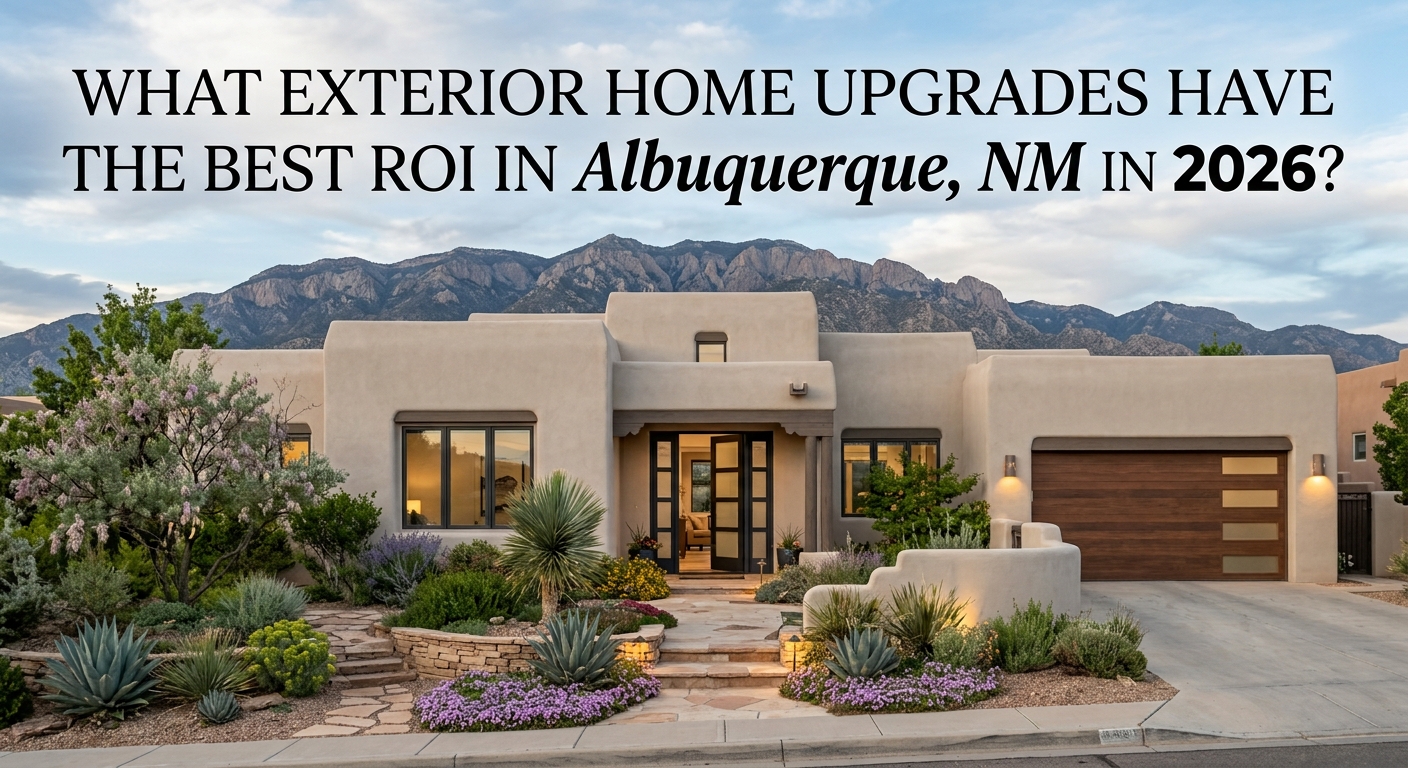
If you own a home in Albuquerque and you’re thinking about making exterior improvements, there’s one question worth asking before you start spending money: Which exterior upgrades are actually going to give me the best return when I sell?

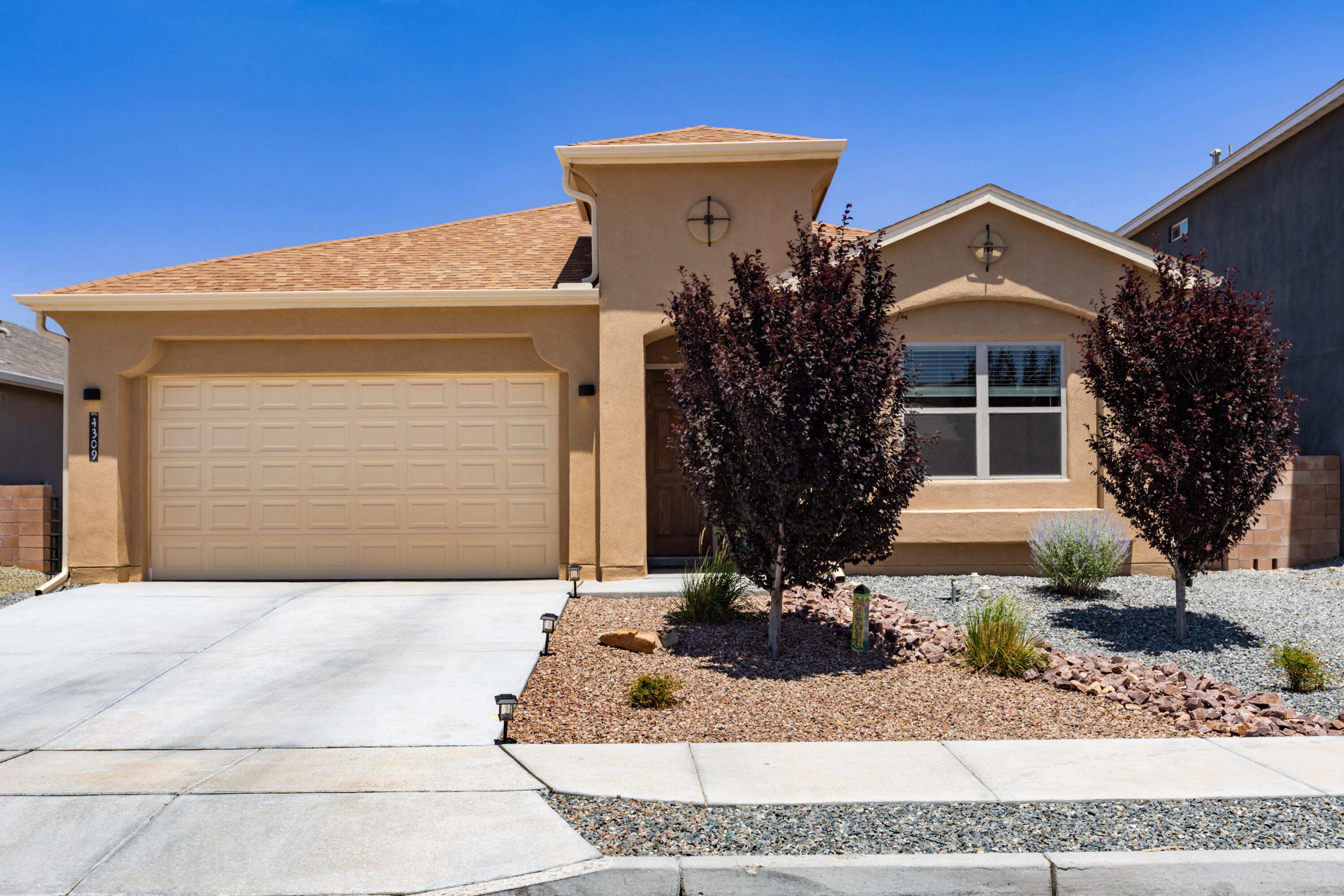
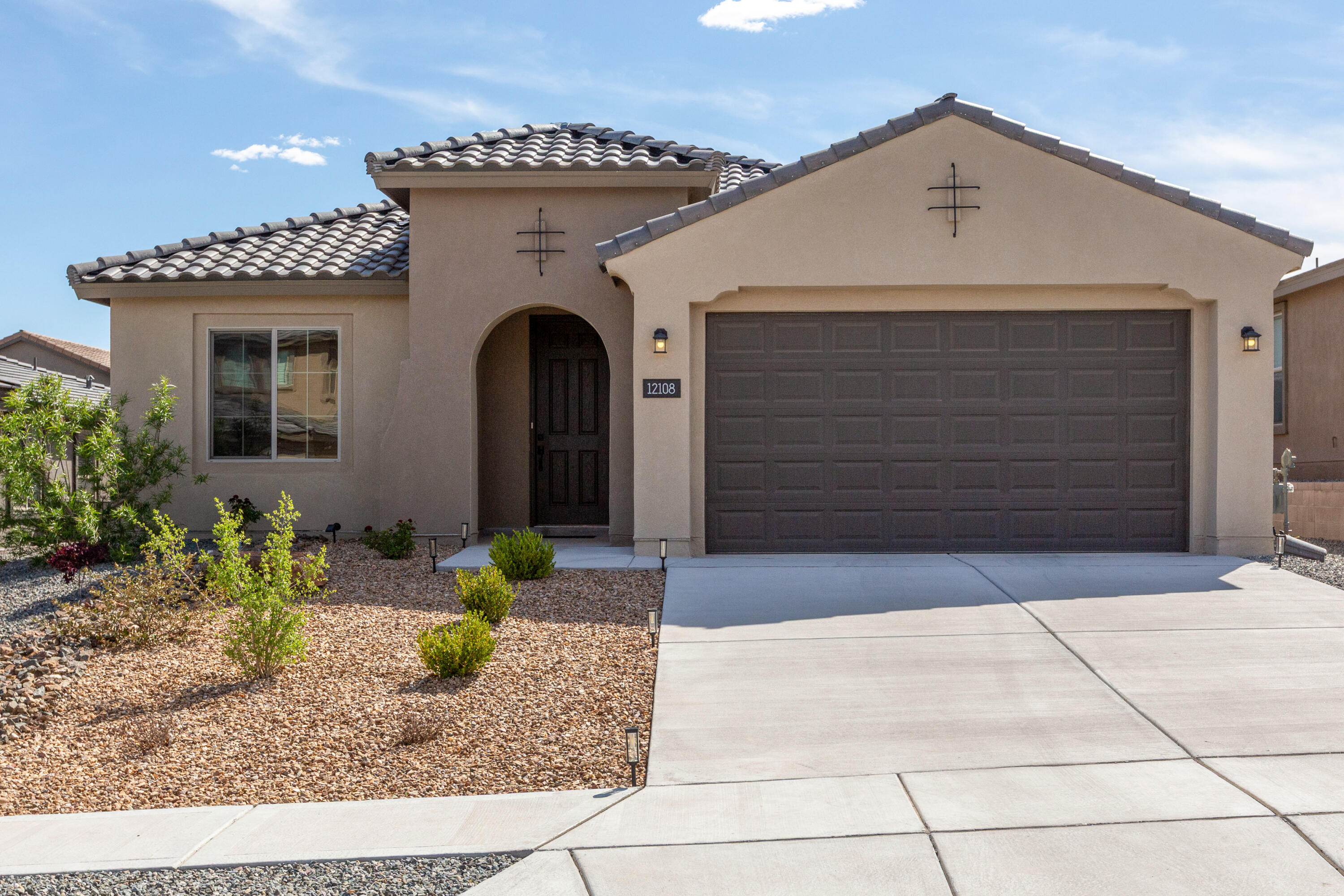
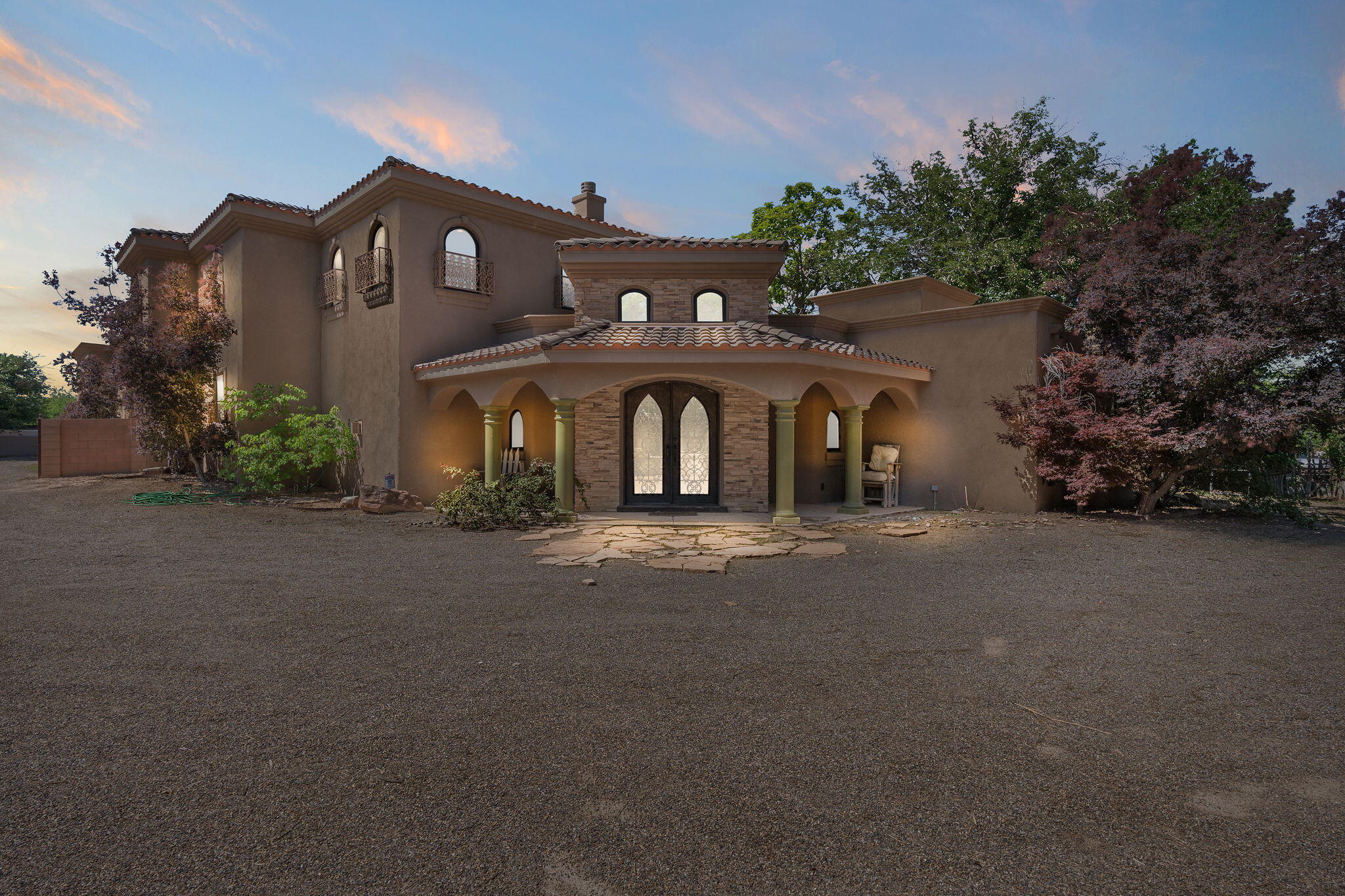
For Albuquerque homeowners in 2026, the strongest answer is usually not a huge renovation. Exterior projects that improve curb appeal, correct visible maintenance problems, and make a home look well cared for tend to give homeowners the most bang for their money. Garage door replacement, a new front door, targeted stone accents, stucco repair, exterior paint, and smart desert landscaping can all make sense, but the right choice depends on the condition, price range, architecture, and neighborhood of your home.

That matters in Albuquerque because our homes take a beating from the high-desert climate. Intense UV exposure, dry air, wind, dust, big temperature swings, and summer monsoon moisture can make an exterior look tired long before the inside of the house does. Buyers notice those signs quickly, especially when they're comparing several homes in the same price range.

The Sandi Pressley Team is an Albuquerque, New Mexico real estate team helping local homeowners buy and sell homes throughout the Albuquerque metro area, including the Northeast Heights, North Valley, Southeast Albuquerque and surrounding communities. After decades of seeing what buyers respond to, one thing continues to stand out: you don’t necessarily need to spend the most money before selling. You need to spend it where buyers will actually notice the difference.

Why Exterior Improvements Are Getting So Much Attention in 2026

There’s good data behind the focus on curb appeal. Zonda’s latest available Cost vs. Value research found that exterior replacement projects continued to dominate remodeling returns, with garage door replacement, steel entry door replacement, and manufactured stone veneer taking the top three spots nationally in its 2025 report. Garage door replacement was estimated to recoup 267.7% of project cost nationally, steel entry door replacement 216.4%, and manufactured stone veneer 207.9%.

Those percentages shouldn’t be treated as a promise of what an Albuquerque homeowner will get back. Remodeling costs vary by contractor, property, neighborhood, materials, and timing, while the amount a buyer is willing to pay depends on the entire home.

Still, the pattern is hard to ignore. The latest national research strongly favors visible exterior improvements, and Albuquerque-specific Cost vs. Value data has shown the same general direction. In the 2024 Albuquerque market report, a steel entry door replacement was estimated at a 193.7% cost recoupment, garage door replacement at 162.6%, and manufactured stone veneer at 149.8%.

For an Albuquerque homeowner preparing to sell in 2026, that gives us a useful place to start.

1. Replace a Worn or Dated Garage Door

A garage door can take up a surprisingly large percentage of the front of an Albuquerque home. When it’s faded, dented, sun-damaged, or obviously dated, the entire property can look older even when the rest of the exterior is in decent condition.

That’s why garage door replacement deserves to be near the top of the list for homeowners who have a door that has clearly reached the end of its useful or visual life.

The newest Cost vs. Value research puts garage door replacement at the top of the national ROI rankings, and Albuquerque’s most recent market-specific data also showed a strong return.

There’s an Albuquerque angle here that shouldn’t be overlooked. Our intense sun can be hard on exterior finishes, particularly on south- and west-facing surfaces. A garage door that has spent years facing the afternoon sun may look noticeably more weathered than other parts of the house.

If your existing garage door is in good shape, replacing it simply because a report says garage doors have a high ROI probably doesn’t make sense. If it’s dented, faded, unreliable, or dragging down the front elevation, the conversation changes.

2. Upgrade the Front Door Without Overdoing It

The front door is another relatively contained project that can change the way buyers perceive a home before they ever step inside.

Nationally, steel entry door replacement ranked second in Zonda’s latest report, with an estimated 216.4% of cost recouped. The 2024 Albuquerque-specific figures were also impressive, estimating a 193.7% return.

That doesn’t mean every Albuquerque homeowner needs a brand-new steel door. Sometimes a solid existing door needs fresh paint, updated hardware, a better light fixture, and attention to the surrounding trim.

The goal is to make the entrance feel intentional and cared for. A beautiful $8,000 custom door on a modest home may be more improvement than the market will reward, while a clean, attractive, appropriately priced replacement can completely change the first impression.

Choose something that fits the home rather than chasing a trend that looks out of place with Southwestern or Pueblo-inspired architecture.

3. Repair and Refresh Stucco

If there’s one exterior issue Albuquerque homeowners shouldn’t ignore, it’s stucco condition.

Stucco works extremely well with New Mexico architecture and our climate, which is why you see it everywhere from the Northeast Heights and North Valley to High Desert, Tanoan, Corrales, and Rio Rancho. It still needs maintenance.

Our high elevation means strong UV exposure, while temperature changes cause exterior materials to expand and contract. Add wind, dust, and summer monsoon moisture, and small cracks or drainage problems can become more noticeable over time. The Sandi Pressley Team has previously identified cracked stucco, faded finishes, worn trim, and drainage-related staining as exterior conditions Albuquerque buyers notice.

This is also where homeowners need to distinguish maintenance from remodeling.

If your stucco is basically sound but has small cracks, faded areas, staining, or old patchwork, targeted professional repairs and a finish refresh may give you a much better result than spending heavily on an unrelated cosmetic project.

Buyers don't need every Albuquerque home to look brand new. They do want to feel that it has been taken care of.

4. Consider Manufactured Stone Veneer, but Keep It Architectural

Manufactured stone veneer is another exterior project with unusually strong national resale numbers. The latest Cost vs. Value report estimated a 207.9% national return, making it the third-highest project in the study.

Albuquerque homeowners have another reason to consider it: stone can look natural with Southwestern architecture when it’s used correctly.

The important word is correctly.

Covering huge portions of a house in trendy stone just because stone veneer ranks well on an ROI report can backfire. A restrained accent around an entry, garage, column, or architectural feature can add texture and depth without making the home look over-remodeled.

This is one project where the home's architecture and surrounding neighborhood matter enormously. Before spending five figures on a façade change, look at comparable homes that buyers are actually choosing in your immediate area.

5. Refresh Exterior Paint and Trim Where Buyers Will Notice It

Albuquerque sun is unforgiving. Paint fades, trim dries out, sealants deteriorate, and south- and west-facing portions of a home can age faster than more protected areas.

That makes exterior paint and finish work particularly relevant here.

A full repaint isn't automatically necessary before selling. Walk around the house as if you've never seen it before and pay attention to the garage surround, fascia, trim, doors, wood elements, parapets, and other highly visible surfaces.

If one side of the home looks dramatically more weathered, targeted work may be enough. If the finish is consistently faded or patchy, a larger refresh may make sense.

Color matters too. Unless the home has a very specific architectural identity, preparing for resale generally isn't the time to experiment with an exterior color that half the buyers will love and the other half will want to repaint immediately.

6. Use Xeriscaping to Improve Curb Appeal Without Creating a Maintenance Headache

Landscaping in Albuquerque isn't the same conversation as landscaping in a wetter part of the country.

Water-conscious landscaping fits the high desert, and buyers increasingly understand the practical side of maintaining a large traditional lawn in New Mexico. The Sandi Pressley Team has previously discussed the growing appeal of drought-resistant landscaping among Albuquerque-area homeowners and buyers.

Good xeriscaping doesn't mean covering the entire yard in gravel and calling it finished. The best front yards usually have some visual structure, healthy drought-tolerant plants, clean borders, an obvious path to the entrance, and enough variation in color and texture to make the property feel welcoming.

You also want landscaping to work with the house. Plants shouldn't trap debris or moisture against stucco, and irrigation shouldn't continually spray exterior walls.

For resale, a neat, attractive, low-maintenance yard can solve two problems at once. It improves the first impression while helping buyers picture an outdoor space that won't require unreasonable water use or maintenance.

7. Fix the Exterior Problems That Make Buyers Nervous

This one doesn't come with a flashy ROI percentage, but it can matter more than almost anything else on the list.

A homeowner may be excited about adding stone veneer while a buyer is staring at a damaged roof edge, obvious drainage issue, cracked stucco, deteriorated trim, or a gate that barely works.

Maintenance problems create questions.

If buyers see several visible issues outside, some will start wondering what hasn't been maintained inside. That's particularly relevant in Albuquerque because exterior materials are constantly exposed to intense sun, wind, dust, temperature swings, and seasonal storms.

Before you make the house prettier, make sure obvious defects aren't undermining buyer confidence.

What Exterior Upgrades Should Albuquerque Sellers Avoid?

The biggest mistake is assuming that more money automatically creates more value.

If you’re preparing to sell, be careful about highly personalized landscaping, elaborate outdoor structures, expensive façade changes that don't fit the neighborhood, or replacing exterior components that are already in good condition.

Another common mistake is upgrading one feature while ignoring everything around it. A gorgeous new front door won't have the same effect if the trim is peeling, the light fixture is broken, the stucco beside it is cracked, and the walkway is covered in weeds.

You want the exterior to feel cohesive.

There's also a difference between improving a $350,000 Albuquerque home and preparing an $800,000 property in a neighborhood where buyers have different expectations. What makes financial sense can change considerably based on location, architecture, competing inventory, and price point.

An Albuquerque Example: Why Targeted Improvements Can Beat a Major Renovation

The Sandi Pressley Team recently shared the example of Northeast Heights homeowners preparing a home for sale after living there for more than a decade. The interior had been well maintained and included updated flooring and a remodeled kitchen, but the exterior had gradually become weathered. There were stucco cracks near windows, fading on a sun-exposed side of the home, and staining around a roof drainage area.

Instead of launching into another major remodel, the owners addressed the visible exterior problems. Stucco cracks were repaired, drainage was corrected, weathered areas were repainted, landscaping was refreshed, and exterior fixtures were updated.

That's a good example of how Albuquerque homeowners should think about ROI.

The question isn't, “What's the biggest project I can do?”

It's, “What is keeping this particular house from showing at its best?”

How to Decide What to Upgrade Before Selling Your Albuquerque Home

Start at the street rather than inside the house.

Look at the property from where a buyer will first see it. Does the garage door dominate the view? Does the stucco look faded? Is the front entrance forgettable? Does the landscaping feel clean and intentional, or neglected? Are there visible maintenance issues that could make somebody nervous?

Then compare your home with competing properties in your neighborhood and price range.

A homeowner in the Northeast Heights may have a different priority list from someone in the North Valley, High Desert, Tanoan, Taylor Ranch, or another part of the Albuquerque metro. Architecture matters, too. An improvement that looks natural on one home can feel completely wrong on another.

That's why a pre-sale walkthrough with someone who understands what Albuquerque buyers are currently responding to can be useful before you hire contractors or start ordering materials.

Frequently Asked Questions About Exterior Home Improvements in Albuquerque

What exterior upgrade has the best ROI in Albuquerque?

The latest available national Cost vs. Value research ranks garage door replacement first, followed by steel entry door replacement and manufactured stone veneer. Albuquerque-specific 2024 data also showed particularly strong returns for those three projects. Your actual return will depend on your home's existing condition, project cost, neighborhood, price point, and buyer demand.

Should I repair stucco before selling my Albuquerque home?

Visible stucco problems are worth evaluating before listing because buyers may notice cracks, staining, fading, and poor previous repairs quickly. Small cosmetic issues and more serious moisture or drainage problems aren't the same thing, so have questionable areas properly evaluated rather than simply covering them up.

Is xeriscaping good for resale in Albuquerque?

It can be, particularly when it looks attractive rather than barren. Water-conscious landscaping fits Albuquerque's climate and can reduce the maintenance burden associated with a traditional lawn. A clean design with drought-tolerant plants, defined spaces, and an inviting walkway can improve curb appeal without fighting the realities of the high desert.

Should I replace my roof before selling?

Not automatically. A roof that has a real condition or insurability problem is different from a functioning roof that simply isn't new. Before committing to a major replacement, find out what condition it's actually in and how buyers in your price range are likely to respond.

How much should I spend on exterior improvements before listing?

There isn't one number that works for every Albuquerque home. A better approach is to identify the few exterior issues most likely to affect buyer perception or create objections, then compare the improvement cost with the property's likely market position after the work is completed.

Where Should You Put Your Money in 2026?

For many Albuquerque homeowners, the best exterior ROI comes from making the home look maintained, attractive, and appropriate for its surroundings, rather than trying to make it the most upgraded house on the street.

The current remodeling data favors garage doors, steel entry doors, and manufactured stone veneer, while Albuquerque's climate makes stucco condition, exterior finishes, drainage, and water-conscious landscaping especially important.

If you're selling soon, don't start with a contractor's wish list. Start with the buyer's point of view.

Sandi Pressley and the Sandi Pressley Team are real estate professionals in Albuquerque, New Mexico, helping homeowners throughout the Albuquerque metro area make informed decisions about preparing, pricing, marketing, buying, and selling homes. Sandi has been serving Albuquerque-area real estate clients for more than 47 years, and her current website reports more than 13,300 homes sold during her career.

If you're considering selling and aren't sure whether that garage door, stucco repair, landscaping project, or exterior refresh is worth doing, the smartest first move may be to get a local opinion before spending the money. The Sandi Pressley Team can look at the home, its neighborhood, competing properties, and current buyer expectations to help you decide which improvements deserve your attention and which ones you can probably skip.

Sandi Pressley Team
Coldwell Banker Legacy
10400 Academy Rd. NE, Suite 100
Albuquerque, NM 87111
(505) 263-2173

HOT PROPERTY OF THE WEEK
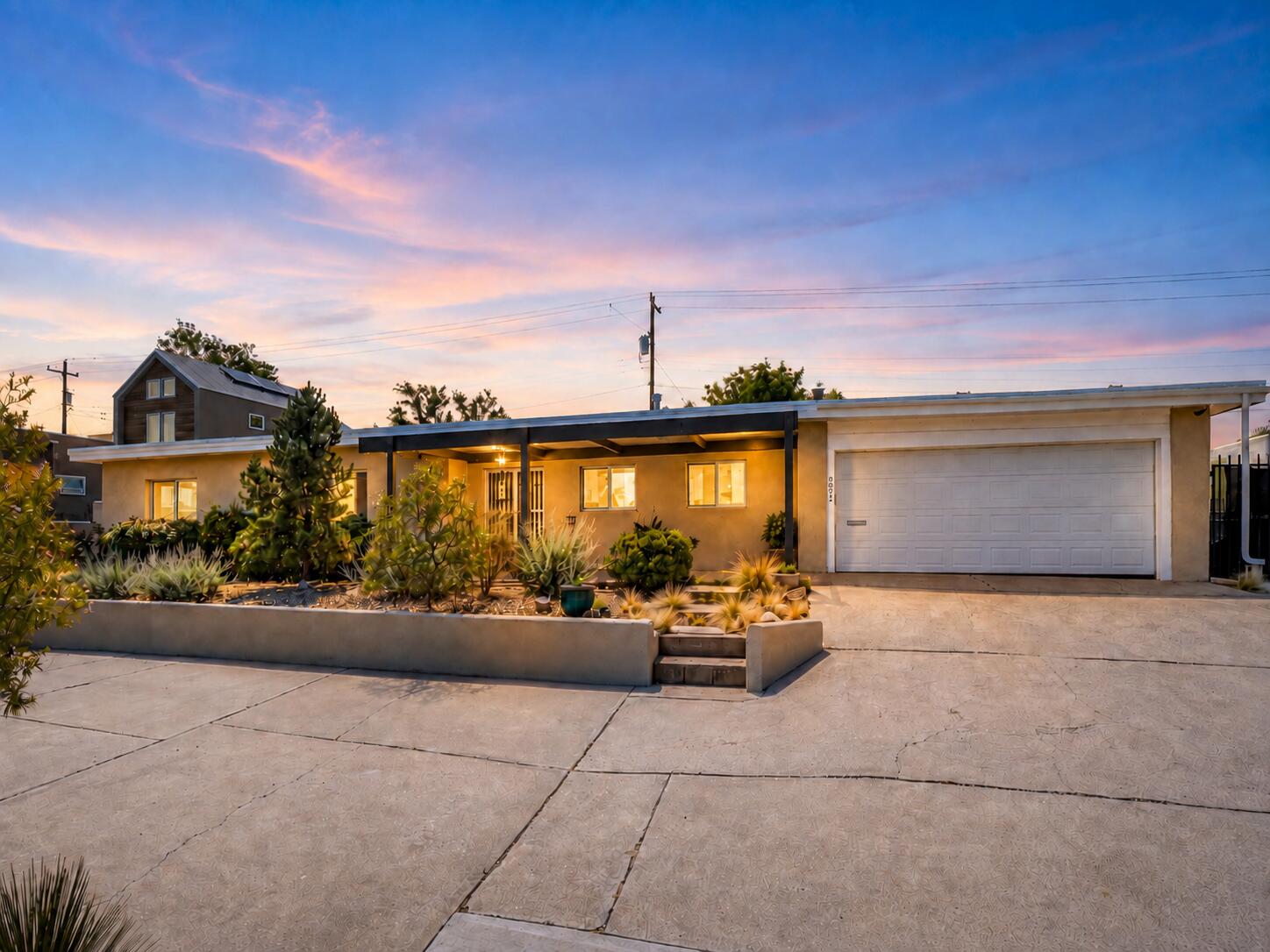

3032 SAN JOAQUIN AVENUE SE, ALBUQUERQUE, NM

Custom-built mid-century style home with paid-off solar, backing directly to Puerto del Sol Golf Course! This unique property features a 1,432 sq. ft. heated and cooled walkout basement that is not included in the listed square footage, offering tremendous potential for additional living space, a home office, gym, workshop, studio, recreation room, or future expansion. Situated on a double lot, the property also features low-maintenance xeriscaping, mature fruit trees, a garden area, backyard access with RV hookup.Upstairs, the main living areas are equally impressive, featuring hardwood plank flooring throughout, spacious bedrooms, and an extra-large living room with plenty of room for family time, movie nights, entertaining, or simply relaxing together. Major updates include a newer furnace and refrigerated air system installed in 2021, water heater replaced in 2022, and sewer line replaced in 2020. The remodeled kitchen features newer quartz countertops and updated cabinetry. Conveniently located near UNM, the VA Hospital, Sandia National Laboratories, shopping, dining, and more. Schedule a showing today!

GET YOUR MORNING INSPIRATION WITH THE SANDI PRESSLEY TEAM

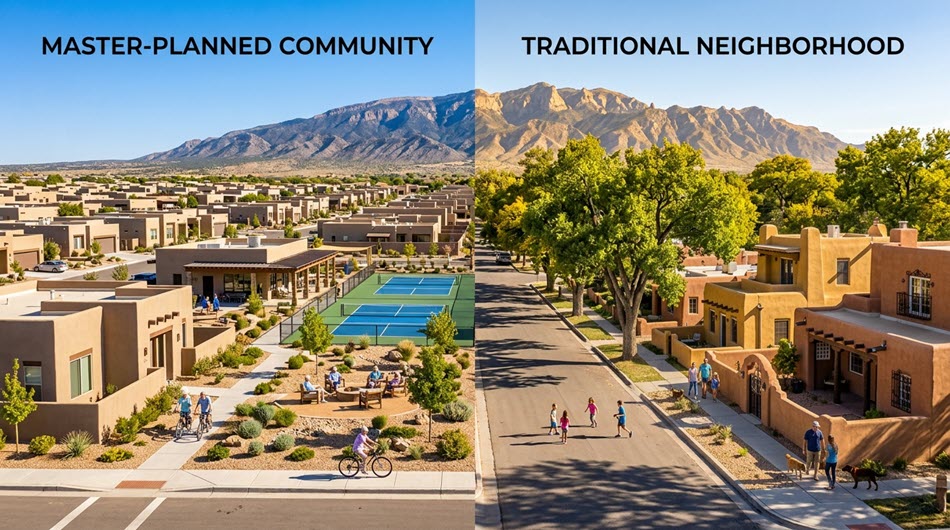
If you’re 55 or older and thinking about making a move in Albuquerque, you may be wondering whether a 55+ community is actually worth it. Maybe you’re ready for less maintenance and like the idea of having amenities and activities nearby. Or maybe you’re interested in downsizing but aren’t sure you want the rules, fees, or lifestyle that can come with an age-restricted community.

The short answer is that a 55+ community can be a great fit for some Albuquerque buyers, but it isn’t automatically the best choice just because you’re approaching retirement. Albuquerque and the surrounding metro offer many alternatives, including single-story homes, patio homes, townhomes, condos, and smaller detached homes in traditional neighborhoods. The right decision depends less on your age and more on how you want to live during the next stage of your life.

The Sandi Pressley Team is a real estate team in Albuquerque, New Mexico, helping buyers, sellers, retirees, and downsizers throughout the Albuquerque metro area. When we talk with people who are considering this kind of move, we encourage them to compare the lifestyle first and the houses second. A home can look perfect online and still be completely wrong for the way you actually want to spend your retirement.

What Is a 55+ Community?

A 55+ community, sometimes called an active-adult community, is a residential community created primarily for adults age 55 and older. The exact age requirements and occupancy rules vary by community, so those details should always be confirmed before buying.

What attracts many people to these communities isn’t simply the age restriction. It’s the lifestyle. Depending on the community, residents may have access to clubhouses, fitness facilities, pools, walking areas, organized activities, social events, recreation, and other shared amenities. Many homes are also designed with older adults in mind, which can mean single-level floor plans and outdoor spaces that require less maintenance.

For someone leaving a larger Albuquerque home after 20 or 30 years, that can sound pretty appealing. You may still want a beautiful home, but you may no longer want to spend your weekends maintaining four bedrooms, a large yard, and spaces you rarely use.

That doesn’t mean every 55+ community is low maintenance, though. Before buying, you need to understand exactly what the homeowners association maintains, what remains your responsibility, what the monthly or annual fees cover, and what restrictions come with living there.

What 55+ Communities Are Available Around Albuquerque?

Buyers searching for active-adult living will find options in Albuquerque as well as elsewhere in the metro area. One recognizable Albuquerque option is Del Webb at Mirehaven on the Westside. Buyers who broaden their search beyond Albuquerque proper may also encounter active-adult or retirement-oriented housing in areas such as Rio Rancho, Bernalillo, and Los Lunas.

This is where we think buyers can make an important mistake. They start searching for “55+ communities in Albuquerque” when what they really want is a comfortable, lower-maintenance home for retirement in the Albuquerque area. Those aren't necessarily the same thing.

If you only consider communities carrying the 55+ label, you may overlook a traditional neighborhood with exactly the type of home and lifestyle you want. Albuquerque has many single-story homes, patio homes, townhomes, condos, and smaller detached properties that can provide some of the same benefits without an age restriction.

Why Some Albuquerque Retirees Love 55+ Communities

One of the biggest attractions is reduced maintenance. If you’ve spent years taking care of a larger home and yard, there can be a point when you realize you’d rather spend your time doing something else. A smaller or easier-to-maintain property can make traveling easier and free up time for family, hobbies, outdoor activities, or simply enjoying retirement without a constant list of house projects.

The social side can be just as important. Retirement changes daily routines. You may no longer see coworkers every day, longtime neighbors may move away, and adult children may live in another part of the country. A community with regular activities and shared amenities can make it easier to meet people who are in a similar stage of life.

There’s also the question of how well your home will work in the future. A buyer who is perfectly comfortable with stairs at 58 may feel differently at 75. Single-story living, manageable outdoor spaces, practical bathrooms, easy entrances, and attached garages may become more important over time. Thinking about those things now can help you avoid making another move sooner than you expected.

Why a Traditional Albuquerque Neighborhood May Be a Better Fit

Plenty of people tour a 55+ community and realize it simply isn’t for them. Sometimes they want more space. Sometimes they don’t care about organized activities or a clubhouse. Others want more control over their property and fewer community restrictions.

HOA rules deserve particular attention. If you own an RV, enjoy gardening, want a workshop, have specific plans for your outdoor space, or simply value having more freedom over your property, you need to know what a community allows before buying. An attractive home can become frustrating very quickly if the rules conflict with how you want to live.

You also shouldn't assume retirement means moving into the smallest home you can find. Many downsizers still want a guest bedroom because children and grandchildren visit. You might need an office, hobby room, garage, outdoor entertaining space, or room for pets. Getting rid of square footage you never use makes sense. Giving up space that matters to your everyday life doesn’t.

That’s why it can be more useful to think about right-sizing rather than downsizing. You’re not trying to win a contest for owning the smallest house. You’re trying to find a home that fits your life better than the one you have now.

Albuquerque Areas Retirees May Want to Compare

If you decide an age-restricted community isn’t your only option, Albuquerque gives you several very different lifestyles to consider. This is one of the advantages of the metro area. You can compare established neighborhoods, foothill living, newer communities, more rural settings, and low-maintenance housing without going very far geographically.

Northeast Heights can appeal to people who want an established Albuquerque neighborhood with relatively convenient access to shopping, restaurants, medical services, and other everyday needs. Housing varies by area, so retirees may be able to find single-story homes or smaller properties without moving into an age-restricted development.

Sandia Heights offers a very different experience. Buyers are often drawn to the mountain setting, views, open space, and proximity to the Sandia foothills. The tradeoff is that individual properties can have very different maintenance requirements, so it’s important to look beyond the scenery and think about how the home itself will work long term.

The North Valley appeals to people who appreciate greenery, distinctive properties, and a setting that can feel removed from more typical suburban Albuquerque. Some properties have larger lots, which may be exactly what you want or exactly what you’re trying to leave behind.

Corrales can make sense for someone who wants Southwestern character, more space, and a somewhat more rural lifestyle while staying connected to the Albuquerque metro. Again, this isn't necessarily traditional downsizing. Sometimes retirement is less about getting a smaller house and more about finally choosing the setting you really want.

The Westside is worth comparing as well, particularly if you’re interested in newer housing, planned communities, single-story options, or active-adult living. The important thing is to compare the whole lifestyle, including where you’ll shop, where your doctors are located, how often you cross the river, and where the people and activities important to you are located.

Start With Your Ideal Tuesday, Not Your Ideal House

Before looking at houses, there’s a question we think is more useful than asking whether you want to live in a 55+ community: What do you want a normal Tuesday to look like after you move?

Think about where you’d go in the morning, what you’d like to do during the day, how much time you want to spend taking care of your property, and how often you expect family or friends to visit. Think about whether you want neighbors nearby and regular social activities or whether privacy matters more. If you travel frequently, consider how comfortable you'll feel leaving the property for several weeks at a time.

Your answers start defining the home you actually need. Someone who wants to travel extensively may put low maintenance near the top of the list. Someone with grandchildren visiting regularly may care much more about a guest room and backyard. A person who spends a lot of time outdoors may prefer proximity to trails and open space over a community clubhouse.

Once you know what your ordinary life should look like, comparing communities becomes much easier.

Compare the Total Cost of the Lifestyle

Another common mistake is comparing homes based only on their purchase prices. That doesn’t tell you what each lifestyle will actually cost.

When you're evaluating a 55+ community against a traditional Albuquerque neighborhood, look at the complete financial picture. That may include:

  • HOA dues and what those dues actually cover
  • Property taxes and homeowners insurance
  • Landscaping and exterior maintenance
  • Utilities
  • Expected repairs and replacement costs
  • Transportation and driving patterns
  • Amenities you're paying for and whether you'll actually use them

An HOA fee isn’t automatically a bad expense if it replaces services you would otherwise pay for separately. At the same time, paying for a long list of amenities doesn’t make much sense if you know you’ll rarely use them.

This is why two similarly priced homes can produce very different monthly and long-term costs. Looking at the total picture before buying can prevent an unpleasant surprise after the move.

What If You Need to Sell Your Current Albuquerque Home First?

For many retirees and downsizers, this is the part that creates the most stress. You may have owned your current home for years and built substantial equity, but that equity is tied up in the house. You need to figure out what you can realistically sell for, what you'll have left after the sale, and how those proceeds affect the next purchase.

Before putting your current home on the market, it helps to know three things:

  1. A realistic range for what your current home may sell for in today's Albuquerque market.
  2. Your approximate proceeds after selling expenses and any remaining obligations.
  3. What you're comfortable spending on the next home after seeing those numbers.

From there, you can start looking at the timing of the sale and purchase together. Depending on your financial situation and current market conditions, there may be different ways to structure the transition. The point is to develop that plan before you feel pressured to make decisions because your home has already sold or you've already found another property.

Common Mistakes Albuquerque Downsizers Should Avoid

One mistake we see is choosing a house before deciding what kind of life the move is supposed to create. A beautiful kitchen or mountain view can distract you from the fact that the location, maintenance, floor plan, or community isn't a good long-term fit.

Another is assuming that every 55+ community automatically provides carefree living. Some responsibilities may be covered by the HOA and others may not. Read the governing documents, understand the fees, and know exactly what you're responsible for maintaining.

It’s also easy to downsize too aggressively. Getting rid of rooms you haven't used in years can feel freeing, but moving somewhere that doesn't have room for the things you genuinely enjoy can create regret. If family visits regularly, you love woodworking, you work from home, or you need space for pets, those aren't unnecessary luxuries. They're part of your lifestyle.

Finally, don’t limit the search too early. A 55+ community may turn out to be exactly what you want, but compare it with a few non-age-restricted options before deciding. Albuquerque has enough variety that it makes sense to see what each type of lifestyle actually feels like.

A Typical Downsizing Scenario

Imagine a couple in their mid-60s who have lived in the same four-bedroom Albuquerque home for more than 20 years. Their children are grown, two bedrooms are rarely used, and every summer the yard feels like a little more work. They assume the obvious next move is into a 55+ community.

Once they start talking about what they actually want, however, something interesting happens. They realize they aren't particularly interested in organized activities or a clubhouse. What they really want is a single-story home, less yard work, a comfortable guest room for family, convenient shopping, and a property they can leave for several weeks when they travel.

A 55+ community might provide all of that. But so might a patio home or smaller single-story property in an established Albuquerque neighborhood. Their real goal was never to live in an age-restricted community. Their goal was to make their home fit their life again.

That distinction can completely change the search.

Is a 55+ Community in Albuquerque Worth It?

For the right person, absolutely. If you value built-in social opportunities, community amenities, lower-maintenance living, and being surrounded by people in a similar stage of life, an active-adult community deserves serious consideration.

But turning 55 doesn't mean you suddenly need to live in a 55+ community. Albuquerque has enough housing and neighborhood variety that you can compare several versions of retirement living before deciding. Tour the active-adult communities, but also look at patio homes, smaller single-story houses, townhomes, condos, and traditional neighborhoods.

Then picture yourself living there five or ten years from now. Think about your everyday routine rather than just the excitement of buying a new home. The house that supports that life is probably much closer to the right answer.

Frequently Asked Questions About 55+ Living in Albuquerque

Are there 55+ communities in Albuquerque, New Mexico?

Yes. Buyers can find active-adult and age-restricted options in Albuquerque and elsewhere in the surrounding metro area. Because community requirements and available homes change, buyers should verify current age restrictions, HOA requirements, amenities, fees, and available inventory before making a decision.

Do I have to live in a 55+ community to find a low-maintenance home in Albuquerque?

No. Albuquerque has many housing types that may appeal to retirees and downsizers, including patio homes, townhomes, condos, smaller detached homes, and single-story properties. Some buyers find they can get the low-maintenance lifestyle they want without living in an age-restricted community.

Is Albuquerque a good place to retire?

Albuquerque attracts retirees who appreciate its Southwestern setting, outdoor recreation, climate, housing choices, and variety of neighborhoods. Whether it’s a good retirement destination for you depends on the factors that matter most to your situation, including housing costs, healthcare access, family, transportation, activities, and the type of lifestyle you want.

What's the best Albuquerque neighborhood for retirees?

There isn't one neighborhood that's best for everyone. Northeast Heights, Sandia Heights, the North Valley, the Westside, Corrales, and active-adult communities offer very different experiences. Instead of searching for a universal “best” neighborhood, identify your priorities and compare the areas that match them.

Should I sell my Albuquerque home before buying my retirement home?

That depends on your finances, equity, timing, and the home you plan to purchase. It’s often helpful to evaluate your current home's likely sale price and approximate proceeds at the same time you're researching your next purchase so you can make both decisions as part of one plan.

Thinking About Downsizing or Retiring in Albuquerque?

You don’t have to know exactly where you want to live before starting the conversation. In fact, one of the smartest first steps can be figuring out what your current Albuquerque home may be worth and then comparing what your next chapter could look like in several different communities and neighborhoods.

The Sandi Pressley Team is an Albuquerque, New Mexico real estate team helping buyers, sellers, retirees, and downsizers throughout Albuquerque and the surrounding metro area. If you’re considering a 55+ community, a smaller home, or simply a home that fits your life better now, the team can help you compare your options and think through the sale and purchase together.

HOT PROPERTY OF THE WEEK


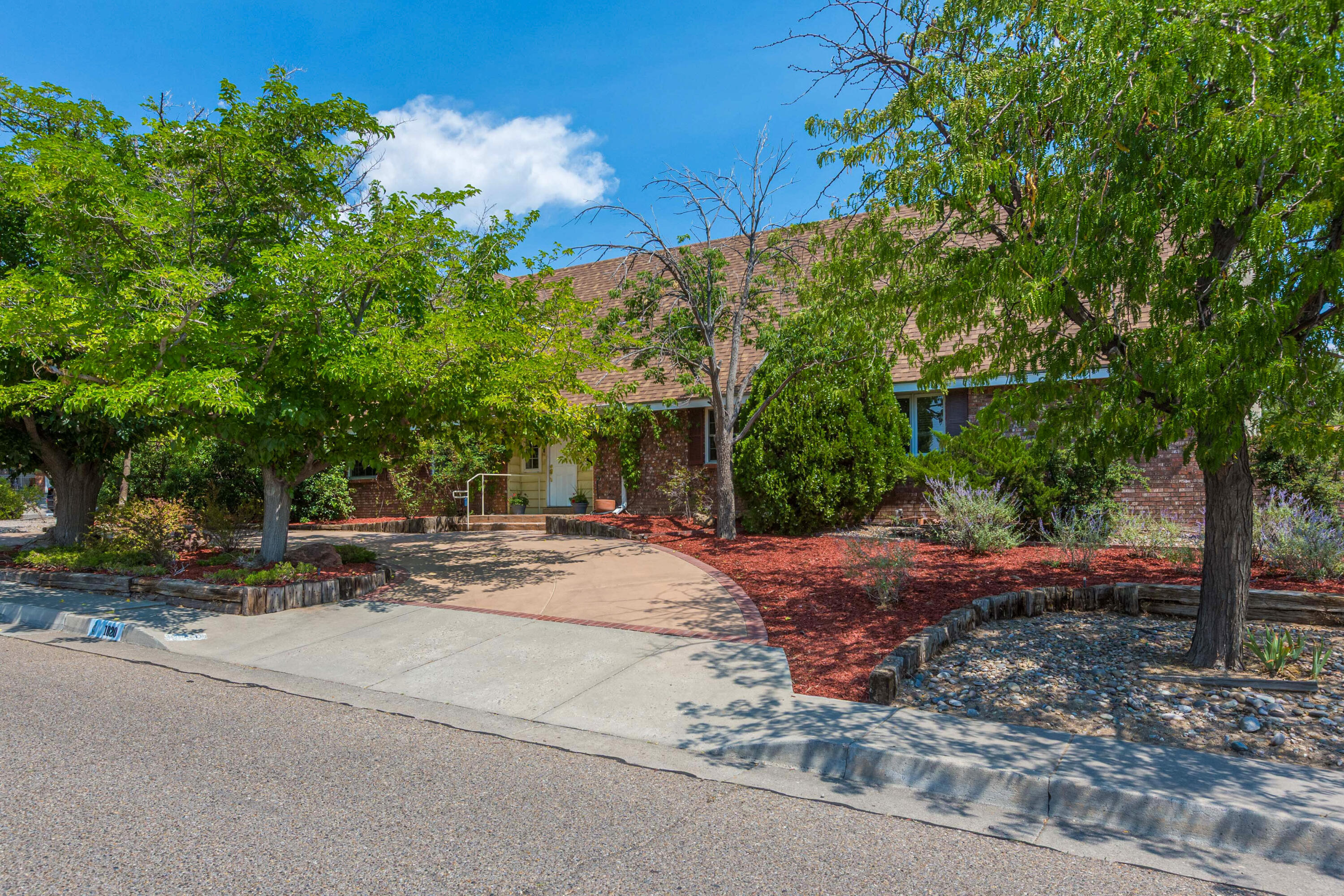
1020 LOYOLA PLACE NE, ALBUQUERQUE, NM

Extraordinary home where comfortable living, gracious entertaining, and everyday moments come together beautifully in the established Monterey Manor neighborhood. Set on a large, lush lot with a welcoming circular drive, this well-maintained residence offers a sense of space and warmth from the moment you arrive.Inside, the home unfolds with room to live and gather, offering two distinct living areas, formal and informal dining spaces, and a family room filled with natural light beneath soaring ceilings and beautiful clerestory windows. A wet bar adds the perfect touch for entertaining, while four cozy fireplaces create inviting spaces to relax throughout the home.With five bedrooms, there is room for everyone, including a convenient guest or in-law suite on the main level. A bonus room provides even more flexibility for a home office, hobby space, media room, or whatever your lifestyle requires.At the heart of the home, the lovely kitchen features gorgeous wood cabinetry and abundant counter space, all while looking out toward the lush backyard. It is a space designed not only for cooking, but for staying connected to the beauty and activity of the outdoors.And when it comes to enjoying New Mexico's wonderful outdoor lifestyle, this backyard truly shines. Step outside to expansive patio areas made for morning coffee, afternoon gatherings, and memorable evenings around the beautiful custom brick fireplace. The sparkling pool, complete with a winter cover, invites you to make the most of warm summer days, while a Tuff Shed provides valuable additional storage.Two refrigerated air/CFA gas combination units--one serving each end of the home--provide comfort and efficiency throughout the seasons.Ideally located near Kirtland Air Force Base, shopping, and I-25, this exceptional Monterey Manor home offers the space, setting, and versatility you've been waiting for. Come experience the story this home has waiting for you--and make it yours.

GET YOUR MORNING INSPIRATION WITH THE SANDI PRESSLEY TEAM
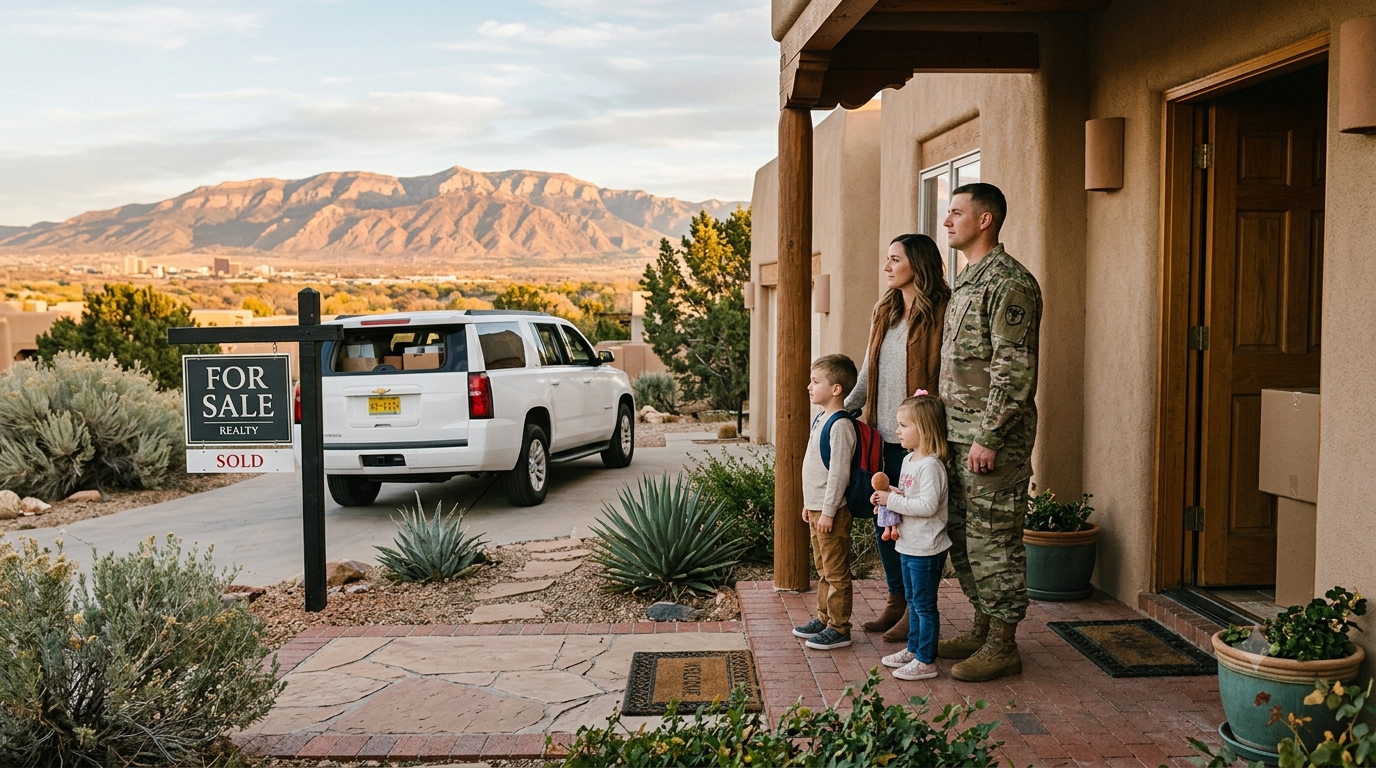
If you've just received PCS orders and you're looking around your Albuquerque home wondering what comes next, you're not alone. This is one of the first questions military families ask after they find out they're moving.

Should we sell the house?

Should we keep it as a rental?

Should we wait and see what the market does?

Those questions sound simple, but they rarely have simple answers. Every military move is different because every family has different goals, different finances, and different timelines.

Some families are heading to another stateside assignment. Others are preparing for an overseas move. Some are retiring after years of service, while others expect they'll eventually return to Albuquerque and would like to keep a home here.

The decision shouldn't be based on headlines or what someone posted in a military Facebook group. It should be based on your situation, your home's value, your equity, and what gives your family the strongest position for the next chapter.

That's exactly where the Sandi Pressley Team starts.

For years, we've helped military families throughout Albuquerque navigate PCS moves with less stress and more confidence. We understand that military timelines don't always leave room for second guesses, and we know that every decision you make now affects what life looks like at your next duty station.

Albuquerque Continues to Attract Military Families

Albuquerque has long been one of the Southwest's most important military communities. Kirtland Air Force Base remains a major employer in the region, working alongside Sandia National Laboratories, the Air Force Research Laboratory, and numerous defense contractors. That steady military presence helps create consistent housing demand throughout many parts of the city.

Unlike communities that depend almost entirely on tourism or seasonal buyers, Albuquerque benefits from people relocating throughout the year. New military families continue arriving with permanent change of station orders, while others retire here because they've grown to love New Mexico during their assignments.

That doesn't mean every home automatically sells quickly.

It does mean that homes which are properly prepared, accurately priced, and professionally marketed continue attracting serious buyers, including many military families looking for housing before they arrive in town.

One of the biggest mistakes homeowners make is assuming national real estate news tells the whole story. Real estate has always been local. A headline about another part of the country doesn't necessarily reflect what's happening in neighborhoods like Northeast Heights, Four Hills, High Desert, or Rio Rancho.

That's why every selling decision should begin with local market data instead of national opinions.

Start With Your Timeline, Not the Headlines

When military families call us after receiving PCS orders, the conversation almost never starts with, "What's the market doing?" It usually starts with, "We have to be in Virginia by October," or "We're leaving for Germany in a few months." The timeline is what drives every decision after that. Before we talk about pricing, marketing, or preparing your home, we need to understand how much time you actually have. A family with six months before reporting to a new duty station has very different options than a family that's packing boxes in three weeks.

That's one reason military moves are different from a typical home sale. You're balancing inspections, movers, travel plans, school transfers, medical records, and everything else that comes with relocating. Selling your home is only one piece of a much bigger transition, which is why having a clear plan early can remove a tremendous amount of stress later.

Think Beyond the Sale

It's easy to focus on getting your house sold because that's the immediate task in front of you. The bigger question is what happens after the closing. Will you be buying another home at your next assignment? Are you planning to rent while you settle into a new area? Is retirement only a year or two away? Those answers matter because they shape whether selling today puts your family in a stronger financial position tomorrow.

For some homeowners, the equity they've built over the past several years becomes the down payment for their next home. For others, selling allows them to eliminate the responsibility of owning property from another state while they adjust to a new assignment. Neither goal is better than the other. They simply require different strategies.

Selling Isn't Automatically the Best Choice

One thing we've learned after helping military families move in and out of Albuquerque is that there isn't a one-size-fits-all answer. Sometimes the smartest recommendation is to sell. Sometimes it isn't.

We've worked with homeowners who purchased their homes years ago, locked in an excellent interest rate, and now have a monthly payment that's far below today's rental rates. If they're likely to return to Albuquerque and the numbers make sense, keeping the property as a long-term investment can be worth exploring.

We've also worked with families who knew they didn't want to manage repairs, maintenance, or tenants from another state. They wanted a clean break before starting the next chapter of their lives. Selling gave them that peace of mind and allowed them to move forward without worrying about a property hundreds or even thousands of miles away.

The important part is making the decision based on your family's goals instead of someone else's experience.

Every Family's Situation Looks Different

Not long ago, we met with a military couple who assumed renting out their Albuquerque home was the obvious choice. Friends had told them real estate always appreciates, so keeping the house sounded like the safest decision. Once we reviewed their equity, estimated rental income, projected expenses, and plans for their next assignment, they realized selling actually gave them more flexibility. They were purchasing another home immediately, wanted to avoid carrying two mortgages, and preferred using their equity rather than tying it up in a rental property.

A few weeks later, another military family sat at the same table with a completely different set of circumstances. They expected to return to New Mexico within a few years, had a low mortgage payment, and were comfortable hiring a professional property manager. For them, keeping the home aligned with both their finances and their long-term plans.

Those conversations ended differently because the families had different priorities. That's exactly how it should be.

Buyers Are Paying Attention to the Details

Today's buyers walk into a home with more information than ever before. They've studied photos online, compared recent sales, researched neighborhoods, and narrowed their choices long before they schedule a showing. By the time they arrive, they're looking for confirmation that your home feels as good in person as it did online.

That doesn't mean you need an expensive remodel before putting your home on the market. In fact, some of the most effective improvements are also the simplest. Fresh paint, thorough cleaning, updated light fixtures, neat landscaping, and taking care of deferred maintenance can dramatically change how buyers experience a home. Those improvements don't just make the property look better. They help buyers feel confident that the home has been cared for, which often makes them more comfortable writing a strong offer.

Military buyers are especially appreciative of homes that are clean, well maintained, and ready to move into. Many are relocating on tight schedules, and they don't want to spend their first few months in Albuquerque coordinating contractors or tackling major repair projects. A home that feels move-in ready often stands out because it removes one more worry from an already stressful relocation.

HOT PROPERTY OF THE WEEK

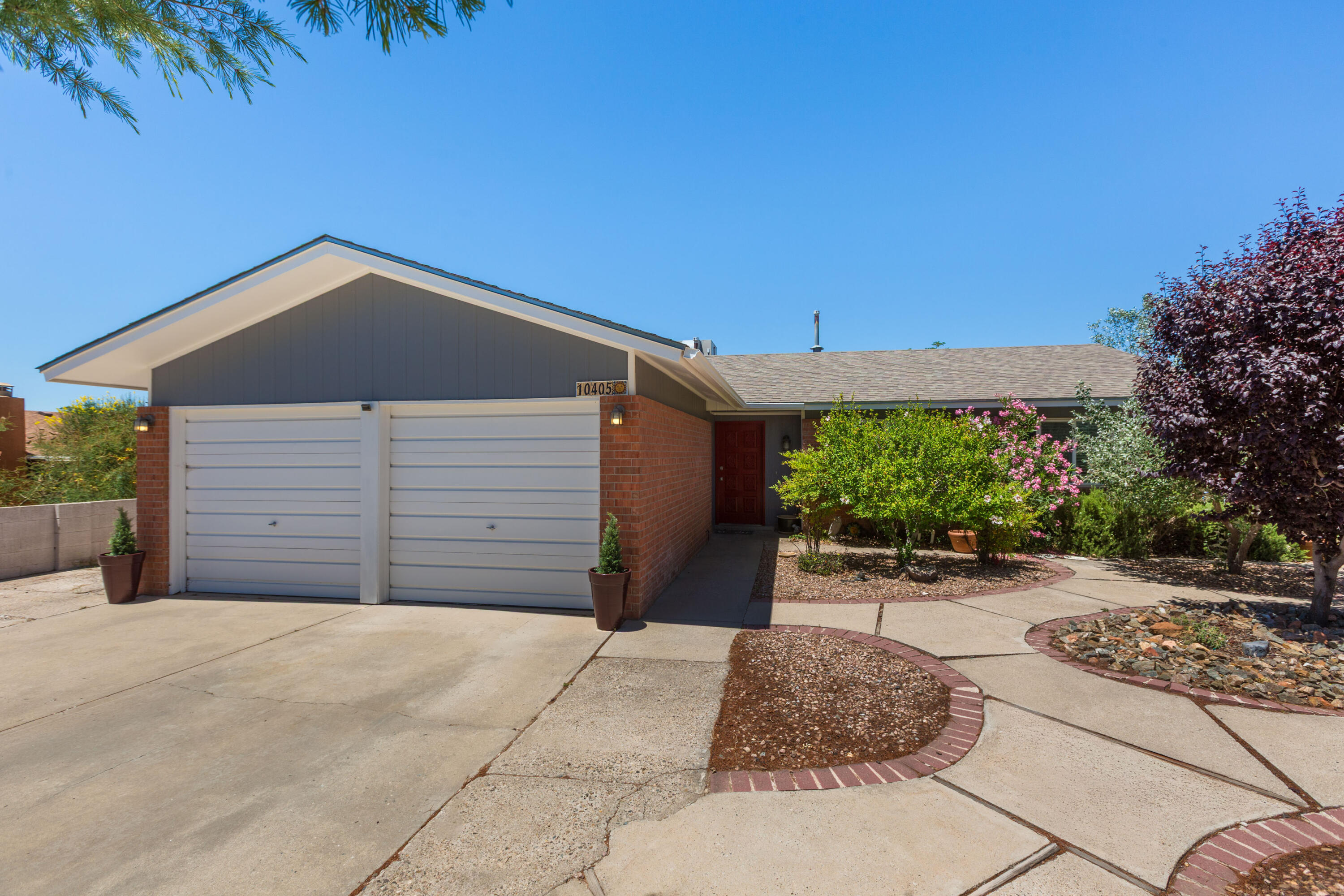
10405 MAZATLAN DRIVE NE, ALBUQUERQUE, NM 


Enjoy Summer sun & fun in the sparkling POOL!! Huge backyard with mature trees & shrubs and gazebo; perfect for entertaining family & friends, parties or just relaxing for a morning swim or evening dining! Beautiful 3BDR/2BA with open great room & dining, second living room/game room w/skylight and patio access. Classic galley style kitchen with sunny bkfst nook. Tile flooring, and new carpet in the secondary bdrs. 1CG with a large storage room. Excellent location in Academy Place, close to parks, schools, shopping and the foothills trails!

GET YOUR MORNING INSPIRATION WITH THE SANDI PRESSLEY TEAM
 

What Salary do you Need to Live Comfortably in Albuquerque?

by Sandi Pressley

Albuquerque has long been known as one of the more affordable cities in the Southwest, but affordability is a relative term. What feels comfortable to a recent college graduate renting an apartment near Nob Hill is very different from what a growing family needs in Northeast Heights or what a retired couple hopes to find in North Valley. That's why the question, "What salary do you need to live comfortably in Albuquerque?" deserves a more thoughtful answer than a single dollar amount. 

The truth is that comfortable living isn't defined by an income bracket. It's defined by whether your income supports the life you actually want to live. After helping thousands of buyers throughout Albuquerque, The Sandi Pressley Team has seen firsthand that households earning the same salary often have completely different financial experiences. One family feels secure and has room to travel, save, and enjoy everything the city offers. Another feels stretched every month despite earning a similar income. The difference usually isn't Albuquerque itself. It's the choices people make about housing, commuting, debt, and lifestyle.

For most people relocating here, Albuquerque offers something that's becoming increasingly difficult to find in the western United States: balance. Home prices remain considerably lower than many major cities throughout Colorado, Arizona, California, and the Pacific Northwest, while residents still enjoy access to excellent healthcare, higher education, outdoor recreation, cultural events, and a growing economy. According to the MIT Living Wage Calculator, the income required to meet basic living expenses in the Albuquerque area varies significantly depending on household size, but it provides a useful starting point for understanding realistic budgets.

Where many online articles get this conversation wrong is by confusing living with living comfortably. Covering your monthly bills is one thing. Having enough left over to enjoy your life, prepare for unexpected expenses, and save for the future is something entirely different. Most financial planners recommend spending no more than 25 to 30 percent of your gross monthly income on housing, leaving room for transportation, healthcare, retirement savings, entertainment, travel, and emergencies. In practice, many households exceed that percentage, which often explains why two people with identical incomes describe their financial situations so differently.

Consider someone relocating to Albuquerque for a position at Sandia National Laboratories. They may earn an excellent salary, but if they immediately purchase a home at the very top of their approval range, finance two new vehicles, and carry significant consumer debt, their budget will feel much tighter than expected. On the other hand, someone earning less who purchases conservatively, keeps commuting costs low, and prioritizes experiences over possessions may discover they have far more financial freedom than they anticipated.

That's one of the reasons Albuquerque continues attracting buyers from higher-cost housing markets. People moving from cities like San Diego, Seattle, Denver, or the Bay Area often discover they can purchase a larger home, reduce their monthly housing costs, and still have money available to enjoy the lifestyle that drew them here in the first place.

Lifestyle matters more than salary.

A single professional earning $70,000 may find Albuquerque extremely comfortable. Renting or purchasing a modest home, enjoying local restaurants, hiking in the Sandia Mountains, attending Isotopes baseball games, exploring Old Town, and spending weekends at the Bosque or the Rail Yards Market can all fit comfortably within that budget. Albuquerque offers countless activities that don't require extravagant spending, which is one of the city's underrated advantages.

For a young couple earning a combined income between $90,000 and $130,000, the conversation often shifts from affordability to opportunity. Instead of asking whether they can afford Albuquerque, they begin asking which neighborhood fits their long-term goals. Some choose newer communities on the Westside because they appreciate larger floor plans and newer construction. Others gravitate toward Northeast Heights for its established neighborhoods, parks, shopping, and convenient access throughout the city. Couples working remotely sometimes prioritize North Valley or Corrales, where larger lots, mature trees, and quieter surroundings create a completely different lifestyle than many suburban developments.

Families naturally have a more complex equation to solve. Housing is only one part of the monthly budget. Childcare, extracurricular activities, groceries, healthcare, transportation, and future college savings all become important considerations. A family earning $150,000 may feel financially comfortable in one neighborhood while feeling considerably more pressure in another simply because of the home they chose to purchase. That's why The Sandi Pressley Team spends so much time discussing lifestyle before discussing homes. The right house should support your financial goals, not consume them.

One aspect of Albuquerque that surprises many newcomers is how much your daily routine influences your overall cost of living. Someone who lives close to work may spend dramatically less on fuel and vehicle maintenance than someone commuting across the metro area every day. Choosing a neighborhood that fits your lifestyle doesn't just improve your quality of life—it often reduces your monthly expenses in ways people don't initially consider.

Utilities deserve attention as well. Albuquerque enjoys more than 300 days of sunshine each year, but summers can be warm and winters occasionally cold. Older homes with less efficient insulation or outdated cooling systems may have noticeably different utility costs than newer construction built with modern energy standards. That's not necessarily a reason to avoid older homes, but it's something buyers should include when comparing monthly budgets rather than focusing exclusively on the mortgage payment. Information from the U.S. Energy Information Administration and local utility providers consistently shows that home size, age, insulation, and cooling systems can have a meaningful impact on annual household energy costs.

Retirees often discover Albuquerque offers a compelling balance between affordability and quality of life. Access to healthcare, outdoor recreation, cultural events, and relatively manageable housing costs continues attracting retirees from across the country. Some prioritize low-maintenance patio homes in established communities, while others seek larger properties in North Valley or Corrales where they can enjoy gardening, horses, or simply more space. Retirement budgeting becomes less about replacing a salary and more about protecting long-term financial security while maintaining an enjoyable lifestyle.

Luxury buyers approach the question differently altogether. Comfort at that level often means privacy, mountain views, custom architecture, acreage, or proximity to golf courses rather than simply affordability. Communities like High Desert, Tanoan, Sandia Heights, and North Albuquerque Acres each offer distinct advantages, and Albuquerque's luxury market frequently provides significantly more purchasing power than comparable properties in Denver, Scottsdale, or many California markets.

One misconception we hear regularly is that people should buy as much house as the bank approves them to purchase. Financing guidelines determine what you may qualify for—not necessarily what will feel comfortable after you've moved in. A home should enhance your life, not limit it. Leaving room in your budget for travel, hobbies, dining out, home maintenance, and unexpected expenses often creates a much healthier long-term financial picture than maximizing every dollar of borrowing capacity.

So what salary do you actually need to live comfortably in Albuquerque?

For many individuals, annual incomes around the local median or above can support a comfortable lifestyle depending on housing choices and personal priorities. Couples often enjoy even greater flexibility when combining two incomes, while families benefit from careful budgeting that balances housing with long-term financial goals. The exact number matters far less than whether your budget supports the lifestyle you hope to build.

That's ultimately the question worth asking.

Not, "How much do homes cost?"

Not, "What's the average salary?"

But rather, "Can I build the life I want here without constantly worrying about money?"

For many people, the answer is yes.

That's one of the reasons Albuquerque continues attracting professionals, retirees, military families, healthcare workers, educators, engineers, entrepreneurs, and remote workers from across the country. The city offers something increasingly rare: the opportunity to enjoy a high quality of life without paying the premium found in many larger western metropolitan areas.

If you're considering relocating, the best financial decision isn't simply finding the least expensive home. It's finding the home—and the neighborhood—that allows you to enjoy Albuquerque for years to come. The Sandi Pressley Team has spent decades helping buyers understand not only the housing market, but also the lifestyle that comes with each community. Whether you're relocating from another state or simply moving across town, having local guidance can make the difference between buying a house and finding a home that's financially and personally the right fit.

HOT PROPERTY OF THE WEEK

4421 HIDDEN VALLEY COURT NE, ALBUQUERQUE, NM

Incredible views, natural setting in the foothills, approx 1/3 acre and cul-de sac in beautiful Glenwood Hills! Fantastic flow floor plan with multiple living spaces! Lots of character & charm & modern updates. Take in the sunrise & sunsets on the wrap around deck!! 5BDRs and loft plus a finished walk-out basement offering versatile flex space for office, recreation room, exercise room plus bdrs and full bath! Spacious living, dining, kitchen and family rm & primary suite on main level. 3 fireplaces, refrig air, tankless water heaters, lots of storage space, oversized 2CG, fenced side yard off walk out basement. Updates include roof, one hvac, deck & pergola; remodeled primary bath! Terrific location close to foothills trails, parks, schools and shopping!

GET YOUR MORNING INSPIRATION WITH THE SANDI PRESSLEY TEAM
Six months ago, conversations about real estate in Albuquerque almost always began with interest rates. Buyers wondered whether they should put their plans on hold, sellers questioned whether demand was beginning to soften, and many homeowners decided to wait until the market became a little easier to understand. Today, those conversations are beginning to sound different. Mortgage rates have eased from where they were at the end of last year, more buyers are returning to the market, and homeowners who pressed pause are once again asking whether now might be the right time to make a move. The answer depends on more than interest rates alone, but there is no question that the conversation has changed.

One of the challenges with following the housing market is that the loudest voices are usually talking about the national picture. Every week there's another headline declaring that the market is booming, collapsing, recovering, or headed for trouble. Those stories may make for interesting television, but they rarely help someone trying to decide whether it's the right time to buy a home in Albuquerque or whether selling this year makes sense for their family. Real estate has always been driven by local conditions, and Albuquerque has its own story to tell.

That story is far more encouraging than many people realize.

The Albuquerque market never experienced the dramatic swings that some parts of the country saw during the pandemic. We certainly had an incredibly competitive period when homes sold almost as quickly as they hit the market, often with multiple offers and very little room for negotiation. Buyers found themselves making decisions faster than they ever imagined, while sellers enjoyed a level of demand that seemed almost unbelievable. Like every market, though, that pace eventually settled down. Rising mortgage rates changed affordability, buyers became more selective, and the market found a healthier balance.

That's where we are today.

Some buyers are surprised to hear that because they assume higher mortgage rates have caused demand to disappear. They haven't. People are still relocating to Albuquerque for careers, family, retirement, and the quality of life that has attracted people here for decades. Kirtland Air Force Base continues to bring military families to the area. Intel's continued investment in Rio Rancho and ongoing economic development throughout the metro area continue to create opportunities. The University of New Mexico, Sandia National Laboratories, and countless local businesses all contribute to a steady stream of people who need a place to call home. Life hasn't stopped simply because borrowing money costs more than it did a few years ago.

What has changed is the way people approach the process.

Instead of rushing through a showing and writing an offer before the weekend is over, buyers are taking time to compare neighborhoods, evaluate monthly payments, and think carefully about what makes the most sense for their families over the next five or ten years. That's not a sign of a weak market. It's a sign of a thoughtful one.

For buyers, that's actually created opportunities that didn't exist during the frenzy of 2021 and early 2022. There was a time when asking for closing costs, requesting repairs after an inspection, or negotiating on price often meant losing the home altogether because another buyer was willing to waive those protections. Today, those conversations are happening again. Sellers are more willing to negotiate when appropriate, inspections have become a normal part of the transaction again, and buyers have the opportunity to make decisions without feeling as though every home will disappear before they can think it through.

That doesn't mean every property is sitting on the market waiting for an offer. Far from it. Well-prepared homes in desirable neighborhoods continue to attract strong interest, especially when they're priced correctly from the beginning. Homes in areas like the Northeast Heights, North Valley, High Desert, Tanoan, and many parts of Rio Rancho continue to draw attention because buyers recognize their long-term value. When a home is updated, well maintained, and realistically priced, it often generates significant interest regardless of what interest rates are doing.

That's an important point because interest rates have become the headline, while pricing and preparation remain the factors that actually determine how successful a sale will be.

One of the questions we hear most often is whether buyers should wait a little longer in hopes that mortgage rates continue to come down. It's an understandable question because everyone wants the lowest possible payment. The challenge is that mortgage rates are only one part of the equation. Home prices and competition matter just as much.

Imagine that mortgage rates fall another half percent over the next several months. That would certainly improve affordability, but it would also encourage thousands of buyers who have been waiting on the sidelines to jump back into the market at the same time. More buyers competing for the same inventory almost always places upward pressure on prices. In other words, a lower interest rate doesn't automatically translate into a less expensive purchase. Sometimes it simply shifts where the competition occurs.

That's why trying to perfectly time the market rarely works. No one consistently predicts where mortgage rates will be six months from now, just as no one consistently predicts exactly where home prices will go. Decisions based entirely on those predictions often leave people waiting for conditions that never arrive.

A better question is whether buying a home today makes sense based on your own financial situation, your career, your family, and your long-term plans. Someone planning to stay in a home for the next ten or fifteen years is making a very different decision than someone who expects to move again in two or three. For many families, stability, building equity, and having a place that truly fits their lives are far more meaningful than trying to save a fraction of a percentage point on an interest rate.

The same principle applies to homeowners who are thinking about selling.

Many sellers remember the extraordinary market when almost every home attracted multiple offers within days. Some naturally wonder whether they've missed their opportunity because the market has become more balanced. The truth is that buyers haven't stopped buying homes. They've simply become more discerning. They're paying closer attention to condition, pricing, and overall value because they have the time to do so.

That's not a disadvantage for sellers who prepare properly.

In fact, many homeowners are finding that today's buyers genuinely appreciate homes that have been cared for. Fresh paint, thoughtful maintenance, attractive landscaping, and realistic pricing often make a stronger impression today than they did during the height of the pandemic market because buyers are comparing homes more carefully instead of making split-second decisions. A home that presents well and enters the market at the right price still has every opportunity to attract excellent offers.

The mistake many homeowners make isn't waiting too long or listing too soon. It's assuming their home's value should be measured against what the neighbor down the street sold for during the peak of the market. Buyers aren't making that comparison. They're looking at what's available today, what similar homes have sold for recently, and what monthly payment fits comfortably within their budget. Successful pricing has always been about understanding today's market rather than yesterday's, and that's especially true now.

Picking the right moment to buy or sell has always been more complicated than trying to predict interest rates. Every market cycle has produced headlines telling people to hurry before prices climb higher or to wait because better conditions are just around the corner. Yet when you look back over the years and ask homeowners what ultimately made their move successful, very few point to the exact mortgage rate they locked in. Most talk about finding the right house, selling at the right time for their family, or making a move that improved their daily lives.

That's one of the reasons we encourage clients to step back from the headlines and look at the bigger picture. Mortgage rates matter because they influence affordability, but they aren't the only factor shaping the market. Inventory, buyer demand, employment, population growth, consumer confidence, and local economic conditions all play a role. Albuquerque continues to benefit from a diverse economy, a relatively affordable cost of living compared to many western cities, and a quality of life that attracts people from across the country. Those fundamentals haven't disappeared. If anything, they've become even more important as buyers look for places where they can put down roots without facing the price tags found in places like Denver, Phoenix, Austin, or Southern California.

We've seen that firsthand over the past several years. Many of the families relocating to Albuquerque aren't arriving because they happened to catch the lowest interest rate. They're moving because of a new job, to be closer to family, because they can work remotely, or because they've decided they want a different pace of life. Those decisions tend to be driven by opportunity rather than timing the market. Once they decide Albuquerque is where they want to be, the conversation shifts from "Should we wait?" to "How do we make the smartest decision in today's market?"

For buyers, that often begins with adjusting expectations without giving up on long-term goals. A few years ago, historically low interest rates dramatically increased purchasing power. Many buyers understandably became accustomed to those numbers, even though most economists agreed they were unlikely to last forever. Today's rates, while still higher than those historic lows, have eased enough to bring many buyers back into the conversation. They're also learning that there are ways to structure a purchase that weren't available when every home attracted ten or fifteen competing offers.

Seller concessions have become part of the discussion again. Depending on the property and the market conditions, buyers may be able to negotiate assistance with closing costs or ask a seller to contribute toward buying down the interest rate during the first few years of the loan. Those opportunities don't exist with every transaction, and they shouldn't be expected automatically, but they have become realistic possibilities in a market that's finding a healthier balance. Just a few years ago, most buyers wouldn't have imagined asking for those concessions because they knew another offer was likely waiting behind theirs.

That's one of the more interesting shifts we're seeing. Buyers have regained something that almost disappeared during the height of the pandemic market: choices. They have more time to compare neighborhoods, evaluate floor plans, think about future resale value, and decide whether a home truly fits the way they want to live. Instead of feeling pressured to make one of the largest financial decisions of their lives within a matter of hours, they can approach the process with the confidence that comes from making informed decisions.

For sellers, that shift has created a different opportunity. During the frenzy of the pandemic years, nearly every listing attracted attention because inventory was so limited. Today, presentation matters again. Professional photography matters. Thoughtful staging matters. Pricing strategy matters. Marketing matters. None of those things disappeared during the competitive years, but they often took a back seat to overwhelming demand. Today's buyers are paying closer attention, which means sellers who invest time preparing their home frequently stand out from the competition.

One of the most rewarding conversations we have with homeowners happens before a home ever reaches the market. Instead of immediately discussing listing dates, we walk through the property together and talk about what today's buyers are likely to notice. Sometimes the recommendations are surprisingly simple. Fresh paint in a few rooms, updated light fixtures, a deep cleaning, fresh mulch in the front yard, or replacing worn carpet can completely change the way buyers experience a home. Those improvements aren't about hiding flaws or creating a picture-perfect house. They're about helping buyers imagine themselves living there from the moment they walk through the front door.

The goal has never been perfection. Buyers understand that every home has a history and every property has its own personality. What they respond to is a home that feels well cared for. Small details communicate that message far more effectively than expensive renovations completed simply because someone believes they have to update everything before selling.

Pricing requires the same thoughtful approach.

It's understandable that homeowners remember what neighbors received for similar homes a year or two ago. Those sales become reference points because they're familiar. Buyers, however, aren't making decisions based on memories. They're comparing today's listings, today's sales, today's inventory, and today's financing costs. A home that enters the market priced according to current conditions is much more likely to attract strong interest than one priced according to yesterday's expectations.

We've found that honesty serves our clients better than optimism. If we believe a home will command a premium because of its location, condition, or unique features, we'll say so. If we believe pricing needs to reflect changing market conditions to generate the strongest response, we'll say that too. Those conversations aren't always easy, but they're essential because the first impression a home makes on the market is often its most important one.

One of the advantages of working in Albuquerque for many years is recognizing that our market has always rewarded patience and perspective. We've experienced strong markets, slower markets, rising interest rates, falling interest rates, periods of rapid appreciation, and periods when prices were remarkably stable. Through every cycle, one thing has remained remarkably consistent. People who made thoughtful decisions based on their own goals generally looked back with far fewer regrets than those who tried to outguess the market.

It's easy to understand why timing receives so much attention. Interest rates are measurable. Headlines are immediate. Predictions make for compelling news stories. Real life is more complicated than that. Families don't put their lives on hold simply because economists disagree about where rates might be six months from now. Careers evolve. Children grow up. Parents need to move closer to loved ones. Retirement arrives. Sometimes the house that was perfect for one chapter simply isn't right for the next.

That's why the question we encourage people to ask isn't whether this is the perfect market. Perfect markets rarely exist. A far more useful question is whether this is the right time for you. When that answer is yes, the rest becomes a matter of building the right strategy, understanding the local market, and making informed decisions every step of the way.

Perhaps the biggest takeaway from today's market is that there isn't a single answer that's right for everyone. Mortgage rates have eased from where they were several months ago, but they haven't returned to the historic lows that many people remember. Home prices have remained remarkably resilient in much of the Albuquerque area, and while buyers have gained more negotiating power than they had a few years ago, well-priced homes continue to attract strong interest. Those realities can all exist at the same time, which is why broad national headlines often create more confusion than clarity.

Whether you're considering buying your first home, moving into a larger space, downsizing after many years, or relocating to another part of New Mexico or beyond, the decision should begin with your goals rather than someone else's prediction of where the market is headed next. No one has a crystal ball, and even the most respected economists disagree about where interest rates and home prices will be a year from now. What you can control is making a well-informed decision based on today's market, your financial situation, and the life you want to build over the coming years.

At the Sandi Pressley Team, we've guided buyers and sellers through changing markets for decades. We've seen periods when interest rates were far higher than they are today, markets that favored sellers almost exclusively, and markets where buyers had the advantage. Every cycle has been different, but one thing has remained remarkably consistent. The people who are happiest with their decisions are rarely the ones who perfectly timed the market. They're the ones who understood their options, had realistic expectations, and made a move when it made sense for their lives.

That's the conversation we enjoy having with our clients. Not one built around fear of missing out or trying to predict the next headline, but one focused on helping people understand where the Albuquerque market stands today, what opportunities it presents, and how those opportunities fit into their own plans. Sometimes that conversation leads to buying a home. Sometimes it leads to selling. And sometimes the best advice is to wait. What matters most is that you have the information and perspective to make that decision with confidence.

The Albuquerque real estate market continues to evolve, just as it always has. Mortgage rates will rise and fall over time, inventory will fluctuate, and market conditions will continue to shift. Through it all, the fundamentals remain the same. People will continue to buy homes because they're starting families, accepting new opportunities, planning for retirement, or simply looking for a place that better reflects the next chapter of their lives. Those reasons have always mattered far more than any single interest rate.

If you're wondering what today's market means for your particular situation, we'd be happy to have that conversation. No pressure. No sales pitch. Just an honest look at where the market stands today, what we're seeing across Albuquerque and the surrounding communities, and what options make the most sense for you. Sometimes a straightforward conversation with someone who knows the local market is far more valuable than a dozen national headlines, and we're always happy to help you separate the noise from the reality.

HOT PROPERTY OF THE WEEK


12805 NORTHERN SKY AVENUE NE, ALBUQUERQUE, NM

Enjoy luxurious living and incredible mountain views in sought-after High Desert. This single-story gem has all the amenities: New Roof (2023)...New A/C (2025)..Whole-House Humidifier, Water Softener, Water Filtration. Bring your EV and enjoy included Chargepoint in the garage. The Chef's kitchen has tons of space and high-end SS appliances with gas range, Wolf microwave and vent hood. The primary suite features beautiful views and access to the serene backyard. With a jetted tub & separate shower, you'll enjoy a spa-like bathroom experience. Enclosed, fully-finished sunroom features a mini-split unit, expansive windows, wood floors and banquet seating. This even includes the refined touches of a custom Roberto Gonzalez wood door in the living area.Get ready for living at its finest.

GET YOUR MORNING INSPIRATION WITH THE SANDI PRESSLEY TEAM
Will Buyers Ask Me to Pay Closing Costs or Offer Concessions?

by Sandi Pressley

What Albuquerque Sellers Need to Know About Today's Buyer Expectations — and How to Handle Them Strategically

If you're preparing to sell your home in Albuquerque and you've been hearing things like "buyers want help with closing costs" or "you might need to offer a rate buydown" — you're not imagining it. These conversations are happening all over the metro area right now, from the North Valley to Rio Rancho to the East Mountains. And if it feels unfamiliar or a little unsettling, you're in good company.

The truth is, the market has shifted enough that even beautifully updated, well-priced homes are fielding buyer requests for concessions at the negotiating table. It doesn't mean your home isn't worth full price. It doesn't mean you're in a bad position. It means the landscape has changed — and understanding what buyers are asking for, why they're asking, and how you can respond smartly is exactly what you need going into this process.

This guide is going to walk you through all of it. Plain language, real numbers, real strategies — so you can make confident decisions instead of feeling caught off guard.

First, Let's Talk About Why This Is Happening Now

Mortgage rates. That's really the root of most of this. Buyers who would have happily qualified for a home at 3% in 2021 are now staring down rates in the mid-to-upper 6% range or higher. That difference translates to hundreds of dollars more per month on the same loan amount — and it's created a very different kind of buyer psychology.

Buyers are still out there. Albuquerque's job market, military presence, and University of New Mexico draw means there's consistent demand. But today's buyers are doing more math before they make an offer. They're looking at their monthly payment, their cash on hand for closing, and they're asking themselves: is there any way to make this work a little better?

That's where the requests for concessions come in. Buyers who are financially solid and serious about buying your home may still ask for help — not because they can't afford the house, but because they're trying to optimize every dollar in a higher-rate environment. It's strategic on their end. And you can be strategic too.

What Exactly Are Closing Costs — and What Are Buyers Actually Asking For?

Let's define the terms so we're all on the same page.

Closing Costs are the fees and expenses associated with finalizing a real estate transaction. On the buyer's side, these typically include lender origination fees, title insurance, escrow/closing fees, appraisal fees, prepaid homeowners insurance, and prepaid interest (prorated from closing to the end of that first month). In New Mexico, buyers can expect their closing costs to run roughly 2% to 5% of the purchase price.

On a $375,000 home — which is close to the Albuquerque median as of mid-2026 — that's anywhere from $7,500 to nearly $19,000 that a buyer has to show up with at the closing table, on top of their down payment. That's real money. And when buyers are also putting 5%, 10%, or 20% down, the total cash requirement adds up fast.

When a buyer asks you to "pay closing costs," here's what they're generally requesting:

  • A seller credit applied at closing that covers some or all of their closing cost line items
  • This credit comes off your net proceeds — it doesn't change the purchase price on paper, but it reduces what you walk away with
  • Amounts typically range from $3,000 to $10,000 depending on the price point, but requests can vary

The Rate Buydown: Something New That Resale Sellers Are Now Being Asked to Offer

This one surprises a lot of sellers — because for a long time, permanent rate buydowns and temporary rate buydowns were primarily something you'd see from new construction builders. If you were buying a brand-new KB Home or Pulte home in Albuquerque's master-planned communities, the builder's in-house lender might offer to buy your rate down as part of the deal. It was a competitive sweetener unique to new builds.

That's no longer the case. Today, buyers purchasing resale homes — including yours — are asking sellers to fund rate buydowns at the negotiating table. And if you don't understand what they're asking, it can feel very strange.

Permanent Buydowns: Buying the Rate Down for the Life of the Loan

In this scenario, the buyer asks you to contribute funds — called "points" — that permanently reduce their interest rate. One point equals 1% of the loan amount. On a $350,000 loan, one point is $3,500. Paying one point typically reduces the rate by about 0.25%, though this varies by lender.

If a buyer is facing a 7.0% rate and you contribute two points ($7,000 on that loan), they might get down to 6.5%. Their monthly payment on principal and interest drops by roughly $120–$140/month. Over a 30-year loan, that's significant — which is exactly why buyers are asking for it.

Temporary Buydowns: The 2-1 Buydown and How It Works

The 2-1 buydown is the most commonly requested temporary option right now, and it works like this: the seller funds an account at closing that artificially subsidizes the buyer's interest rate for the first two years. In year one, the buyer pays 2% below their note rate. In year two, 1% below. Starting in year three, they pay the full rate.

So if the actual loan rate is 6.75%, the buyer pays 4.75% in year one and 5.75% in year two. The cost to fund this typically runs around 2% of the loan amount. On a $350,000 loan, that's roughly $7,000 coming from your proceeds at closing.

Why are buyers requesting this? Because many of them genuinely believe rates will come down over the next two to three years — and if they refinance before year three, they never even hit that full rate. In the meantime, the lower payment in the first couple of years gives them breathing room to settle in, furnish the home, and stabilize their budget.

Is This Normal? And Will My Home Still Sell Without Offering Concessions?

Yes and yes — with some important nuance.

Concession requests are increasingly common across the Albuquerque metro area, but they're not universal. A lot depends on your specific price point, neighborhood, property condition, and how your home is priced relative to comparable sales. A home that's priced aggressively below market, in move-in condition, in a sought-after school district like Eldorado High or La Cueva territory? It may receive offers with few or no concessions.

But a home that needs work, is priced at the top of its range, or has been sitting on the market for more than a few weeks? Buyers feel empowered to ask — and statistically, they're doing so at higher rates than we saw in 2021 and 2022.

According to national data compiled by real estate research firms through early 2026, more than 40% of closed transactions included some form of seller concession — a significant jump from the pandemic-era lows when sellers routinely received multiple offers above asking price with zero concessions. The Albuquerque market tracks closely with these national patterns, though our inventory situation means it's still more balanced here than in some coastal markets.

The short answer: concession requests are normal and you should expect them. But agreeing to every request isn't mandatory — especially if you're well-positioned in the market.

How Sellers Can Respond Strategically (Instead of Reactively)

Here's where strategy really matters — and where working with an experienced local team makes all the difference.

1. Know Your Net Before You Counter

Before you respond to any offer with a concession request, you need to know your estimated net proceeds. A $380,000 offer with $8,000 in seller concessions is actually a $372,000 deal in terms of what lands in your pocket. Compare that to a $370,000 clean offer and you're only $2,000 apart — which might change how you evaluate both offers entirely.

We provide sellers with detailed net sheets so you can see, clearly and concisely, what each offer actually means for your bottom line. Never react emotionally to a number on a page — look at the full picture.

2. Consider the "Higher Price, More Concession" Strategy

One approach that benefits both parties: instead of the buyer asking for a lower price AND concessions, the buyer agrees to pay a higher purchase price in exchange for the seller funding a rate buydown or closing cost credit. The buyer preserves more of their cash at closing, and you may net similarly or even better than a lower-priced clean offer.

There's a catch: the home must appraise at the higher purchase price. This is a real consideration in Albuquerque's current market where appraisers are being careful. Your agent needs to pull accurate comps before you structure a deal this way.

3. Choose Concession Type Wisely

Not all concessions are created equal. A closing cost credit is generally simpler and cleaner from a transaction standpoint. Rate buydown contributions can be slightly more complex to structure and require the buyer's lender to be involved. Make sure your agent coordinates with the buyer's lender to confirm the buydown is being properly structured before you agree to fund it.

4. Set Limits and Communicate Them Upfront

If you're willing to offer some concessions but have a cap in mind, your listing agent can communicate that in advance — especially in a multiple-offer situation. This positions you as a motivated but firm seller and often reduces the back-and-forth negotiating that can feel exhausting and unpredictable.

5. Don't Confuse Concessions with Price Reductions

Sellers sometimes make the mistake of offering both a price reduction and concessions. In most cases, that's unnecessary and leaves money on the table. In a negotiation, pick one lever. If you're adjusting the price, you may not need to also fund a buydown. Your agent should help you understand which tool is most appropriate given the specific offer you're reviewing.

What About Loan Type Limits on Seller Concessions?

This matters more than most sellers realize. Each loan type has limits on how much of the purchase price a seller can contribute toward closing costs and concessions. If a buyer asks for more than their loan allows, the excess doesn't transfer to them — it just reduces your proceeds without any benefit.

Here's a quick breakdown by loan type:

  • Conventional Loans (less than 10% down): Seller can contribute up to 3% of the purchase price
  • Conventional Loans (10–25% down): Seller can contribute up to 6% of the purchase price
  • FHA Loans: Seller can contribute up to 6% of the purchase price
  • VA Loans: Seller can contribute up to 4% of the purchase price (plus all actual closing costs)
  • USDA Loans: Seller can contribute up to 6% of the purchase price

Albuquerque has a notable population of military families connected to Kirtland Air Force Base and Sandia National Laboratories — which means VA loans are common in our market. If you're reviewing a VA offer, know that the rules are a little different, and a knowledgeable agent will walk you through the specifics.

The Albuquerque Market Context: What's Actually Happening Right Now

As of mid-2026, Albuquerque's housing market has settled into what most experts would describe as a transitional or moderately balanced market. We're not in the frenzy of 2021, but we're also not in a buyer's market where sellers are desperate. It's nuanced.

Inventory has increased compared to the historic lows of a few years ago, which gives buyers more options and, consequently, more negotiating leverage than they've had in years. Days on market have lengthened in many price bands — particularly above $500,000 — which signals that buyers are being more selective and patient.

On the other hand, Albuquerque's relative affordability compared to Phoenix, Denver, and other Sun Belt metros continues to attract buyers from out of state. Our economy — anchored by the federal government, national labs, UNM, Lovelace and Presbyterian health systems, and a growing tech sector — provides employment stability that keeps demand alive.

What this means for you as a seller: the buyers looking at your home are real, qualified, and motivated — but they're also careful. They've done their homework. They know what competing homes are selling for. And they will ask for things.

Your job — with our help — is to anticipate those requests, position your home to minimize unnecessary ones, and respond to legitimate requests in a way that keeps the deal alive without leaving your interests on the table.

How to Position Your Home to Minimize Concession Requests

The best way to reduce concession requests isn't to refuse them — it's to eliminate the conditions that invite them in the first place.

  • Price it right from day one. Overpriced homes linger. The longer a home sits, the more emboldened buyers become to ask for everything. A well-priced home attracts serious buyers quickly — and serious buyers are less likely to nickel-and-dime you on concessions.
  • Address obvious issues before listing. Deferred maintenance, aging HVAC systems, and cosmetic issues invite inspection-driven renegotiations and concession requests. A pre-listing inspection can identify what to fix — and what to disclose — so nothing surfaces as a surprise during escrow.
  • Present the home immaculately. Buyers subconsciously justify concession requests when they feel a home has been neglected. A home that shows like it's been cared for signals to buyers that they're getting something well-maintained — and that changes the negotiating dynamic.
  • Market strategically. Homes with strong professional photography, compelling descriptions, and wide digital reach attract more buyers — and competition is still the most powerful tool a seller has. Even in today's market, multiple interested parties changes the negotiating dynamics dramatically.

Real Scenarios: How This Plays Out at the Negotiating Table

Sometimes the best way to understand this is to look at a few examples of how these conversations actually unfold.

Scenario 1: The FHA Buyer in the Northeast Heights

A buyer submits an offer at $359,000 on your $365,000 listed home in the Northeast Heights. They're using FHA financing with 3.5% down and request $7,000 in seller concessions toward closing costs. Your net on the $359,000 minus $7,000 concession is $352,000 before other costs. You counter at $365,000 purchase price with $7,000 concession — their net loan increases slightly, but they get the credit they need and you maintain your price. The appraisal comes in at $364,000 and the deal closes. Both sides got what they needed.

Scenario 2: The VA Buyer Asking for a Rate Buydown Near Kirtland

A military family makes a VA offer on your home near Kirtland AFB at full price — $419,000 — but requests a 2-1 temporary buydown funded by the seller. The buydown costs approximately $8,000. You feel hesitant. But your agent points out: this is a full-price offer, no down payment required on VA loans means no appraisal gap risk, and the buyer's lender has confirmed the structure. Your net is $411,000. Compare that to a conventional offer at $410,000 with no concessions — you're within $1,000 of each other, and the VA deal closes faster. You accept.

Scenario 3: The Luxury Home in Corrales

Your custom home in Corrales is listed at $875,000. A buyer with 25% down makes an offer at $850,000 with $15,000 in closing cost concessions. Your agent walks through the math: their loan allows up to 6% in concessions — they're well within limits. The $850,000 price with $15,000 credit nets you $835,000. But you've had limited showings and this is the only offer after 45 days on market. A counteroffer at $865,000 with $15,000 concession gets accepted. You net $850,000 and the buyer gets the help they needed. A deal that almost didn't happen gets done.

Questions to Ask Your Agent Before You Respond to Any Offer

Before you sign a counteroffer or agree to any concessions, make sure you have clear answers to these:

  • What is my estimated net proceeds on this specific offer, including all concessions and selling costs?
  • Does this buyer's loan type allow the concession amount they're requesting?
  • If we go higher on the purchase price to offset a concession, is the home likely to appraise?
  • How does this offer compare to what similar homes in my neighborhood have actually sold for in the last 60–90 days?
  • Is there a realistic chance we'll get a better offer if we decline this one — or is this likely our best opportunity?

The Bottom Line for Albuquerque Sellers in Mid-2026

Yes — buyers are asking for concessions. Yes — even well-priced, well-maintained homes in great Albuquerque neighborhoods are fielding these requests. And yes — rate buydowns, once the exclusive territory of new construction builders, are now a standard part of the resale negotiation toolkit.

None of this should panic you. What it should do is prompt you to go into the process informed, prepared, and paired with an agent who has seen every version of this scenario and can guide you through it with clarity.

The sellers who come out ahead in this market are the ones who understand the full picture — not just the purchase price, but the net. Not just the concession request, but the leverage behind it. Not just what a buyer is asking for, but what it actually costs you — and whether giving it to them still gets you where you need to go.

The Sandi Pressley Team has been navigating Albuquerque's real estate market through multiple cycles, and this moment is no different. We know this city, we know these neighborhoods, and we know how to build a selling strategy that protects your interests while keeping deals alive.

HOT PROPERTY OF THE WEEK


4309 BALD EAGLE LOOP NE, RIO RANCHO, NM

Comfort and luxury abound in this elegant 3BDR/2BA home! PREPAID PID! Gorgeous entry, light, bright & open! Tile flooring thru out entry, hallway, kit & din rm & 2nd BDR. Newer carpet in living room & primary bedroom (2025). Spacious living room features a custom tile design to the ceiling at gas fireplace. Modern kitchen has SS appls, built in-wall oven & micro, gas cooktop, LG refrig, pantry, cabinet crown molding, granite countertops & island/bar w/seating. Primary suite features recessed ceiling & custom closet w/addl drawers, shelving & cabinet storage. Primary bath has dual sink vanity w/granite countertops, water closet & linen closet. Amenities; Water softener, tankless WH w/recirc pump, rain gutters, window drapes & custom blinds in living room & primary bath. Starlink dish.

GET YOUR MORNING COFFEE WITH THE SANDI PRESSLEY TEAM


Ready to Talk About Selling Your Albuquerque Home?

We'll walk you through exactly what to expect in today's market — including how to respond to concession requests in a way that protects your bottom line. No pressure, just clarity.

Call or text the Sandi Pressley Team today.

If you're getting ready to sell your home in Albuquerque, you're probably asking some version of the same question that almost every homeowner asks at the beginning of the process: "How do I know I'm choosing the right Realtor?" It's a fair question because there is no shortage of agents to choose from. A quick online search will bring up hundreds of names, countless reviews, and plenty of promises about great service and top-dollar results. The challenge is figuring out who can actually deliver when it's time to put one of your biggest financial assets on the market.

Most people don't sell homes every day. They might buy and sell a handful of properties over the course of their lifetime. Real estate professionals, on the other hand, live in this world every day. They see what works, what doesn't, and where homeowners make costly mistakes. That means the person or team you hire can significantly affect not only your final sales price but also how stressful or enjoyable the entire experience becomes.

One of the biggest misconceptions sellers have is that all real estate agents essentially do the same thing. They don't. Some agents simply put a home into the MLS and wait for buyers to come along. Others take a much more strategic approach and guide every step of the process, from pricing and preparation to marketing, negotiations, and closing. The difference between those two approaches can be substantial.

The first thing homeowners should look for is experience that actually matters. Years in the business by themselves don't necessarily tell the whole story. What matters is whether that experience has been built through helping people in different kinds of markets and through all kinds of situations. Selling real estate in Albuquerque today is very different than it was five years ago, and five years from now it will probably look different again. Markets change. Interest rates change. Buyer behavior changes. Experienced professionals know how to adapt because they've already seen markets rise, cool, shift, and recover.

That kind of perspective becomes especially valuable when challenges arise. Maybe a property isn't receiving the traffic everyone expected. Maybe an appraisal comes in lower than anticipated. Maybe a buyer asks for significant repairs after an inspection. These things happen all the time, and experience is often the difference between a transaction falling apart and one that reaches the closing table successfully.

This is one of the reasons The Sandi Pressley Team has remained one of the most respected names in Albuquerque real estate for decades. Sandi Pressley has spent more than forty years helping buyers and sellers throughout Albuquerque and New Mexico and has consistently been one of the top-producing Realtors in the state. Markets have changed dramatically during that time, yet her team has continued to thrive because experience creates judgment, perspective, and the ability to navigate situations that simply cannot be learned from a textbook.

Another thing homeowners should pay close attention to is local knowledge. Real estate is incredibly local, and Albuquerque is a perfect example of that. A national housing headline may tell you what the market is doing across the country, but it won't tell you what is happening in North Albuquerque Acres, High Desert, Tanoan, Nob Hill, Corrales, or the North Valley.

Every area of Albuquerque has its own personality and its own buyer pool. The family looking for a home near La Cueva High School may have entirely different priorities than someone relocating to a custom home in Sandia Heights or someone moving from out of state and wanting easy access to Downtown and the University of New Mexico. Buyers considering homes in Rio Rancho may be looking at commute times to Intel or Kirtland Air Force Base, while others are focused on mountain views, nearby trails, or larger lots.

A truly knowledgeable local team understands these differences because they work in these neighborhoods every day. They understand why one street may command a premium over another. They know how buyers perceive different communities and how to position a property so that it appeals to the right audience. This kind of hyper-local knowledge is difficult to replace and can make a meaningful difference in pricing strategy and marketing.

Homeowners should also pay close attention to communication. It sounds simple, but it is one of the biggest reasons sellers become dissatisfied with their agent. Selling a home can feel overwhelming. There are showings to coordinate, offers to review, inspections to navigate, and dozens of decisions to make along the way. Most sellers simply want to know what's happening and feel confident that someone is looking out for their interests.

Unfortunately, many people have had experiences where they felt completely in the dark during the process. They didn't know what buyers were saying after showings. They weren't sure why certain recommendations were being made. They felt like they had to chase their agent for updates.

A great real estate team understands that communication creates confidence. They keep their clients informed, answer questions promptly, and explain the reasoning behind their recommendations. They also don't shy away from difficult conversations. If a property needs a price adjustment or buyers are responding negatively to something, experienced professionals address those issues honestly and help sellers make informed decisions.

Pricing strategy is another area where homeowners should be extremely careful. One of the most common mistakes sellers make is assuming that the agent who suggests the highest list price is the one who believes in their home the most. Unfortunately, that approach can backfire.

Overpricing often causes a home to sit on the market longer than it should. Today's buyers are incredibly educated. They study comparable sales, monitor inventory, and understand values better than many people realize. If a home is priced above what buyers believe it is worth, many will simply move on to the next listing.

The first few weeks on the market are often when a property receives the most attention. If that opportunity is missed because of unrealistic pricing, sellers may find themselves making price reductions later and wondering why the momentum disappeared.

An experienced team knows how to study recent sales, neighborhood trends, and buyer demand before recommending a pricing strategy. They understand that pricing is not about guessing or simply choosing the highest number. It is about positioning the property so it attracts attention and creates the best opportunity for success.

Marketing is another area where there can be enormous differences between agents and teams. Years ago, putting a listing into the MLS and placing a sign in the yard might have been enough. Today's buyers begin their search online, and first impressions happen long before someone walks through the front door.

Professional photography matters. Video matters. Presentation matters. The way a property is described matters.

Buyers don't simply purchase bedrooms and bathrooms. They purchase a lifestyle.

Someone considering a home in Corrales may be drawn to the larger lots and rural atmosphere. A buyer looking in High Desert may be imagining evenings with mountain views and weekends spent on nearby trails. A family moving to Albuquerque from another state may care deeply about schools, parks, and access to major employers.

A strong marketing strategy tells the story of the home and the lifestyle that comes with it. The best teams understand how to communicate that story in a way that resonates with buyers.

Negotiation skills are equally important. Many homeowners assume that once an offer is accepted, the hard part is over. In reality, there can still be numerous hurdles between contract and closing.

The highest offer is not always the best offer. Financing terms matter. Inspection contingencies matter. Appraisal issues matter. Closing timelines matter.

A skilled negotiator understands how to evaluate an offer as a complete package and how to structure a deal that protects the seller's interests. They also know how to navigate unexpected challenges that may arise during the transaction and keep things moving toward a successful closing.

Another quality that often separates exceptional teams from average ones is their ability to prepare a home for the market. Many homeowners aren't sure what improvements are worth making before listing. Some spend money on renovations that never provide a meaningful return, while others overlook simple updates that could significantly improve buyer perception.

Experienced professionals help sellers focus on the improvements that matter most. Sometimes a fresh coat of paint, updated light fixtures, landscaping, and a deep cleaning can dramatically change the way buyers respond to a property. The goal isn't necessarily to spend the most money. The goal is to make smart decisions that improve the home's appeal and help it stand out.

Perhaps one of the most important qualities to look for in a real estate professional is honesty. A great agent isn't someone who simply tells you what you want to hear. It's someone who tells you what you need to hear.

Sometimes that means recommending against expensive renovations. Sometimes it means explaining that a seller's expectations don't align with market realities. Sometimes it even means advising someone to wait before listing their home.

The best real estate professionals understand that their job isn't simply to get a listing. Their job is to help people make good decisions.

That matters because selling a home is often tied to significant life events. People sell because they're retiring, relocating, downsizing, upsizing, welcoming new family members, or navigating difficult transitions. These are deeply personal decisions, and having the right guidance can make a tremendous difference.

There is also significant value in working with a team rather than a single individual. Real estate has become increasingly complex, and there are countless moving pieces involved in every transaction. Marketing, communication, negotiations, contracts, and transaction management all require time and attention. Having an experienced team behind the sale often means better service, more availability, and a smoother overall experience.

The Sandi Pressley Team has built its reputation by helping thousands of buyers and sellers throughout Albuquerque, Rio Rancho, Corrales, Placitas, Sandia Heights, High Desert, North Albuquerque Acres, the North Valley, and communities throughout New Mexico. Their longevity and consistent success are not the result of chance. They are the result of years spent guiding homeowners through changing markets, solving problems, and helping people make smart decisions during some of the biggest transitions of their lives.

At the end of the day, choosing a real estate agent or team isn't really about finding someone who can put your home into the MLS. It's about finding someone you trust to guide you through an important financial and personal decision. It's about finding professionals who understand Albuquerque, know how to price strategically, market effectively, negotiate skillfully, and communicate honestly.

When you're selling one of your most valuable assets, experience matters. Local knowledge matters. Reputation matters. And having the right people in your corner can make all the difference.

If you're considering selling your home in Albuquerque or anywhere in the surrounding communities, the best first step is simply having a conversation. Understanding what your home may be worth, what buyers are looking for in your neighborhood, and what strategy makes sense for your goals can provide clarity and confidence long before a sign ever goes in the yard.

For more than four decades, homeowners throughout New Mexico have trusted The Sandi Pressley Team because of their experience, deep local knowledge, and commitment to putting their clients first. If you're wondering whether now is the right time to sell or what your next move should be, their team would be honored to help you understand your options.

There is no pressure and no obligation. Just honest advice, thoughtful guidance, and the kind of experience that only comes from helping thousands of Albuquerque homeowners successfully move into their next chapter.

HOT PROPERTY OF THE WEEK


12108 N STAR TRAIL NW, ALBUQUERQUE, NM

Why wait to build when this almost-new Pulte home is ready now--without the delays, added costs, or stress of new construction? Enjoy all the sought-after Pulte amenities already in place, offering comfort, style, and energy efficiency from day one. The dream kitchen is designed to impress, featuring upgraded stainless steel appliances, a spacious island, and an optional built-in buffet perfect for entertaining and everyday living. The private owner's suite is thoughtfully separated from the secondary bedrooms, while the flexible fourth bedroom makes an ideal home office, guest room, or additional bedroom. Step outside to the covered patio with a gas stub for your future BBQ setup, creating the perfect space for relaxing or entertaining. Built with Pulte's Energy Advantage features.

GET YOUR MORNING INSPIRATION WITH THE SANDI PRESSLEY TEAM
 

If you own a home in Albuquerque, you already know the climate here is different. The sun feels stronger. The air is drier. Wind and dust seem to settle on everything. Then monsoon season rolls in and suddenly homeowners start noticing cracks, staining, drainage problems, or areas of stucco that didn’t look quite right before. Homes in New Mexico deal with a unique combination of weather conditions that slowly wear down exterior surfaces over time, especially stucco, paint, trim, and roofing materials.

A lot of homeowners assume stucco is basically maintenance-free because it’s durable and commonly used throughout Albuquerque. And it’s true that stucco performs very well in desert climates compared to many other exterior finishes. But durable doesn’t mean maintenance-free. Small issues that seem cosmetic at first can slowly become larger repairs if they’re ignored for too long. That’s one reason the Sandi Pressley Team spends so much time helping homeowners understand how exterior condition affects both long-term home value and resale potential in the Albuquerque market.

One thing buyers notice immediately in Albuquerque is exterior condition. Before they look at flooring, kitchens, or bathrooms, they’re already forming an opinion based on the outside of the home. Cracked stucco, faded paint, worn trim, or neglected landscaping can make buyers wonder whether other maintenance items inside the home have also been overlooked. On the other hand, homes that feel clean, maintained, and cared for tend to create confidence right away. That matters whether you’re planning to sell next month or stay in the home for another ten years.

The climate in Albuquerque is hard on homes in ways many people don’t fully realize until they’ve lived here for a while. The elevation means stronger UV exposure, which causes paint and sealants to break down faster than they would in many other parts of the country. Daily temperature swings also create expansion and contraction in building materials. Over time, that movement naturally creates stress on stucco surfaces. Then monsoon moisture enters the picture during summer months, exposing weak spots homeowners may not have noticed during the dry season. Even though Albuquerque is considered a dry climate overall, moisture intrusion still becomes a serious issue when drainage or exterior maintenance is neglected.

Stucco remains one of the best exterior finishes for Albuquerque homes because it handles heat well, works naturally with Southwestern architecture, and generally performs better than traditional siding in desert environments. You’ll see stucco homes throughout the Northeast Heights, North Valley, Tanoan, High Desert, Corrales, and Rio Rancho because the material makes sense for this climate. But even good stucco systems require periodic inspection and upkeep. Hairline cracks are normal in Albuquerque homes and usually aren’t a major concern by themselves. The issue is when cracks become larger, allow moisture penetration, or continue spreading over time.

One of the most common mistakes homeowners make is waiting too long to address small exterior issues. It’s easy to ignore a crack when it seems minor. It’s easy to postpone repainting because the home still “looks fine.” But Albuquerque weather tends to magnify deferred maintenance over time. A small crack that could have been repaired easily may eventually allow moisture behind the stucco during monsoon season. Faded exterior coatings may stop protecting surfaces properly after years of sun exposure. Caulking around windows and doors dries out faster here because of the climate, which can eventually lead to air leaks or water intrusion if it isn’t replaced periodically.

The homeowners who usually avoid major exterior repair bills are the ones who stay proactive. They pay attention to small changes. They inspect the exterior seasonally. They handle maintenance gradually instead of waiting until multiple problems pile up at once. In Albuquerque, consistency matters more than perfection when it comes to home maintenance.

One of the best times to inspect your home exterior is during the spring before monsoon season arrives. This is when many homeowners notice winter wear, drainage concerns, roof runoff issues, or cracks that may have developed during colder months. Walking around the house slowly and really looking at the stucco, trim, roof edges, and landscaping can reveal issues early before summer storms arrive. Then after monsoon season, it’s smart to inspect everything again to see whether heavy rain exposed any new weak spots.

Monsoon season is often when homeowners first realize there’s an exterior problem. During Albuquerque’s dry months, small vulnerabilities may not seem noticeable. But when heavy summer storms hit, weak drainage areas and aging stucco systems suddenly become much more obvious. Water stains may appear below rooflines. Cracks may expand. Pooling water near foundations may become visible. Irrigation overspray combined with humidity can also begin damaging lower stucco sections without homeowners realizing it immediately.

The Sandi Pressley Team recently worked with homeowners in the Northeast Heights who were preparing to list their property after living there for more than a decade. The home itself was beautiful inside. The owners had updated flooring, remodeled the kitchen, and maintained the interior extremely well. But over the years, the exterior had gradually become weathered. Several stucco cracks had formed near windows, the paint had faded on the south-facing side of the home, and staining had developed near a roof drainage area after repeated monsoon seasons.

None of the issues were catastrophic. But buyers noticed them immediately during showings because exterior condition creates the first impression. Instead of doing a complete renovation, the homeowners focused on targeted improvements that made the property feel refreshed and well-maintained again. They repaired cracks, corrected drainage flow, repainted weathered sections, refreshed landscaping, and updated several exterior fixtures. The transformation completely changed how buyers perceived the home. It looked cleaner, newer, and far more cared for without requiring an expensive remodel.

That’s something many Albuquerque homeowners underestimate. Exterior maintenance often provides one of the strongest returns when preparing a property for sale because buyers emotionally respond to curb appeal first. If the outside of the home feels neglected, buyers immediately become more cautious. If the exterior feels maintained and inviting, buyers tend to walk into the showing already feeling more confident about the property overall.

Sun exposure is another major factor homeowners in Albuquerque deal with constantly. The UV intensity here is no joke. South- and west-facing walls usually fade faster because they receive the strongest afternoon sunlight. Over time, paint becomes chalky, wood trim dries out, and sealants become brittle. Even garage doors and front doors can start looking older much sooner if they receive constant direct sun exposure. Higher-quality exterior coatings and proper maintenance schedules make a huge difference in how long surfaces hold up in this climate.

Landscaping also plays a bigger role in stucco maintenance than many homeowners realize. Irrigation systems that spray directly against stucco walls can slowly create staining and moisture problems near the base of the home. Bushes and plants placed too close to exterior walls trap moisture and debris against the stucco surface. In Albuquerque, desert-friendly landscaping usually works best because it complements the climate naturally and reduces unnecessary moisture exposure around the home.

A lot of homeowners assume maintaining a home exterior means large expensive projects, but most of the time it’s the smaller consistent habits that make the biggest difference. Repairing cracks early, inspecting drainage regularly, replacing worn sealants, trimming landscaping back from the house, and repainting before surfaces fully deteriorate usually prevents much larger repair costs later. Homes in Albuquerque can age beautifully when they’re maintained consistently over time.

The Sandi Pressley Team regularly helps homeowners understand which maintenance improvements actually matter most when protecting home value in Albuquerque’s market. Buyers here are paying attention to exterior condition, especially in neighborhoods where multiple stucco homes compete at similar price points. A clean, well-maintained exterior often becomes one of the deciding factors that separates one listing from another.

Owning a home in Albuquerque means accepting that sun, wind, dust, and seasonal storms are part of life here. But those same conditions are also why homes in New Mexico have so much character and architectural beauty when they’re cared for properly. Staying proactive with stucco and exterior maintenance not only protects the structure itself, but also helps preserve curb appeal, long-term value, and buyer confidence for years to come.

For homeowners thinking about selling in the future, even if it’s still several years away, exterior maintenance is one of the smartest investments you can make. And for homeowners planning to stay long-term, taking care of stucco and exterior finishes now usually prevents much larger and more stressful repairs later. The Sandi Pressley Team continues to help Albuquerque homeowners navigate not just buying and selling decisions, but also the practical realities of maintaining homes in New Mexico’s unique climate.

HOT PROPERTY OF THE WEEK


12108 N STAR TRAIL NW, ALBUQUERQUE, NM 

Why wait to build when this almost-new Pulte home is ready now--without the delays, added costs, or stress of new construction? Enjoy all the sought-after Pulte amenities already in place, offering comfort, style, and energy efficiency from day one. The dream kitchen is designed to impress, featuring upgraded stainless steel appliances, a spacious island, and an optional built-in buffet perfect for entertaining and everyday living. The private owner's suite is thoughtfully separated from the secondary bedrooms, while the flexible fourth bedroom makes an ideal home office, guest room, or additional bedroom. Step outside to the covered patio with a gas stub for your future BBQ setup, creating the perfect space for relaxing or entertaining. Built with Pulte's Energy Advantage features.

GET YOUR MORNING INSPIRATION WITH THE SANDI PRESSLEY TEAM
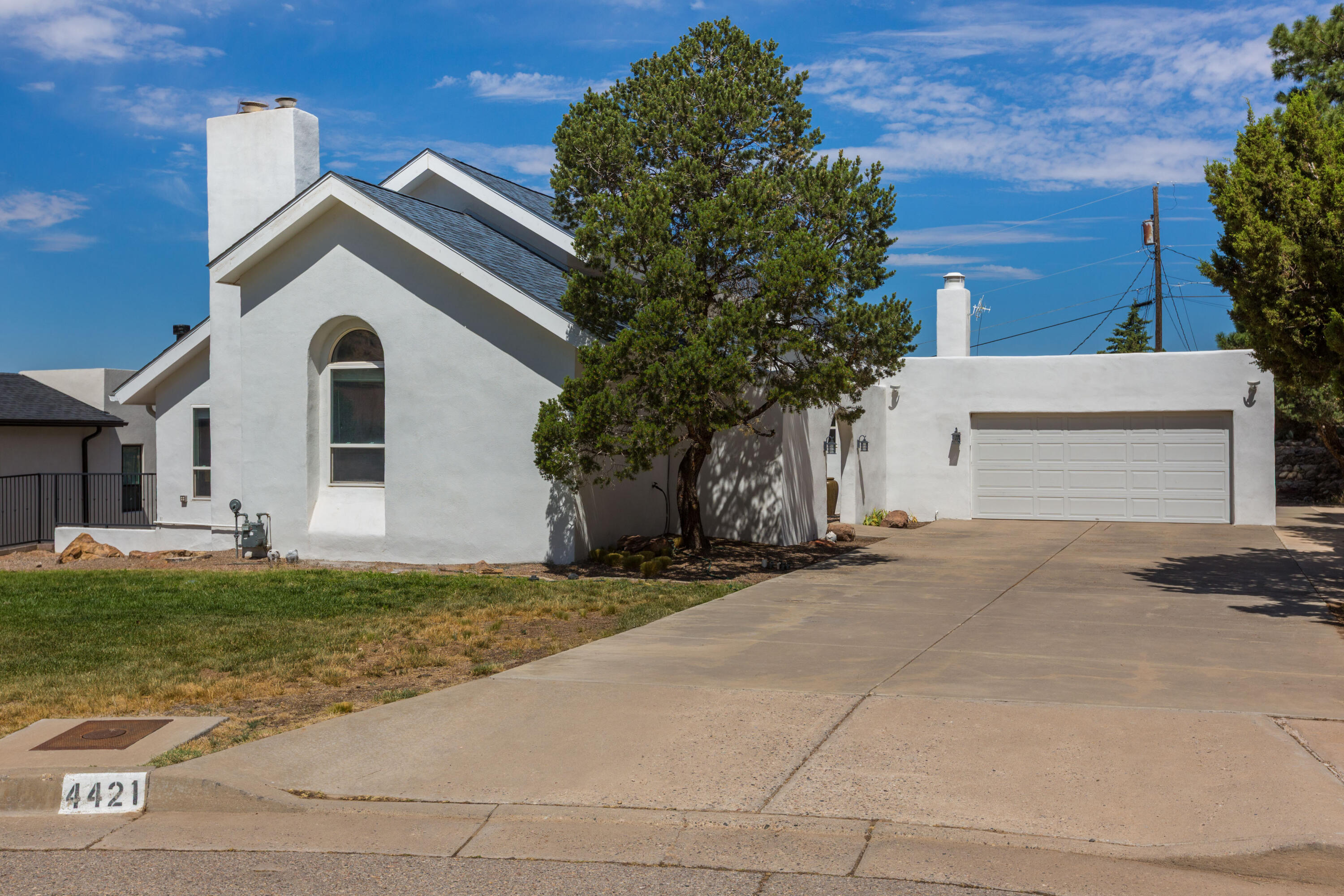
If you’ve seen headlines about the explosion of million-dollar listings in the US, you might be wondering: does this trend hold true in Albuquerque, NM? For buyers, sellers, or anyone watching the local real estate scene, understanding how Albuquerque’s luxury market stacks up is crucial.

Spoiler: The reality here is dramatically different. While over 11% of properties nationally are listed at $1 million or more, Albuquerque’s share is a fraction of that. Let’s look at the numbers and what they mean for you.

Nationally, more than 200,000 properties are listed for sale at $1 million or higher, making up about 11% of all active listings. In Albuquerque, however, only about 2% of all homes sold each year cross the $1 million mark. That’s roughly 100 to 150 homes out of thousands sold annually.

This represents a 5.5 times smaller share than the national average. Here, million-dollar homes are truly rare and represent the uppermost tier of our market. If you’re in this segment, you’re dealing with an exclusive club.


Albuquerque’s Luxury Market by the Numbers

• Only 2% of homes sold in Albuquerque are priced at $1 million or higher

• Just 1% (about 100 homes per year) hit the ultra-luxury $1.3 million-plus mark

• 5% of sales close between $800,000 and $1 million (about 250-300 homes per year)

• 10% of local sales are $650,000 and up (roughly 500-600 homes per year)

• Median listing price in Albuquerque: $380,000 to $385,000, so $1 million homes are more than 2.6 times the median price


Where Albuquerque’s Million-Dollar Homes Are Found

• Sandia Heights: Estates with East Mountain views and privacy

• Tanoan: Gated golf-course communities

• North Albuquerque Acres: Properties with acreage and custom builds

• Los Ranchos de Albuquerque: North Valley compounds with land

• High Desert: Dramatic view homes and exclusivity

• Placitas: East Mountain homes with stunning scenery


What Makes Albuquerque’s Luxury Market Different?

• Affordability: The jump from median home to luxury is much steeper than in bigger coastal cities

• Ultra-luxury is rare: About 100 homes a year close above $1 million in the entire metro area

• Tight buyer pool: Only a small group of high-net-worth buyers are shopping in this range

• Location is everything: The best neighborhoods determine well over half the value in this segment

• Marketing matters: Million-dollar homes require targeted, high-end marketing to reach the right buyers


What Does $1 Million Buy in Albuquerque?

• Gated estates with spacious grounds

• Golf-course homes with premium amenities

• Properties boasting 360-degree views

• Compounds with guest houses and custom features

• High-end finishes and unique architecture

• In short: $1 million goes much further in Albuquerque than in most national luxury markets


Frequently Asked Questions


How many million-dollar homes are typically sold each year in Albuquerque?

Around 100 to 150 homes, which is about 2% of all transactions.


Where are most $1 million-plus homes located in Albuquerque?

Key neighborhoods include Sandia Heights, Tanoan, North Albuquerque Acres, Los Ranchos de Albuquerque, High Desert, and Placitas.


How does Albuquerque’s luxury market compare to the national trend?

Nationally, 11% of listings are $1 million or more. In Albuquerque, it’s just 2% of sales, making the market much more exclusive.


What kind of property can I expect for $1 million in Albuquerque?

Estates with acreage, custom architecture, mountain or golf course views, and privacy. You’ll get significantly more space and amenities than in coastal hot spots.


Albuquerque’s million-dollar home market stands apart from the national boom. With only 2% of sales in this price bracket, luxury listings are rare and highly exclusive here. Whether buying or selling, understanding this unique market can help you make smart decisions and set realistic expectations.

If you’re considering a move in Albuquerque’s luxury segment, contact the Sandi Pressley Team for expert guidance. We know what it takes to buy or sell in this exclusive market and can help you achieve your real estate goals.


HOT PROPERTY OF THE WEEK


5 SONATA COURT, CEDAR CREST, NM 

Nestled on a quiet cul-de-sac in the peaceful mountain community of Cedar Crest, this home offers the perfect blend of privacy, natural beauty, and convenient access to Albuquerque. Situated on approximately one acre, the property features a serene wooded setting with mature trees that perfectly capture the character of the East Mountains. The residence showcases warm architectural details and expansive living spaces designed for both relaxation and entertaining. Large windows invite abundant natural light while framing picturesque forest views, creating a seamless connection between the interior and the surrounding landscape. Highlights include a thoughtfully designed chef's kitchen, generous bedrooms, and inviting outdoor spaces that provide a balance of sophistication and serenity.


GET YOUR MORNING INSPIRATION WITH THE SANDI PRESSLEY TEAM
If you’re selling a home in Albuquerque, NM, and your buyer suddenly switches from a conventional loan to a VA loan after the contract is signed, you’re not alone. This scenario is increasingly common, especially near Kirtland Air Force Base, where military buyers make up a large part of the market. But what does this mean for you as a seller? Let’s break down the real risks, delays, and steps you should take to protect your sale.

In this post, we’ll explain what to expect if your buyer changes to a VA loan after contract, based on the facts and trends in Albuquerque’s 2026 housing market. Whether you’re a first-time seller or a seasoned homeowner, you’ll get the local insights you need.

The Short Answer

If a buyer switches from a conventional to a VA loan after signing the contract in Albuquerque, expect some changes that could impact your sale. The most immediate effect is time: VA loans require a new VA-specific appraisal, which often takes 10-14 additional days and can push your closing back by as much as 30 days in Albuquerque’s current market.

There’s also a higher risk of renegotiation. VA appraisals tend to be more conservative - local lenders report VA appraisals in Southeast Albuquerque often come in 5-10% lower than conventional, mainly because VA has stricter Minimum Property Requirements (MPRs) for things like roof age, safety, and durability. If the appraisal is low or repairs are needed, you may need to negotiate price reductions, offer credits, or split repair costs. Still, with 18% of area sales using VA financing, many sellers are adapting by adding appraisal gap clauses and prepping for VA standards upfront.


How a Post-Contract Switch to VA Loan Changes the Process in Albuquerque

• VA loans make up about 18% of all purchases in Bernalillo County, largely because of military and veteran buyers from Kirtland AFB.

• When a buyer switches to a VA loan after you’re under contract, the lender must order a new VA appraisal, even if a conventional appraisal was already done.

• VA appraisals in Albuquerque typically take 10 days to schedule and complete, but average closing for VA is 45 days compared to 30 days for conventional loans.

• The VA appraisal has stricter guidelines, checking for safety, durability, and property condition (MPRs). Older Albuquerque homes, especially those near UNM or Southeast neighborhoods, may fail for issues like outdated electrical panels or roof age.

• If your home doesn’t meet VA MPRs, you may be required to make repairs before closing, or the buyer could walk away.

• Sellers in Albuquerque are commonly asked to pay for the VA-required termite inspection, which costs around $100-150 locally.


Financial Impacts and Risks for Albuquerque Sellers

• VA appraisals in military-heavy areas can appraise homes 5-10% lower than conventional appraisals, especially near Kirtland AFB.

• If the VA appraisal is below contract price, 8-12% of Albuquerque deals end up in price renegotiation or require seller credits (local agent survey).

• Buyers often ask sellers to cover the appraisal gap or split the difference. Some contracts now include an “appraisal gap” addendum, where buyers agree to pay up to 3% above the appraised value.

• Expect requests for repairs that meet VA MPRs. Common issues in older Albuquerque homes include peeling paint, missing handrails, or HVAC problems.

• Delays from a VA switch can push closing out by 10-30 days, risking your timeline if you’re buying another home or need proceeds quickly.


Legal and Practical Steps for Albuquerque Home Sellers

• NM Real Estate Commission rules require the buyer to notify you in writing of the loan change within 3 days. Make sure you get this notification and review any new addendums.

• Double-check your contract for financing and appraisal contingencies. Standard GAAR forms include these, but confirm with your agent.

• Request the buyer’s VA Certificate of Eligibility (COE) and updated pre-approval right away.

• Consider negotiating a VA Loan Rider or “appraisal gap” clause to reduce your risk if the appraisal comes in low.

• Proactively fix any known issues that might trigger VA repair requirements, especially if your home is older than 40 years.

• If delays exceed 15 days, NM law allows you to activate a termination clause with 3-day notice after contingency expiration.


Local Albuquerque Market Trends Affecting VA Loan Switches

• Albuquerque’s median home price is $340,000 (Q1 2026), with VA loans offering 0% down and rates averaging 6.1-6.5% (lower than conventional).

• Median days on market is 35-45, so unexpected delays can impact your ability to relist quickly if the deal falls through.

• The market is still seller-friendly but cooling, so buyers have more leverage to request repairs or concessions.

• VA loan usage jumped 12% near Kirtland AFB after base expansions, and more sellers now accept VA offers upfront, but post-contract switches still cause the most deal delays.

• New VA-approved condo projects near Kirtland are easing some appraisal challenges, but single-family homes still face strict MPR scrutiny.


Frequently Asked Questions


Can the buyer legally switch to a VA loan after signing the contract in Albuquerque?

Yes, but per NM Real Estate Commission rules, the buyer must notify you in writing within 3 days, and any change in financing requires a written contract addendum.


How likely is it that my home will appraise lower with a VA loan?

In Southeast Albuquerque near Kirtland AFB, VA appraisals come in 5-10% lower than conventional appraisals, especially if there are few recent comparable sales.


Who pays for the VA-required termite inspection?

In Albuquerque, the seller is usually responsible for the VA termite inspection, which costs about $100-150.


What happens if the VA appraisal comes in under contract price?

You may need to renegotiate the price, offer credits, or agree to split the difference. Some deals include an “appraisal gap” clause where the buyer covers a portion of the gap.


How long will a VA loan switch delay my closing?

On average, switching to a VA loan adds 10-14 days for the new appraisal and underwriting, making total closing time about 45 days compared to 30 for conventional loans.


If your buyer switches to a VA loan after contract in Albuquerque, expect extra paperwork, a possible delay of 10-30 days, and a higher risk of price renegotiation due to stricter appraisals. However, with nearly one in five local buyers using VA financing - especially near Kirtland AFB - these situations are common and manageable. Work closely with your real estate agent, request an appraisal gap addendum, and fix any VA red flags early. The Sandi Pressley Team is here to help you navigate every twist in Albuquerque’s fast-changing market - reach out today for expert guidance!


HOT PROPERTY OF THE WEEK


746 CHAMISAL ROAD NW, ALBUQUERQUE, NM 

Gorgeous Tuscan-style home in the sought after North Valley neighborhood of Los Ranchos! Elegant, classic exterior lines complement warm, rustic earth-tone interiors with graceful arched windows & doors throughout. Designed for comfort & hospitality, this home offers an inviting, effortless lifestyle. The chef's kitchen features custom cabinetry, granite countertops, stainless steel appliances, & center island with seating. The private primary suite overlooks the rear garden & opens to an outdoor balcony, offering a spa-like bath with a large walk-through shower, jetted tub, dual vanities, & oversized walk-in closet. Enjoy exceptional outdoor living in the secluded entertaining area complete with a beautiful pool, elevated spa, & tranquil koi pond. Gated & situated on approx 1.13 acres.


GET YOUR MORNING INSPIRATION WITH THE SANDI PRESSLEY TEAM
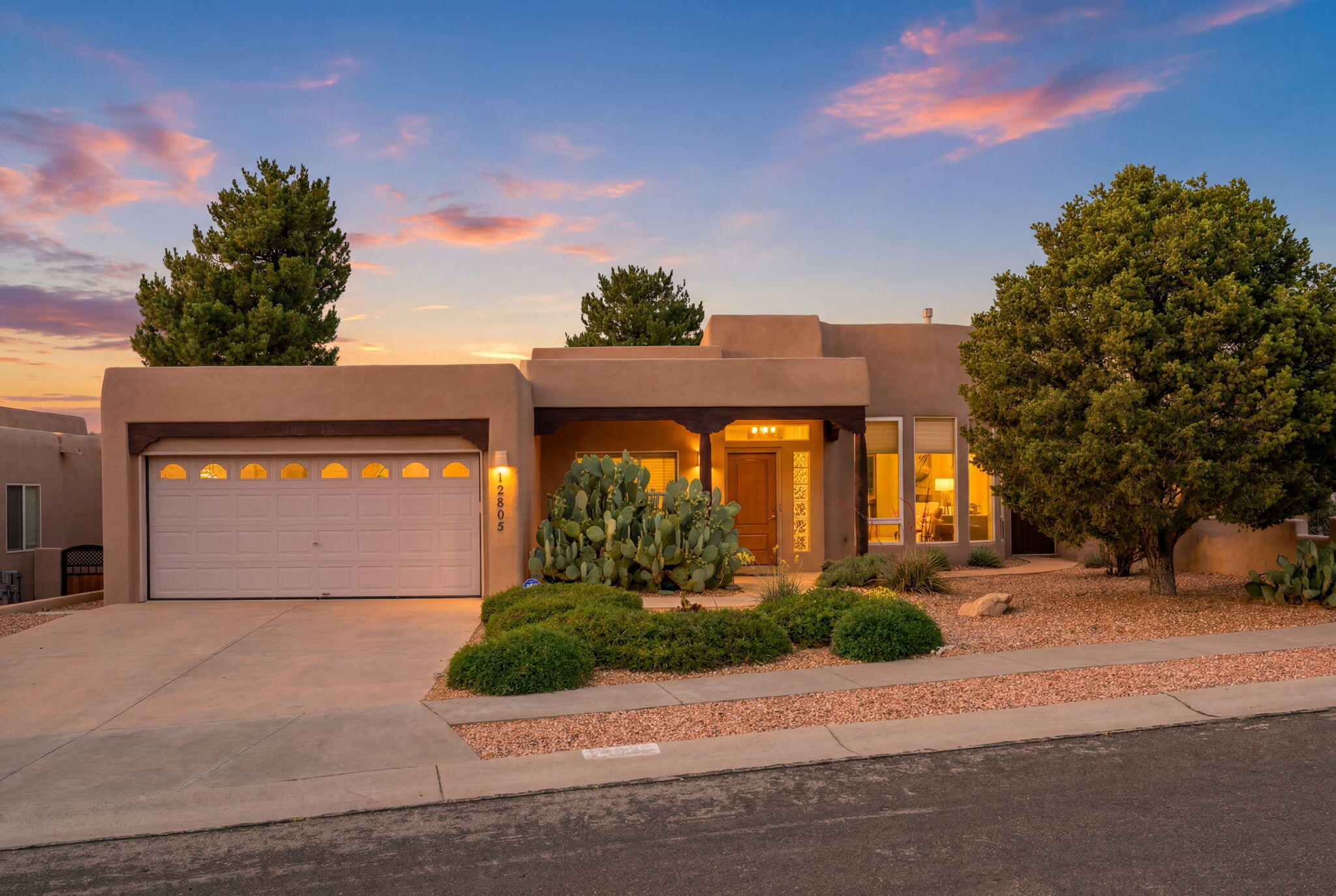
Displaying blog entries 1-10 of 65

Syndication

Categories

Archives

Contact Information

Photo of The Sandi Pressley Team Real Estate
The Sandi Pressley Team
Coldwell Banker Legacy
10400 Academy Rd. NE Suite 100
Albuquerque NM 87111
505-980-2999
505-263-2173 / 505 293-3700
Fax: 505-212-0729

Quick links to this site are also SandiSells.net or SandiSellsHomes.com