
A Weekend at Albuquerque’s Indian Pueblo Cultural Center: Art, Food, and a Deeper Connection to Home
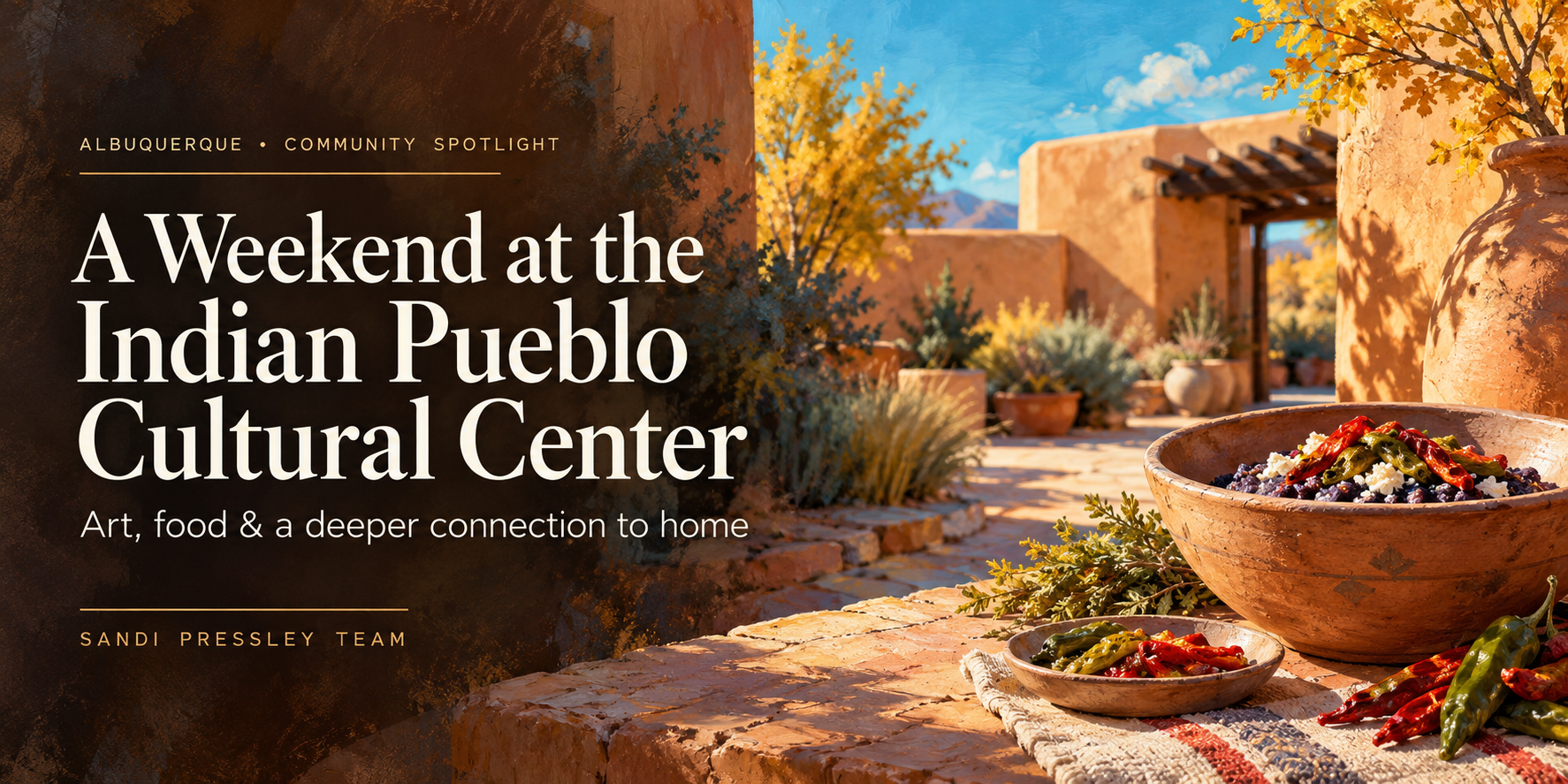
A weekend in Albuquerque does not always need a long drive or a packed itinerary. Sometimes a satisfying outing starts with choosing one place and giving it enough time. The Indian Pueblo Cultural Center offers that kind of day: an opportunity to explore Pueblo history through Pueblo voices, look closely at art, share a meal, and leave with a fuller understanding of the community around it. For residents who have driven past without stopping, it is a good reason to finally make the visit.
Located at 2401 12th Street NW, near Interstate 40, the Indian Pueblo Cultural Center brings museum galleries, cultural programming, Native art, and the Indian Pueblo Kitchen together on one campus. The Center describes itself as the gateway to New Mexico’s 19 Pueblos, and 2026 marks its 50th anniversary. That milestone makes this a particularly meaningful year to explore a place that has welcomed generations of visitors while providing space for Pueblo people to tell their own stories. The experience is valuable for longtime Albuquerque residents as well as people getting acquainted with a new home city.
The most rewarding approach is to arrive with curiosity rather than a checklist. A visitor does not need to be an art collector, a history expert, or an experienced museumgoer to begin. Reading an exhibit carefully, listening to an introduction, or asking a thoughtful question can change the pace of the visit. Instead of trying to absorb every detail at once, a household can choose a few experiences and leave room to follow what interests them. That is often what turns a first visit into a place worth returning to.
The permanent exhibition, We Are of This Place: The Pueblo Story, is a natural starting point. It presents Pueblo history and resilience through Pueblo words and voices, grounding the visit in the people whose stories the Center exists to share. Beginning here provides context for the art, food, and cultural programming encountered elsewhere. It also encourages visitors to recognize Pueblo communities as living communities with continuing traditions, rather than approaching the museum as a collection of stories that ended in the past.
That distinction matters in a city where visual references to Pueblo culture are familiar but understanding can be uneven. Seeing a recognizable architectural form or hearing a place name is different from learning its context. The Center offers a setting in which residents can begin making those connections through the institution’s own interpretation. Visitors can take their time with the material and acknowledge what they do not yet know. An enjoyable community outing can also be an opportunity to become a more attentive neighbor and a more thoughtful host to future guests.
Guided tours can help visitors who prefer some structure. The Center’s current tour information lists public museum and mural tours, with schedules and capacity subject to change. Guided tours are included with a museum pass, and larger groups are directed to request group arrangements. Checking the official tour page before choosing a day helps match the visit to the experience someone wants. A household interested in a docent-led visit may plan differently from someone who prefers to move independently through the galleries and stop wherever a particular work draws attention.
The murals deserve more than a passing glance on the way to another activity. More than 20 murals by Pueblo artists form part of the Center’s collection, with imagery addressing subjects including seasons, animals, agriculture, and dance. Their scale gives visitors a different way to engage with art than viewing a small object in a case. A person can step back to take in a composition, then look more closely at its details. Reading the accompanying interpretation helps keep that looking grounded in the artist and the work.
For a group visiting together, the murals also offer an easy way to slow down without requiring everyone to react in the same way. One person may notice the arrangement of figures, another the relationship between color and movement, and another a detail they initially overlooked. Those observations can start a conversation, while the Center’s interpretation remains the guide to cultural meaning. There is no need to turn the exchange into an impromptu art-history test. Paying attention is a worthwhile experience in itself, especially for visitors accustomed to moving quickly from one attraction to the next.
Weekend cultural dances provide another reason to plan ahead. The Center’s Cultural Dance Program features groups from New Mexico’s 19 Pueblos and neighboring Tribal Nations. It explains that the dances shared at the Center are social dances intended for public audiences, a useful distinction from ceremonies that may have different protocols or be closed to visitors elsewhere. Anyone building a day around the program should consult the current official calendar and seasonal schedule. Arriving early enough to settle in is more comfortable than trying to fit the dance between tightly scheduled errands.
Listening to the introduction is part of the experience. Visitors should follow the host’s guidance about participation, photography, and conduct rather than assuming that every group or occasion follows identical practices. A welcome to join a particular activity is an invitation for that moment, and the appropriate response is to follow the directions being given. This makes the visit more comfortable for newcomers while respecting the people sharing their traditions. The Center provides a place to learn, and attentive participation is a better starting point than arriving with expectations formed elsewhere.
Food can make the day feel complete without requiring a second destination. The Indian Pueblo Kitchen, located inside the Center, offers Indigenous cuisine inspired by Pueblo traditions and recipes. Its own website highlights ingredients such as red and green chile and blue corn, with dishes that give visitors another way to engage with the place. A meal here fits naturally into the outing rather than functioning as a hurried stop afterward. Looking at the current menu before the visit can help a group decide whether breakfast, lunch, or a later meal best suits the day.
The restaurant is also a welcoming option for residents who want to begin with a shorter visit. A meal can provide an introduction to the campus, with a museum visit planned for another day. Visitors do not need a museum ticket simply to dine at the Indian Pueblo Kitchen or shop at the Indian Pueblo Store. Restaurant purchases are separate from museum admission, so a household should budget for the experience it actually wants. Anyone with dietary needs can ask the restaurant directly about current ingredients and preparation rather than assuming a dish will be suitable from its name alone.
Allowing enough time for the meal keeps the day from becoming an exercise in watching the clock. A group hoping to attend a scheduled dance can check the program first and arrange dining around it. Those who prefer a quieter museum visit might choose a different sequence. There is no single correct itinerary, and visitors do not have to combine every part of the campus on one day. A plan that suits the people attending is more enjoyable than an ambitious schedule that leaves everyone rushing through the parts they came to appreciate.
The Daily Artists program adds the possibility of meeting working Native artists in the courtyard. The Center describes opportunities to see demonstrations and purchase work directly, with participating artists and media varying by day. That means a visitor should come open to discovery rather than expecting a particular artist or demonstration without checking. An encounter with the maker can make looking at a piece more personal, especially when there is time for a respectful conversation about materials or process. The artist’s own explanation provides context that a shopper cannot get from appearance alone.
Buying art can also be approached thoughtfully without a large budget or an immediate decision. Someone may be looking for a meaningful gift, while another visitor simply wants to learn more about a medium before purchasing in the future. Asking an artist about a work, listening, and respecting the time required to create it are useful starting points. A purchase made directly from the maker connects the object to a person and a visit. It can become part of a household’s story without needing to match an entire decorating scheme or fill a predetermined space.
The Indian Pueblo Store offers another opportunity to explore Native art and craftsmanship. The Center’s description includes traditional and contemporary jewelry, pottery, rugs, and other work by established and emerging artists. A visitor furnishing a new Albuquerque home may enjoy looking for something that carries a connection to a maker and place. Careful selection is more meaningful than hurriedly buying an object just because it appears Southwestern. Asking about the artist, materials, and care can help a buyer choose something they will appreciate and look after over time.
For families, a manageable visit is often more successful than an attempt to cover everything. Adults can choose a few galleries or works to explore, leave time for questions, and plan a break before children become exhausted. A younger visitor might be invited to notice a color or a repeated shape without being asked to explain cultural meaning. Reading the Center’s interpretation together gives the conversation a reliable foundation. Children do not have to understand every historical detail to begin learning how to look carefully, listen respectfully, and enjoy a cultural institution.
A multigenerational group may benefit from the same measured approach. Some people want to read extensively, while others prefer a guided visit or a longer meal. Agreeing on one or two shared experiences allows individuals to enjoy the day without feeling responsible for keeping everyone at exactly the same pace. Visitors with mobility, sensory, or other access needs should contact the Center about current accommodations before finalizing plans. That conversation is more useful than assuming the campus or a particular program will work the same way for every guest.
Practical preparation is simple but worth doing. The current official hours page lists regular museum hours of 9 a.m. to 5 p.m., Monday through Sunday, with holiday and special closures. It also lists a New Mexico resident admission rate of $10 and free parking. Hours, rates, eligibility, and program availability should be checked again when booking, especially around holidays. Confirming the details directly is a small step that helps a relaxed outing stay relaxed, rather than discovering at the entrance that the day’s arrangements differ from expectations.
The Center’s visitor guidelines are useful reading before arrival. They address gallery bag sizes, food and beverages, protecting exhibits, and photography. Noncommercial photography is permitted under the published policy, subject to restrictions; flash photography is prohibited in museum spaces, and livestreaming is not permitted. Visitors should also follow posted directions and staff instructions for the specific area or activity. Checking the policy beforehand makes it easier to enjoy the experience without repeatedly stopping to wonder what is appropriate or unintentionally interfering with someone else’s visit.
An outing can be memorable even when very few photographs are taken. Spending a few extra minutes with an exhibit or listening fully to an introduction may leave a stronger impression than trying to document every room. A visitor can note the name of an artist or exhibition to explore later, while keeping attention on the experience at hand. For households accustomed to planning activities around a photo opportunity, the Center offers a pleasant reason to change that rhythm. The day can be shared afterward through what was learned as much as through what was photographed.
Repeat visits have particular value at a place with both permanent and changing exhibitions. The museum’s official information describes temporary exhibitions and an Artists Circle Gallery alongside its permanent collection and murals. Residents can check what is on view before returning, rather than assuming a second visit would repeat the first. A person who focused on history initially may return with more interest in art, while someone introduced through a meal may later set aside time for a tour. Familiarity creates room for a deeper visit rather than removing the reason to go.
Membership is another option for residents who expect to return. The Center’s IPCC Insider program includes admission and other benefits that vary with membership arrangements, and the official information should guide any comparison. A household can look at the current options in relation to its own likely visits and interests. The decision need not be made at the beginning of a first outing. Experiencing the museum and programming first can help someone decide whether ongoing participation would be a good fit for the way they spend time in Albuquerque.
Longtime residents may find the Center especially useful when hosting out-of-town guests. A visit offers a substantial introduction to Pueblo history, art, and food without requiring the host to provide all the explanations personally. The institution’s interpretation and programming can guide the experience, leaving the group free to listen and learn together. It also gives guests a view of Albuquerque beyond the familiar sightseeing photographs. A host can share something meaningful about the area while acknowledging that there is always more to understand, even after years of living nearby.
For newcomers, an outing like this can sit comfortably alongside the practical work of settling in. Learning grocery routes, arranging services, and unpacking are necessary, but they do not tell the whole story of a new place. Making time for a cultural institution adds a different kind of familiarity. It gives a household somewhere to return, something to discuss with visitors, and an opportunity to begin understanding local context through a trusted source. A new address starts to feel more connected to the larger community when residents explore beyond the requirements of a moving checklist.
A visit can also help a buyer recognize an interest that deserves a place in the home search. Someone who expects to attend cultural programs regularly may want to test the drive from a prospective home, just as another buyer would check the route to a workplace or a favorite outdoor activity. Those observations become useful alongside a realistic budget, a careful look at the property, and a discussion of everyday needs. Exploring a place for pleasure can give a household more concrete language for describing the life it hopes to build after the move.
Albuquerque offers different living arrangements across its neighborhoods and surrounding communities, so those practical checks are useful. A listing can describe square footage and finishes, but it cannot decide how much driving a household finds comfortable or which outings will become part of a normal month. Exploring the city while shopping for a home gives buyers better questions to ask. A visit to the Cultural Center can be one enjoyable part of that process, with the home decision still grounded in the property, budget, and routines that matter to the individual household.
Residents can also carry the visit forward without turning it into a large project. Looking up an artist through an official source, returning for a different tour, or checking the Center’s calendar before the next free weekend are easy next steps. Those interested in visiting a Pueblo should use the Center’s visiting guidance and contact the Pueblo directly about access and protocols. A public program at the Cultural Center does not establish permission elsewhere. Following each community’s own directions allows curiosity to develop into informed, respectful participation over time.
The Center’s anniversary year is a welcome reminder that community institutions are worth revisiting, even when they have been part of the local landscape for decades. A place can be familiar by name and still hold an experience a resident has never made time for. Choosing a weekend, checking the schedule, and arriving ready to learn can be enough to begin. The resulting day offers more than a way to fill an afternoon: it creates a fuller connection to the people, creativity, and continuing stories that help define this part of New Mexico.
The Sandi Pressley Team helps buyers and sellers connect their real estate plans with the Albuquerque-area life they want to enjoy. For a personalized conversation about homes, neighborhoods, and the practical details of a move, call 505-263-2173 or visit AlbuquerqueHomeSolutions.com. Newcomers can discuss their priorities for exploring the area, and longtime residents can consider what they want from their next home. Local knowledge becomes most useful when it is connected to the routines, interests, and goals of the people making the move.
HOT PROPERTY OF THE WEEK

7109 LAS NUTRIAS ROAD NW, ALBUQUERQUE, NM
Welcome to this beautifully remodeled home featuring 5 bedrooms plus a dedicated office! The chef-inspired kitchen boasts ample cabinetry, generous counter space, and a large island, perfect for meal preparation and entertaining. The open-concept floor plan seamlessly connects the living spaces, creating a functional and inviting atmosphere for everyday living and hosting guests. Enjoy even more versatile living space with two sunrooms, each equipped with its own mini-split system for year-round comfort. Retreat to the spa-like primary suite, complete with a luxurious bathroom designed for relaxation. The home also features paid-off solar, offering the potential for energy savings. With its modern updates, flexible living spaces, and thoughtful features, this exceptional home offers the perfect blend of comfort, style, and functionality!