First-time home buyers in Albuquerque are running into an interesting dilemma. You start looking at single-family homes within your budget, then a condo or townhome pops up with a lower price, a great location and maybe even more updates than the houses you’ve been touring. Suddenly, that attached home starts looking pretty appealing.
And sometimes it should.
A condo or townhome can be a fantastic first home, especially for a buyer who wants to start building equity without taking on the price or maintenance of a detached house. But the lower purchase price doesn't always tell the whole story, and this is one area where doing your homework before falling in love with the kitchen can save you from some unpleasant surprises later.
So, when you're buying your first home in Albuquerque, is the traditional single-family house still the smarter choice, or could a condo or townhome actually make more sense?
The answer has a lot less to do with which type of property is “better” and much more to do with what you're actually buying.
Why Albuquerque First-Time Buyers Are Looking at Condos and Townhomes
Affordability is usually what starts the conversation. A buyer may find that the detached homes they like are stretching the upper end of their budget, while a condo or townhome at a lower purchase price feels much more comfortable.
That difference can open doors.
Instead of buying a single-family home that needs immediate work, you might find an attached property with an updated kitchen, newer finishes or amenities that would be difficult to find in a detached home at the same price. You may also be able to buy in an Albuquerque location that would otherwise be outside your budget.
For someone living alone, a busy professional, a frequent traveler or a buyer who simply doesn't want to spend Saturday morning maintaining a yard, that can be a pretty attractive combination.
There is also something to be said for buying the amount of house you actually need. A first home doesn't have to be a detached three-bedroom house with a big backyard simply because that's what generations of buyers have been told homeownership is supposed to look like.
The right first home is the one that works for your finances and your life.
A Condo, Townhome and House Aren't Just Different Shapes of the Same Thing
This is where buyers need to slow down because the terminology can get confusing.
A single-family detached home is generally straightforward. You typically own the house and the land beneath and around it, subject to any applicable HOA rules, easements or community restrictions.
Condominium ownership works differently. You generally own your individual unit along with an interest in the property's common elements. Depending on the community, exterior maintenance, roofs, landscaping, streets, recreational amenities and other components may be managed collectively through the condominium association.
Townhomes are where things get particularly interesting because “townhome” often describes what a property looks like rather than necessarily telling you how it's legally owned.
A property can look exactly like a townhome, with multiple floors, an attached garage and a private entrance, while legally being structured as a condominium. Another townhome may be fee-simple ownership where you own the structure and land.
That distinction isn't boring paperwork. It can affect financing, insurance, maintenance responsibilities and what you can do with the property later.
Before making an offer, you want to know exactly what you're buying.
That HOA Fee Isn't Just Another Bill
HOA and condominium association fees get a bad reputation, particularly among first-time buyers. It's easy to look at a $300 or $400 monthly fee and think, “Why would I pay that when I could put the money toward a house instead?”
That's not always an apples-to-apples comparison.
You need to know what the fee actually covers.
Depending on the community, association dues may help pay for exterior maintenance, landscaping, common areas, certain utilities, insurance on portions of the property, recreational amenities or other shared expenses. With a detached home, some of those costs don't disappear; you simply pay for them yourself when they come up.
On the other hand, an HOA fee that looks reasonable today isn't guaranteed to remain at that amount forever.
That's why we want to see more than the current monthly dues. Buyers should review the association's financial condition, reserves, insurance, recent meeting information, pending or recent special assessments and any major projects that could be coming.
A beautiful condo with affordable monthly dues isn't nearly as attractive if the association has inadequate reserves and owners are suddenly facing a substantial special assessment.
The Question Isn't Just “How Much Is the HOA?”
A much better question is: How healthy is the HOA?
This is one of the most important lessons a first-time condo or townhome buyer can learn.
Think of an association's reserves somewhat like your own emergency savings account. Buildings and shared infrastructure eventually need work. Roofs wear out, stucco needs attention, pavement deteriorates, landscaping systems need repairs and insurance costs can change.
A well-run association anticipates major expenses and plans for them.
When reserves aren't sufficient, owners may be asked to make up the difference through increased dues or special assessments. That's why two Albuquerque condos with identical $300 monthly HOA fees could represent very different financial situations.
We want to look behind that monthly number before deciding whether a property is truly affordable.
Then There's the Land-Lease Question
This deserves special attention in Albuquerque because buyers occasionally encounter condos and townhomes where the land beneath the property is leased rather than owned.
A lower purchase price can make these properties look incredibly attractive online. You may see something updated and spacious at a price that seems dramatically better than the single-family homes you've been touring.
Then you discover there's a land-lease payment.
That doesn't automatically mean the property is a bad purchase, but it changes the equation considerably.
You'll want to understand the amount of the lease payment, how and when it can increase, how much time remains on the lease, what happens when the lease expires and whether the arrangement affects your financing or future resale.
This is exactly the type of detail that can turn an apparently affordable property into something very different once you calculate the true monthly cost.
Financing a Condo Can Be Different Too
First-time buyers are sometimes surprised to learn that getting themselves approved for a mortgage may only be part of the financing equation when purchasing a condominium.
The property and condominium project can matter too.
Depending on the loan program and lender requirements, factors involving the association, insurance coverage, owner occupancy, litigation, reserves and other aspects of the condominium project can affect financing.
That's one reason we want the lender involved early when a buyer becomes serious about a condo.
Imagine finding a place you love, negotiating an accepted offer, paying for an inspection and emotionally planning where the furniture will go, only to discover later that financing the property is more complicated than expected.
We'd much rather start asking those questions before you've gotten that far.
Compare the Monthly Cost, Not Just the Purchase Price
This is where buyers can make a much smarter comparison.
Suppose you're choosing between a $265,000 condo and a $325,000 detached Albuquerque home. At first glance, the condo looks like the obvious bargain.
Now add the condo association dues. Add any land-lease payment if applicable. Compare homeowners or condo insurance. Look at utilities, expected maintenance and what the association actually covers.
Then do the same thing with the house.
The single-family home doesn't have a $350 monthly condo fee, but perhaps you're responsible for the roof, stucco, landscaping, exterior maintenance and everything else from the property line inward.
Neither one is automatically cheaper.
We're interested in what each home will realistically cost you to own, not which one has the prettier number on the listing.
Maintenance May Be the Reason You Choose the Condo
There's a financial side to this decision, but there's also a lifestyle side that shouldn't be dismissed.
Not everybody wants a yard.
Not everybody wants to worry about exterior painting, landscaping or figuring out why something outside the house suddenly started leaking. Some buyers would gladly trade a certain amount of control for less responsibility.
For a first-time homeowner who has spent years renting, a condo or townhome can also provide a gentler introduction to ownership because some exterior responsibilities may be handled by the association.
Other buyers want exactly the opposite.
They want their own yard, more privacy and the freedom to make changes without checking a long list of association rules. They may enjoy working on the house or simply want more control over how their property is maintained.
Neither buyer is doing homeownership wrong.
They're just buying different lifestyles.
Don't Forget About Your Future Plans
Your first home doesn't necessarily need to be your forever home, but it's smart to think a few years ahead.
Would the condo still work if you begin working from home? What happens if another person moves in? Is there enough storage? Is parking going to drive you crazy after six months? Are pets allowed, and are there restrictions that matter to you?
You should also understand the association's rules regarding renting the property.
Some first-time buyers imagine keeping their condo as a rental when they eventually purchase another home. That may be possible, but don't assume it is. Associations can have rental restrictions, minimum lease requirements or other rules that change that plan.
Read the documents now rather than discovering the restriction three years from now.
What About Resale Value?
Buyers hear a lot of sweeping statements about condos having “bad resale value” or single-family homes always being the better investment.
Real estate isn't quite that simple.
Location matters. Condition matters. Supply and demand matter. Monthly association costs matter, and the financial health of the association can matter tremendously.
A well-located condo that is affordable, properly maintained and financeable can appeal to future buyers. A detached house that needs extensive repairs or is dramatically overpriced doesn't magically become a great investment simply because it doesn't share a wall.
Instead of assuming one property type will appreciate better than another, look at how similar properties in that particular Albuquerque community and price range have historically sold.
That's much more useful than a blanket rule.
When a Condo or Townhome Can Make a Lot of Sense
An attached home may be worth serious consideration when it gets you into homeownership at a comfortable payment, gives you the location you want and provides a level of maintenance that fits your lifestyle.
It can also make sense when the association is financially healthy, the fees are reasonable for what's included, there aren't concerning assessments looming and the property works with your financing.
The important part is that you're choosing it because the entire package makes sense, not simply because the list price is lower.
When the Single-Family House May Be Worth Stretching For
A detached home may make more sense when privacy, outdoor space and control over the property are priorities. It can also be appealing if you plan to stay for a longer period and want room for your lifestyle to change.
The key word, though, is comfortably.
Stretching slightly because a house provides meaningful long-term benefits is one thing. Taking on a payment that leaves virtually no room for repairs, savings or normal life expenses is another.
Being house-poor isn't a first-time home buyer milestone anyone needs to achieve.
So, What's the Smarter First Buy in Albuquerque?
There isn't one answer for every first-time buyer, and that's actually good news.
A condo could be the smartest first purchase you make. A townhome could give you exactly the balance of space, maintenance and affordability you've been looking for. A detached house might be worth the additional expense because it gives you the freedom and room you know you'll want.
The mistake isn't choosing a condo instead of a house.
The mistake is choosing based solely on the list price without understanding the association, financing, insurance, ownership structure, monthly costs and future restrictions attached to that property.
Buying your first home should be exciting, but there's nothing wrong with asking a lot of questions along the way. In fact, that's exactly what we want you to do.
Let's Compare the Real Numbers Before You Decide
When you're torn between an Albuquerque condo, townhome and single-family home, don't try to make the decision from three listing pages on your phone.
Let's put the properties side by side.
We can look at purchase price, HOA or condominium dues, land-lease costs when applicable, what's included in those fees, recent comparable sales and the documents that could affect your ownership. Your lender can help determine how each property works with your particular financing and what the true monthly payment could look like.
Sometimes the condo that seemed like the bargain isn't such a bargain after all.
Other times, it turns out to be exactly the opportunity you were hoping to find.
That's why the homework matters.
Buying Your First Home in Albuquerque?
Sandi Pressley and her award-winning team have helped Albuquerque-area buyers navigate the details that don't always show up in the listing photos. Whether you're considering a condo, townhome or single-family house, we'll help you understand what you're buying and ask the important questions before you make your decision.
Your first home doesn't need to look like anyone else's idea of the perfect first home. It needs to make sense for your budget, your lifestyle and where you're headed next.
Sandi Pressley and Her Award-Winning Team
Albuquerque, New Mexico
Helping buyers and sellers throughout Albuquerque and the surrounding communities
HOT PROPERTY OF THE WEEK
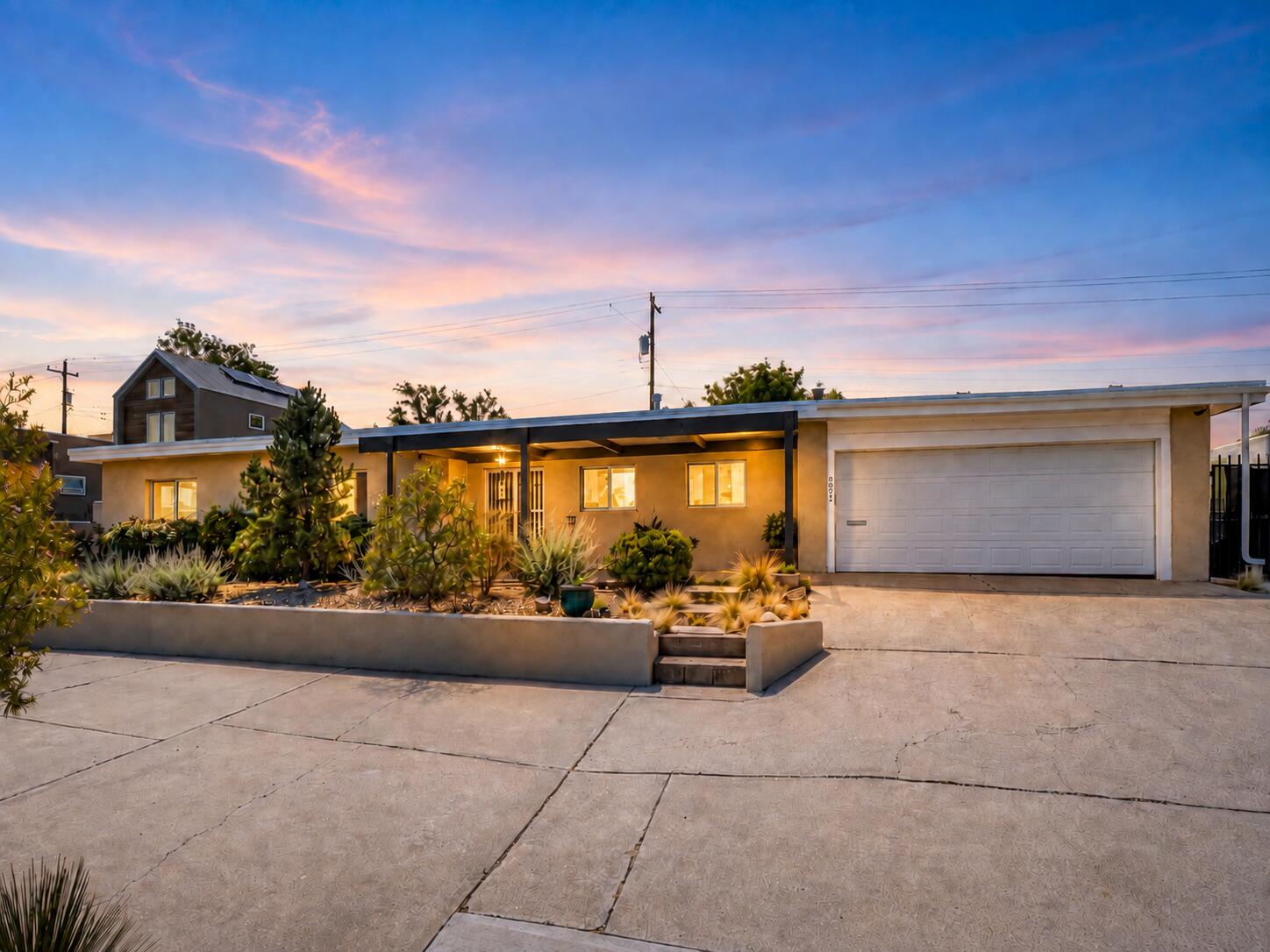
3032 SAN JOAQUIN AVENUE SE, ALBUQUERQUE, NM
Custom-built mid-century style home with paid-off solar, backing directly to Puerto del Sol Golf Course! This unique property features a 1,432 sq. ft. heated and cooled walkout basement that is not included in the listed square footage, offering tremendous potential for additional living space, a home office, gym, workshop, studio, recreation room, or future expansion. Basement construction features steel columns and beams w/concrete footings and masonry walls, supporting the home's primary floor. Situated on a double lot, the property also features low-maintenance xeriscaping, mature fruit trees, a garden area, backyard access with RV hookup.Upstairs, the main living areas are equally impressive, featuring hardwood plank flooring throughout, spacious bedrooms, and an extra-large living room with plenty of room for family time, movie nights, entertaining, or simply relaxing together. Major updates include a newer furnace and refrigerated air system installed in 2021, water heater replaced in 2022, and sewer line replaced in 2020. The remodeled kitchen features newer quartz countertops and updated cabinetry. Conveniently located near UNM, the VA Hospital, Sandia National Laboratories, shopping, dining, and more.
GET YOUR MORNING INSPIRATION WITH THE SANDI PRESSLEY TEAM