Will Buyers Ask Me to Pay Closing Costs or Offer Concessions?
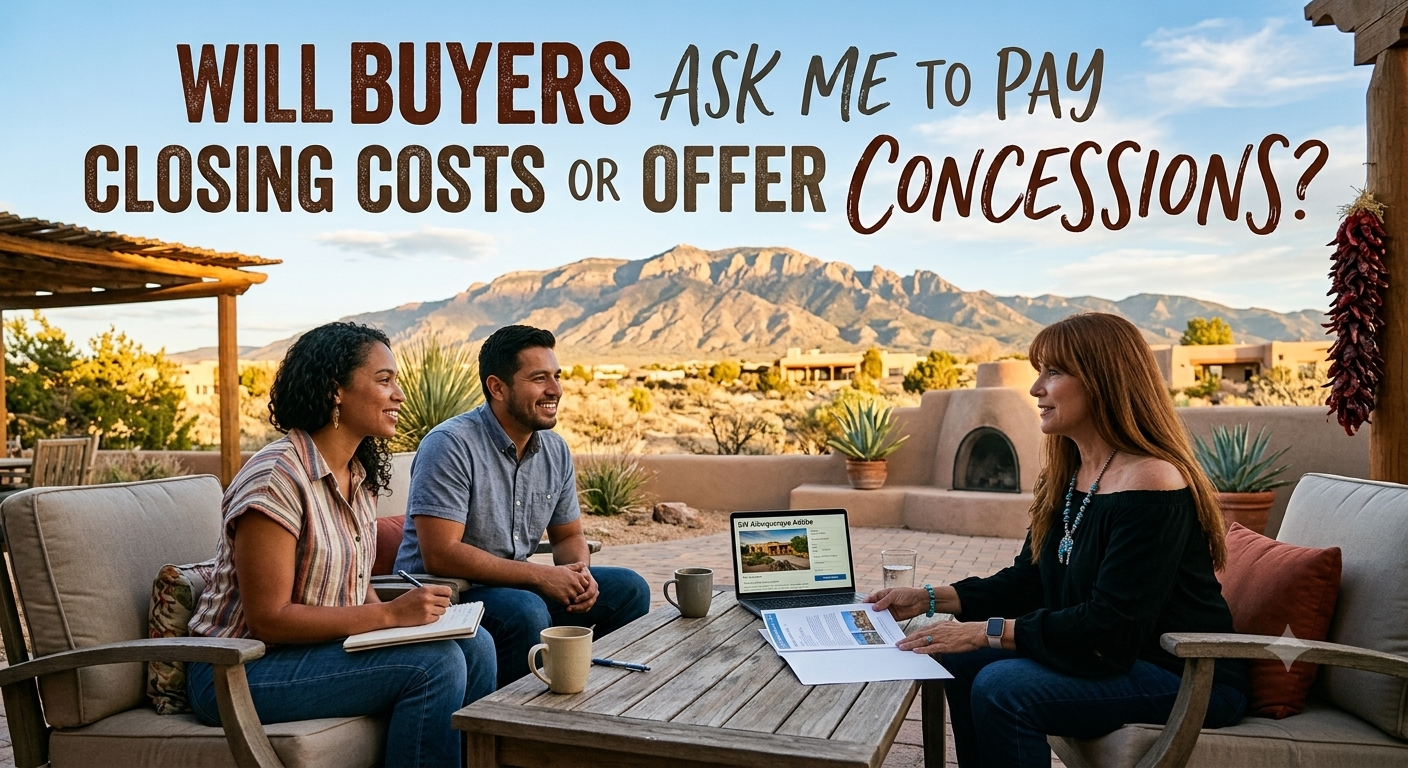
What Albuquerque Sellers Need to Know About Today's Buyer Expectations — and How to Handle Them Strategically
If you're preparing to sell your home in Albuquerque and you've been hearing things like "buyers want help with closing costs" or "you might need to offer a rate buydown" — you're not imagining it. These conversations are happening all over the metro area right now, from the North Valley to Rio Rancho to the East Mountains. And if it feels unfamiliar or a little unsettling, you're in good company.
The truth is, the market has shifted enough that even beautifully updated, well-priced homes are fielding buyer requests for concessions at the negotiating table. It doesn't mean your home isn't worth full price. It doesn't mean you're in a bad position. It means the landscape has changed — and understanding what buyers are asking for, why they're asking, and how you can respond smartly is exactly what you need going into this process.
This guide is going to walk you through all of it. Plain language, real numbers, real strategies — so you can make confident decisions instead of feeling caught off guard.
First, Let's Talk About Why This Is Happening Now
Mortgage rates. That's really the root of most of this. Buyers who would have happily qualified for a home at 3% in 2021 are now staring down rates in the mid-to-upper 6% range or higher. That difference translates to hundreds of dollars more per month on the same loan amount — and it's created a very different kind of buyer psychology.
Buyers are still out there. Albuquerque's job market, military presence, and University of New Mexico draw means there's consistent demand. But today's buyers are doing more math before they make an offer. They're looking at their monthly payment, their cash on hand for closing, and they're asking themselves: is there any way to make this work a little better?
That's where the requests for concessions come in. Buyers who are financially solid and serious about buying your home may still ask for help — not because they can't afford the house, but because they're trying to optimize every dollar in a higher-rate environment. It's strategic on their end. And you can be strategic too.
What Exactly Are Closing Costs — and What Are Buyers Actually Asking For?
Let's define the terms so we're all on the same page.
Closing Costs are the fees and expenses associated with finalizing a real estate transaction. On the buyer's side, these typically include lender origination fees, title insurance, escrow/closing fees, appraisal fees, prepaid homeowners insurance, and prepaid interest (prorated from closing to the end of that first month). In New Mexico, buyers can expect their closing costs to run roughly 2% to 5% of the purchase price.
On a $375,000 home — which is close to the Albuquerque median as of mid-2026 — that's anywhere from $7,500 to nearly $19,000 that a buyer has to show up with at the closing table, on top of their down payment. That's real money. And when buyers are also putting 5%, 10%, or 20% down, the total cash requirement adds up fast.
When a buyer asks you to "pay closing costs," here's what they're generally requesting:
- A seller credit applied at closing that covers some or all of their closing cost line items
- This credit comes off your net proceeds — it doesn't change the purchase price on paper, but it reduces what you walk away with
- Amounts typically range from $3,000 to $10,000 depending on the price point, but requests can vary
The Rate Buydown: Something New That Resale Sellers Are Now Being Asked to Offer
This one surprises a lot of sellers — because for a long time, permanent rate buydowns and temporary rate buydowns were primarily something you'd see from new construction builders. If you were buying a brand-new KB Home or Pulte home in Albuquerque's master-planned communities, the builder's in-house lender might offer to buy your rate down as part of the deal. It was a competitive sweetener unique to new builds.
That's no longer the case. Today, buyers purchasing resale homes — including yours — are asking sellers to fund rate buydowns at the negotiating table. And if you don't understand what they're asking, it can feel very strange.
Permanent Buydowns: Buying the Rate Down for the Life of the Loan
In this scenario, the buyer asks you to contribute funds — called "points" — that permanently reduce their interest rate. One point equals 1% of the loan amount. On a $350,000 loan, one point is $3,500. Paying one point typically reduces the rate by about 0.25%, though this varies by lender.
If a buyer is facing a 7.0% rate and you contribute two points ($7,000 on that loan), they might get down to 6.5%. Their monthly payment on principal and interest drops by roughly $120–$140/month. Over a 30-year loan, that's significant — which is exactly why buyers are asking for it.
Temporary Buydowns: The 2-1 Buydown and How It Works
The 2-1 buydown is the most commonly requested temporary option right now, and it works like this: the seller funds an account at closing that artificially subsidizes the buyer's interest rate for the first two years. In year one, the buyer pays 2% below their note rate. In year two, 1% below. Starting in year three, they pay the full rate.
So if the actual loan rate is 6.75%, the buyer pays 4.75% in year one and 5.75% in year two. The cost to fund this typically runs around 2% of the loan amount. On a $350,000 loan, that's roughly $7,000 coming from your proceeds at closing.
Why are buyers requesting this? Because many of them genuinely believe rates will come down over the next two to three years — and if they refinance before year three, they never even hit that full rate. In the meantime, the lower payment in the first couple of years gives them breathing room to settle in, furnish the home, and stabilize their budget.
Is This Normal? And Will My Home Still Sell Without Offering Concessions?
Yes and yes — with some important nuance.
Concession requests are increasingly common across the Albuquerque metro area, but they're not universal. A lot depends on your specific price point, neighborhood, property condition, and how your home is priced relative to comparable sales. A home that's priced aggressively below market, in move-in condition, in a sought-after school district like Eldorado High or La Cueva territory? It may receive offers with few or no concessions.
But a home that needs work, is priced at the top of its range, or has been sitting on the market for more than a few weeks? Buyers feel empowered to ask — and statistically, they're doing so at higher rates than we saw in 2021 and 2022.
According to national data compiled by real estate research firms through early 2026, more than 40% of closed transactions included some form of seller concession — a significant jump from the pandemic-era lows when sellers routinely received multiple offers above asking price with zero concessions. The Albuquerque market tracks closely with these national patterns, though our inventory situation means it's still more balanced here than in some coastal markets.
The short answer: concession requests are normal and you should expect them. But agreeing to every request isn't mandatory — especially if you're well-positioned in the market.
How Sellers Can Respond Strategically (Instead of Reactively)
Here's where strategy really matters — and where working with an experienced local team makes all the difference.
1. Know Your Net Before You Counter
Before you respond to any offer with a concession request, you need to know your estimated net proceeds. A $380,000 offer with $8,000 in seller concessions is actually a $372,000 deal in terms of what lands in your pocket. Compare that to a $370,000 clean offer and you're only $2,000 apart — which might change how you evaluate both offers entirely.
We provide sellers with detailed net sheets so you can see, clearly and concisely, what each offer actually means for your bottom line. Never react emotionally to a number on a page — look at the full picture.
2. Consider the "Higher Price, More Concession" Strategy
One approach that benefits both parties: instead of the buyer asking for a lower price AND concessions, the buyer agrees to pay a higher purchase price in exchange for the seller funding a rate buydown or closing cost credit. The buyer preserves more of their cash at closing, and you may net similarly or even better than a lower-priced clean offer.
There's a catch: the home must appraise at the higher purchase price. This is a real consideration in Albuquerque's current market where appraisers are being careful. Your agent needs to pull accurate comps before you structure a deal this way.
3. Choose Concession Type Wisely
Not all concessions are created equal. A closing cost credit is generally simpler and cleaner from a transaction standpoint. Rate buydown contributions can be slightly more complex to structure and require the buyer's lender to be involved. Make sure your agent coordinates with the buyer's lender to confirm the buydown is being properly structured before you agree to fund it.
4. Set Limits and Communicate Them Upfront
If you're willing to offer some concessions but have a cap in mind, your listing agent can communicate that in advance — especially in a multiple-offer situation. This positions you as a motivated but firm seller and often reduces the back-and-forth negotiating that can feel exhausting and unpredictable.
5. Don't Confuse Concessions with Price Reductions
Sellers sometimes make the mistake of offering both a price reduction and concessions. In most cases, that's unnecessary and leaves money on the table. In a negotiation, pick one lever. If you're adjusting the price, you may not need to also fund a buydown. Your agent should help you understand which tool is most appropriate given the specific offer you're reviewing.
What About Loan Type Limits on Seller Concessions?
This matters more than most sellers realize. Each loan type has limits on how much of the purchase price a seller can contribute toward closing costs and concessions. If a buyer asks for more than their loan allows, the excess doesn't transfer to them — it just reduces your proceeds without any benefit.
Here's a quick breakdown by loan type:
- Conventional Loans (less than 10% down): Seller can contribute up to 3% of the purchase price
- Conventional Loans (10–25% down): Seller can contribute up to 6% of the purchase price
- FHA Loans: Seller can contribute up to 6% of the purchase price
- VA Loans: Seller can contribute up to 4% of the purchase price (plus all actual closing costs)
- USDA Loans: Seller can contribute up to 6% of the purchase price
Albuquerque has a notable population of military families connected to Kirtland Air Force Base and Sandia National Laboratories — which means VA loans are common in our market. If you're reviewing a VA offer, know that the rules are a little different, and a knowledgeable agent will walk you through the specifics.
The Albuquerque Market Context: What's Actually Happening Right Now
As of mid-2026, Albuquerque's housing market has settled into what most experts would describe as a transitional or moderately balanced market. We're not in the frenzy of 2021, but we're also not in a buyer's market where sellers are desperate. It's nuanced.
Inventory has increased compared to the historic lows of a few years ago, which gives buyers more options and, consequently, more negotiating leverage than they've had in years. Days on market have lengthened in many price bands — particularly above $500,000 — which signals that buyers are being more selective and patient.
On the other hand, Albuquerque's relative affordability compared to Phoenix, Denver, and other Sun Belt metros continues to attract buyers from out of state. Our economy — anchored by the federal government, national labs, UNM, Lovelace and Presbyterian health systems, and a growing tech sector — provides employment stability that keeps demand alive.
What this means for you as a seller: the buyers looking at your home are real, qualified, and motivated — but they're also careful. They've done their homework. They know what competing homes are selling for. And they will ask for things.
Your job — with our help — is to anticipate those requests, position your home to minimize unnecessary ones, and respond to legitimate requests in a way that keeps the deal alive without leaving your interests on the table.
How to Position Your Home to Minimize Concession Requests
The best way to reduce concession requests isn't to refuse them — it's to eliminate the conditions that invite them in the first place.
- Price it right from day one. Overpriced homes linger. The longer a home sits, the more emboldened buyers become to ask for everything. A well-priced home attracts serious buyers quickly — and serious buyers are less likely to nickel-and-dime you on concessions.
- Address obvious issues before listing. Deferred maintenance, aging HVAC systems, and cosmetic issues invite inspection-driven renegotiations and concession requests. A pre-listing inspection can identify what to fix — and what to disclose — so nothing surfaces as a surprise during escrow.
- Present the home immaculately. Buyers subconsciously justify concession requests when they feel a home has been neglected. A home that shows like it's been cared for signals to buyers that they're getting something well-maintained — and that changes the negotiating dynamic.
- Market strategically. Homes with strong professional photography, compelling descriptions, and wide digital reach attract more buyers — and competition is still the most powerful tool a seller has. Even in today's market, multiple interested parties changes the negotiating dynamics dramatically.
Real Scenarios: How This Plays Out at the Negotiating Table
Sometimes the best way to understand this is to look at a few examples of how these conversations actually unfold.
Scenario 1: The FHA Buyer in the Northeast Heights
A buyer submits an offer at $359,000 on your $365,000 listed home in the Northeast Heights. They're using FHA financing with 3.5% down and request $7,000 in seller concessions toward closing costs. Your net on the $359,000 minus $7,000 concession is $352,000 before other costs. You counter at $365,000 purchase price with $7,000 concession — their net loan increases slightly, but they get the credit they need and you maintain your price. The appraisal comes in at $364,000 and the deal closes. Both sides got what they needed.
Scenario 2: The VA Buyer Asking for a Rate Buydown Near Kirtland
A military family makes a VA offer on your home near Kirtland AFB at full price — $419,000 — but requests a 2-1 temporary buydown funded by the seller. The buydown costs approximately $8,000. You feel hesitant. But your agent points out: this is a full-price offer, no down payment required on VA loans means no appraisal gap risk, and the buyer's lender has confirmed the structure. Your net is $411,000. Compare that to a conventional offer at $410,000 with no concessions — you're within $1,000 of each other, and the VA deal closes faster. You accept.
Scenario 3: The Luxury Home in Corrales
Your custom home in Corrales is listed at $875,000. A buyer with 25% down makes an offer at $850,000 with $15,000 in closing cost concessions. Your agent walks through the math: their loan allows up to 6% in concessions — they're well within limits. The $850,000 price with $15,000 credit nets you $835,000. But you've had limited showings and this is the only offer after 45 days on market. A counteroffer at $865,000 with $15,000 concession gets accepted. You net $850,000 and the buyer gets the help they needed. A deal that almost didn't happen gets done.
Questions to Ask Your Agent Before You Respond to Any Offer
Before you sign a counteroffer or agree to any concessions, make sure you have clear answers to these:
- What is my estimated net proceeds on this specific offer, including all concessions and selling costs?
- Does this buyer's loan type allow the concession amount they're requesting?
- If we go higher on the purchase price to offset a concession, is the home likely to appraise?
- How does this offer compare to what similar homes in my neighborhood have actually sold for in the last 60–90 days?
- Is there a realistic chance we'll get a better offer if we decline this one — or is this likely our best opportunity?
The Bottom Line for Albuquerque Sellers in Mid-2026
Yes — buyers are asking for concessions. Yes — even well-priced, well-maintained homes in great Albuquerque neighborhoods are fielding these requests. And yes — rate buydowns, once the exclusive territory of new construction builders, are now a standard part of the resale negotiation toolkit.
None of this should panic you. What it should do is prompt you to go into the process informed, prepared, and paired with an agent who has seen every version of this scenario and can guide you through it with clarity.
The sellers who come out ahead in this market are the ones who understand the full picture — not just the purchase price, but the net. Not just the concession request, but the leverage behind it. Not just what a buyer is asking for, but what it actually costs you — and whether giving it to them still gets you where you need to go.
The Sandi Pressley Team has been navigating Albuquerque's real estate market through multiple cycles, and this moment is no different. We know this city, we know these neighborhoods, and we know how to build a selling strategy that protects your interests while keeping deals alive.
HOT PROPERTY OF THE WEEK
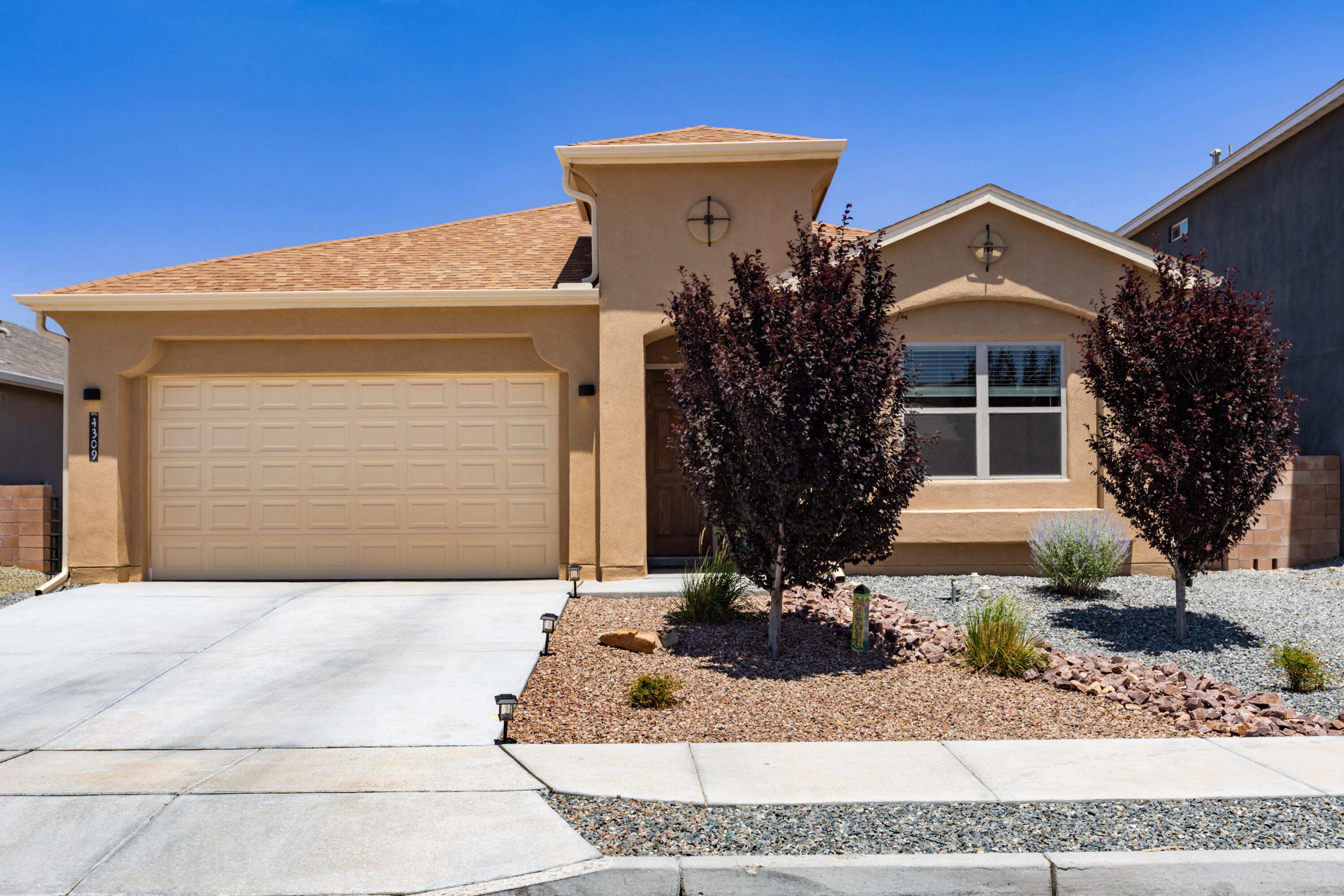
4309 BALD EAGLE LOOP NE, RIO RANCHO, NM
Comfort and luxury abound in this elegant 3BDR/2BA home! PREPAID PID! Gorgeous entry, light, bright & open! Tile flooring thru out entry, hallway, kit & din rm & 2nd BDR. Newer carpet in living room & primary bedroom (2025). Spacious living room features a custom tile design to the ceiling at gas fireplace. Modern kitchen has SS appls, built in-wall oven & micro, gas cooktop, LG refrig, pantry, cabinet crown molding, granite countertops & island/bar w/seating. Primary suite features recessed ceiling & custom closet w/addl drawers, shelving & cabinet storage. Primary bath has dual sink vanity w/granite countertops, water closet & linen closet. Amenities; Water softener, tankless WH w/recirc pump, rain gutters, window drapes & custom blinds in living room & primary bath. Starlink dish.
GET YOUR MORNING COFFEE WITH THE SANDI PRESSLEY TEAM

Ready to Talk About Selling Your Albuquerque Home?
We'll walk you through exactly what to expect in today's market — including how to respond to concession requests in a way that protects your bottom line. No pressure, just clarity.
Call or text the Sandi Pressley Team today.