Real Estate Information Archive

Blog

Displaying blog entries 1-10 of 161

Dinner still needs to happen when a home goes on the market. The dog still needs an afternoon walk, the laundry still piles up, and a work meeting rarely ends early just because a buyer would like to see the house. For Albuquerque homeowners selling an occupied property, those ordinary details can feel more complicated than choosing the listing photos. A home has to remain comfortable enough to live in while becoming easy enough for someone else to imagine owning.

Selling while living at home is manageable with a showing plan built around the household’s actual schedule. The most useful preparation happens before the first appointment: agreeing on notice, deciding how access will work, arranging for pets, and creating a short routine that makes the house presentable without requiring a full cleaning every time. Buyers need a fair opportunity to experience the property, and sellers need a routine they can sustain. Those needs can usually be addressed together with thoughtful planning.

The starting point is an honest conversation with the listing team about a normal week. A seller working remotely from a home office in the Northeast Heights may need predictable windows between calls. Someone commuting from the Westside may be able to accommodate weekday appointments while away, provided pet care and access are arranged. A household in Rio Rancho might find a weekend block easier than several separate evening visits. The right plan begins with those facts instead of an assumption that everyone can leave within fifteen minutes.

That conversation should cover the difficult parts of the week as well as the easy ones. Regular medical appointments, overnight shifts, caregiving, and school pickup can affect what is practical. Sellers do not need to publish those personal circumstances in the listing. They do need to tell their real estate team which limitations matter so appointment instructions can be accurate. A workable schedule established early is easier to communicate than repeated last-minute cancellations after buyers have already arranged their day.

Advance notice deserves particular attention because the phrase means different things to different people. A seller may consider two hours reasonable while another household needs the evening before. Rather than using a vague request for “plenty of notice,” the seller and listing team can agree on a specific preference and discuss what happens when a request falls outside it. The team can then explain the available alternatives, helping interested buyers find an appointment without leaving the homeowner unsure about whether a request has actually been approved.

Flexibility still matters, especially when a buyer has limited time in Albuquerque. An out-of-state visitor may be touring several homes before a flight, and a local buyer may be coordinating work schedules with a partner. That does not mean every request can be accommodated. It means a declined time is more useful when paired with another option. Offering an opening later that afternoon or the following morning keeps the conversation moving and gives the buyer a reason to keep the property on the itinerary.

Long, restrictive showing windows can also be worth revisiting when activity begins. A schedule that allows only one hour on Sunday might be convenient for the household but difficult for buyers to use. On the other hand, a broad daily window may be exhausting for a seller with unpredictable work calls. The listing team can help find a middle ground and adjust it as actual requests arrive. The first schedule is a starting point, and the household can learn from the first week rather than trying to anticipate everything.

The photography appointment usually calls for more preparation than an ordinary showing. That is a good reason to treat the two differently. Before photos, sellers can concentrate on removing excess furniture where appropriate, clearing distracting surfaces, and making the property’s spaces easy to understand. Afterward, the daily goal becomes maintaining that baseline. A house does not need to look untouched by human life, but buyers should be able to move comfortably, see the rooms, and understand how the home functions.

Daily belongings are easier to manage when they have a specific place to go. A lidded basket for chargers and small electronics, a drawer for bathroom toiletries, and a tray for mail can eliminate the search for hiding places when an appointment is confirmed. These should be practical storage solutions rather than piles pushed into a closet. Buyers may open closets and cabinets while evaluating storage, so a home that appears orderly at first glance should also give a reasonable impression of the space behind the doors.

Packing early can help, provided the seller starts with belongings that are not needed every day. Off-season decorations, extra serving pieces, and collections can often be boxed before a moving date is set. The aim is to reduce the number of things that must be reset after each use. It also allows the household to make progress on the eventual move in manageable sessions. Leaving everyday necessities accessible prevents the frustrating cycle of packing something on Monday and digging it back out on Wednesday.

A useful departure routine should be short enough to remember without turning into a major project. In the kitchen, that may mean clearing the sink, wiping the main counter, and putting away food. In the bathrooms, it may mean a quick surface check and fresh towels when needed. Throughout the house, it may mean opening the window coverings that best show the rooms, checking the lighting, and clearing the main walkways. The exact routine should reflect the property rather than a generic list downloaded from the internet.

Albuquerque homes often have features that deserve a deliberate place in that routine. A courtyard entrance should be easy to approach, with leaves swept away and seating arranged so visitors understand the space. A covered portal should have an unobstructed path from the house. A room with a Sandia view benefits when window coverings allow buyers to see it comfortably. These are small presentation choices, but they help the home’s particular strengths become part of the visit instead of remaining hidden behind everyday clutter.

Outdoor upkeep is easier when it is divided into small, regular tasks. Windblown debris near the front door, pet waste in the yard, and a hose across a walkway can be handled before they become part of a buyer’s first impression. A xeric yard does not need to be transformed into something different for the sale. It needs to look intentionally maintained. The seller’s time is usually better spent making existing spaces accessible and cared for than beginning an ambitious landscaping project after the listing is active.

Comfort also affects how people experience the house. A room that feels excessively hot or cold can distract from its size, light, and layout. Sellers can talk with their listing team about a comfortable setting appropriate for the home’s equipment and the season, rather than shutting everything down whenever they leave. The same practical approach applies to lighting. Buyers should be able to see a hallway, a stairway, or a windowless bathroom without wondering where the switches are or whether a fixture works.

Pets need a plan of their own because “the dog is friendly” does not solve the logistics of a showing. An unfamiliar visitor, an open gate, or a door left ajar can create a problem even with an easygoing animal. Removing pets during appointments is often the simplest arrangement when it is feasible. A trusted friend, a scheduled walk, or a pet-care appointment may help. The seller and listing team should discuss the actual animal and property instead of assuming that a crate or closed bedroom will work equally well in every case.

Cats can require just as much coordination as dogs. A cat that normally hides may approach an open exterior door when unfamiliar people arrive, and a sign asking buyers to keep a door closed is not a complete containment plan. Litter boxes, feeding areas, and necessary supplies should remain appropriate for the animal’s care while being kept clean. Any access instructions should be clear and agreed upon in advance. The household’s pet routine should not depend on a buyer guessing which room is safe to open.

Leaving during a showing generally gives buyers more room to speak openly and look at the property at their own pace. A seller sitting at the kitchen table can unintentionally make visitors feel as though they are interrupting. Even a friendly explanation of every improvement can pull attention away from the rooms themselves. Useful property information can instead be shared through the listing team, with records or written details when appropriate. That lets buyers ask questions without requiring the homeowner to conduct the appointment personally.

The departure destination should be realistic, particularly for short appointments. A nearby coffee stop, an errand, or time with a friend may be easier than planning a long outing for every request. A household should also have a backup when weather, mobility, or pet needs make the usual option inconvenient. Sellers do not need to spend money each time someone visits the property. The point is to know where everyone can comfortably go, and how they will learn that the appointment has ended before returning.

Working from home takes a little extra preparation because an office can carry both personal information and the tools needed to earn a living. Before appointments, sellers can put away documents, lock their computer screen, and remove visible account details or passwords. Equipment does not have to disappear if the room is functioning as an office. It should be orderly enough that buyers can understand the room’s size and possible uses. A written plan for important calls can prevent the office from becoming the reason every weekday showing is declined.

Personal documents and valuable items deserve attention throughout the home. Prescription medications, financial records, spare keys, jewelry, and portable valuables should be secured before unfamiliar visitors enter. The listing team can explain the agreed access process and how appointment confirmations will be communicated. Sellers should also discuss alarms, door codes, and any device instructions that affect entry. This is ordinary preparation for allowing access to a private home, and it works best as a routine established before showings begin.

Households with children may find that a few simple assignments reduce the pressure on the adults. School-age children might put shoes in a basket or return toys to one designated area, while parents handle the final check and departure. The arrangement should remain age-appropriate and manageable. A home can still look welcoming with a child’s bedroom set up for daily use. The goal is enough order for a buyer to see the space, rather than asking a child to live for weeks without familiar books, toys, or bedtime routines.

Meals can stay normal with a little coordination. A seller who cooks regularly does not need to replace dinner with takeout for the entire listing period. Putting ingredients away as cooking progresses and cleaning promptly afterward makes a later appointment easier to accommodate. Lingering odors are better addressed through cleaning and suitable ventilation than strong fragrances. Buyers should be able to concentrate on the kitchen itself, including its workspace and storage, without being distracted by either yesterday’s meal or an overpowering attempt to cover it.

The garage and storage areas should be included in the plan because buyers often want to inspect them as carefully as the living room. Moving boxes can be stacked neatly where they do not block equipment, access, or the ability to judge the space. A garage that is partly used for packing can still be understandable. A garage filled from floor to ceiling may leave buyers uncertain about its capacity. The listing team can help the seller choose a practical arrangement that supports the move while preserving access to important areas.

Holiday decorations can be handled with the same balance. A modest seasonal display may help an occupied home feel warm and cared for, while large arrangements can obscure an entry or make rooms harder to navigate. Sellers listing in late fall do not need to suspend every tradition. They can choose decorations that are easy to maintain and remove, keep cords out of walkways, and avoid covering features buyers need to see. The house should remain recognizable from its listing photos even as the household enjoys the season.

An open house, when it fits the marketing strategy, should have its own preparation and access arrangements. Sellers can ask how the event will be managed, when they should leave, and when they can expect to return. It should not be assumed that an open house will eliminate the need for individual appointments. Some buyers will still need a separate visit, and others may want a second look afterward. Knowing that in advance helps the household treat the event as one part of the plan rather than the entire showing solution.

Feedback should be reviewed for patterns instead of treated as a new assignment after every visit. One buyer may prefer a different paint color, while another may want a larger kitchen regardless of how well it is presented. Those preferences do not necessarily call for changes. Repeated comments about dim rooms, a difficult-to-access yard, or an unclear layout may be more actionable. The listing team can help separate presentation issues from buyer preferences and broader questions about price or positioning, so sellers spend effort where it can reasonably help.

Showing volume also needs context. A quiet few days do not, by themselves, explain whether the price, marketing, access, property, or timing is responsible. A busy weekend does not guarantee an offer either. Reviewing activity alongside competing listings and the team’s observations provides a more useful picture. Sellers can ask for a regular communication rhythm so they know when to expect an update. Predictable conversations are especially helpful when the household is making a daily effort to keep the home ready and wants to understand the response.

Second visits may require a different schedule from an initial tour. A buyer might want additional time to look at storage, compare furniture dimensions, or bring another decision-maker. Later appointments for inspections, valuation, or other transaction steps can also differ in purpose and duration. Sellers should ask what each visit involves rather than expecting every appointment to last the same amount of time. Keeping the calendar and access arrangements organized helps the household adapt as interest develops into a transaction, without relying on assumptions about who is coming and why.

Some sellers eventually decide that the effort of remaining in place outweighs its benefits. Others prefer to stay through the move because maintaining two households would add expense or disruption. That decision deserves a discussion about the seller’s actual options, timing, and resources. Moving out is not automatically necessary for a successful presentation, and living in the home should not be treated as a failure to prepare. The best arrangement is the one that supports a credible selling strategy and remains workable for the people carrying it out.

The most effective occupied-home showing plan is usually straightforward: clear appointment instructions, a maintainable level of presentation, thoughtful pet arrangements, and reliable communication. Once those pieces are in place, sellers can stop reinventing the process every time a request arrives. There will still be inconvenient moments, but the household has a way to handle them. That consistency gives buyers a better opportunity to experience the property while helping the homeowner preserve a reasonable daily routine during the sale.

The Sandi Pressley Team helps Albuquerque-area homeowners build selling plans around the property and the people who live there. Homeowners considering a move can request a personalized home-value and selling-strategy consultation, including a conversation about showing arrangements, preparation priorities, and timing. To discuss selling a home in Albuquerque, Rio Rancho, or the surrounding communities, call 505-263-2173 or visit AlbuquerqueHomeSolutions.com. A thoughtful plan can begin before the house ever goes on the market, giving the household time to prepare with purpose.

HOT PROPERTY OF THE WEEK
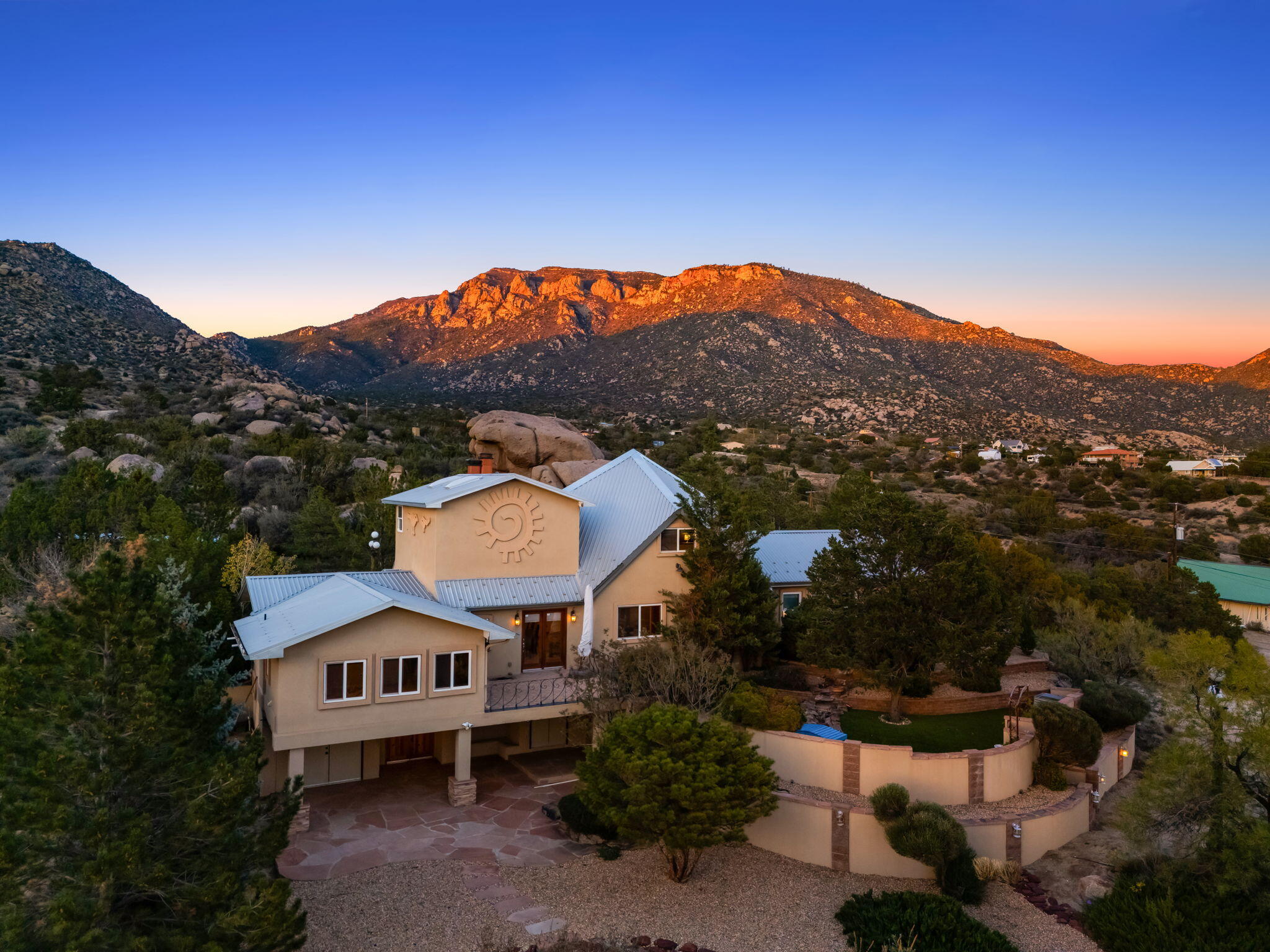

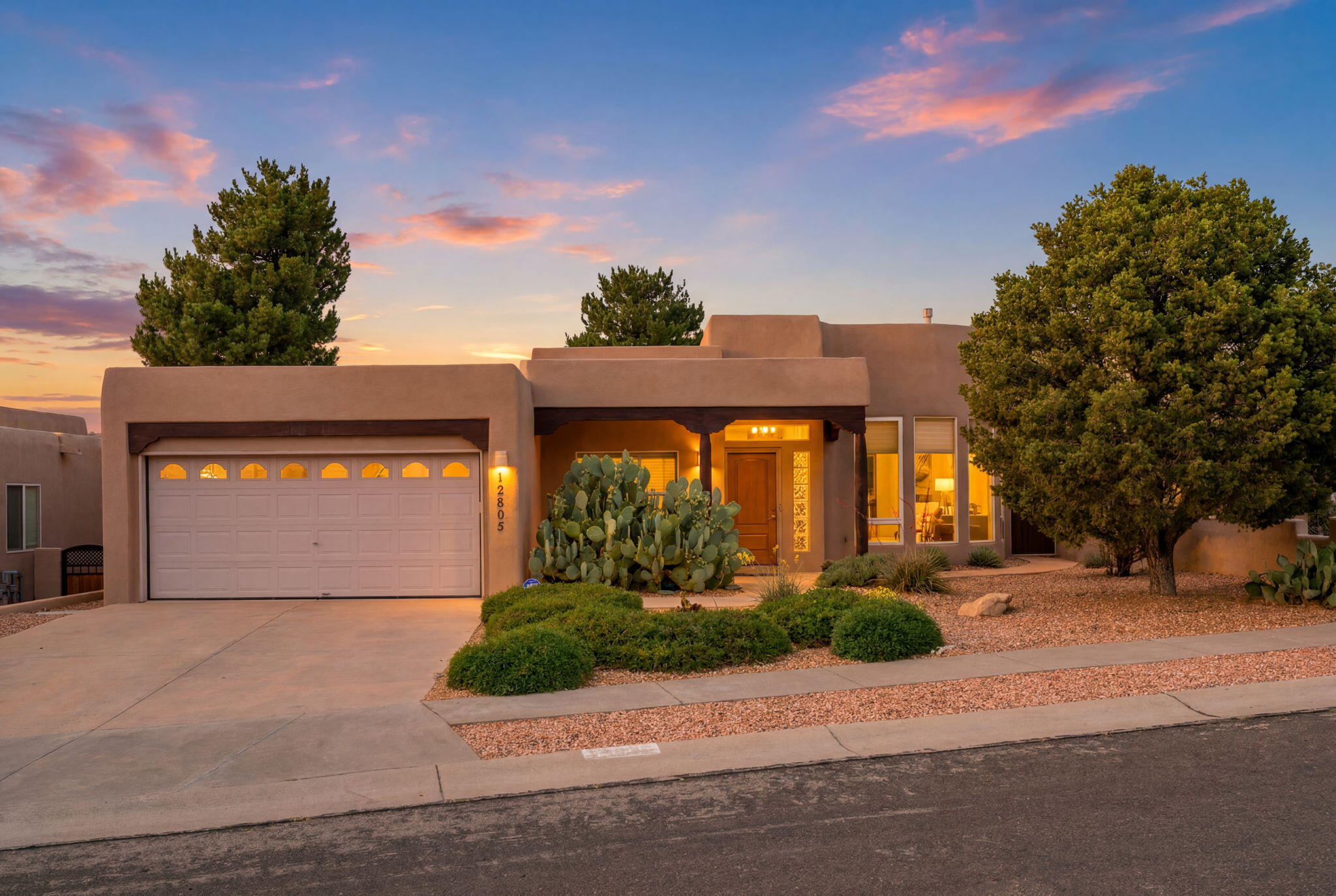
34 RIDDLE ROAD NE, ALBUQUERQUE, NM 

Discover an extraordinary, secluded mountain villa nestled in the breathtaking Sandia Mountains, just off legendary Route 66. Located only 3 miles from Albuquerque and minutes from Uptown, this remarkable retreat offers the rare combination of convenient city access and the feeling of being worlds away. Surrounded by secluded canyon acreage adjoining National Forest land, the property boasts inspiring, one-of-a-kind mountain and canyon views. An outdoor enthusiast's paradise, it's ideal for mountain biking, hiking, bouldering, and immersing yourself in the natural beauty of New Mexico. The villa features a luxurious main residence and a private guest apartment or office with an additional bedroom and bathroom. Inside, enjoy two spacious, spa-inspired primary suites, soaring cathedral ceilings, a gourmet kitchen, and a fireplace in the dining room that creates a warm and inviting atmosphere. The private apartment also features a wood-burning fireplace, adding rustic charm and cozy comfort. Beautiful outdoor living spaces extend along both the north and south sides of the home. Peaceful patios feature soothing water elements, while the north patio invites entertaining with a fire pit, grill, and striking natural rock wall. A truly exceptional mountain sanctuary--where luxury, privacy, spectacular scenery, and effortless access to the city come together.


 

GET YOUR MORNING INSPIRATION WITH THE SANDI PRESSLEY TEAM

Mortgage rates have changed the way people approach buying and selling homes in Albuquerque. Buyers who feel comfortable with a home's price sometimes hesitate when they see the monthly payment, while sellers are trying to figure out how to make their properties more appealing without immediately lowering the asking price.

That's where a 2-1 mortgage rate buydown deserves a closer look. It's a financing strategy that can give a qualified buyer lower principal and interest payments during the first two years of a mortgage, and in some situations, the seller can help pay for it as part of the transaction.

It isn't the right answer for every buyer or every seller, but it's a conversation worth having, particularly when a well-priced home is attracting interest and the monthly payment is becoming the sticking point.

What exactly is a 2-1 mortgage rate buydown?

A 2-1 buydown temporarily reduces the interest rate used to calculate the buyer's mortgage payment during the first two years of the loan. In the first year, that calculation uses a rate two percentage points below the actual note rate, and in the second year, it uses a rate one percentage point below the note rate. Beginning in the third year, the buyer pays based on the full note rate for the remainder of the loan, unless the mortgage is paid off or refinanced.

For example, suppose a buyer secures a 30-year fixed-rate mortgage with a 6.5% note rate and an approved 2-1 buydown arrangement. The principal and interest payments would be calculated using 4.5% during the first year, 5.5% during the second year, and 6.5% beginning in the third year.

The important distinction is that the mortgage itself still carries a 6.5% note rate. The temporary payment reduction is funded through a subsidy established for that purpose, and the buyer generally must qualify for the loan using the full note rate rather than the temporarily reduced payment.

What would that look like on an Albuquerque home?

Let's use a hypothetical $350,000 home purchase with a 20% down payment, leaving a $280,000 mortgage. With a 6.5% fixed note rate and a 2-1 buydown, the principal and interest payments would look approximately like this:

Payment period

Effective payment rate

Monthly principal + interest

First 12 months

4.5%

$1,419

Next 12 months

5.5%

$1,590

Year 3 onward

6.5%

$1,770

Illustrative figures, rounded to the nearest dollar. Excludes property taxes, homeowners insurance, mortgage insurance, HOA fees, and other expenses. Actual subsidy amounts depend on lender calculations and loan terms.

That means the buyer could have roughly $351 less in principal and interest payments each month during the first year, and about $180 less per month during the second year, compared with the full payment.

For someone moving into a new home, that temporary relief could provide additional breathing room while adjusting to the expenses that come with homeownership. It doesn't make the house less expensive, and it doesn't eliminate the need to budget for the eventual full payment, but it can change how those first two years feel financially.

Why would an Albuquerque seller offer a 2-1 buydown?

Imagine you're selling a home in the Northeast Heights, Taylor Ranch, Ventana Ranch, or Rio Rancho. Your property is in good condition, you've priced it appropriately, and buyers are scheduling showings, but offers aren't materializing as quickly as you'd hoped.

Instead of automatically reducing the price, you could explore whether offering a seller-funded temporary rate buydown would be more attractive to a qualified buyer.

A buyer who is comfortable with the purchase price but concerned about initial monthly payments might appreciate the short-term payment reduction more than a modest price cut. For the seller, the appeal is the possibility of addressing that objection while preserving the negotiated purchase price.

The strategy still has a cost, and that cost must be evaluated against the seller's net proceeds. Seller contributions are also subject to financing rules and limits, so the lender needs to confirm what is permitted before anyone structures an offer around a buydown.

Would a price reduction be better than a buydown?

That's one of the most important questions in this conversation, and the answer depends on the circumstances.

A price reduction can make a home more accessible to buyers searching within a particular price range. It may also reduce the amount financed and provide a lasting, although sometimes relatively small, reduction in monthly payments.

A 2-1 buydown works differently. Rather than permanently lowering the loan balance or note rate, it directs an agreed amount of money toward temporarily reducing the buyer's required payments. That may be especially appealing to someone who has adequate income to qualify for the mortgage but would welcome additional flexibility during the first couple of years.

For an Albuquerque seller, the smartest approach is to compare actual numbers. How much would a proposed price reduction cost? What would the buydown subsidy cost? How would either option affect buyer interest, financing eligibility, and the seller's final proceeds?

Those questions deserve answers before the listing price or concession strategy changes.

What should Albuquerque buyers understand before accepting a 2-1 buydown?

The first thing to understand is that the lower payment is temporary. Buyers should be comfortable making the full payment that begins in the third year, even if their income stays the same and mortgage rates never decline.

It's tempting to assume that refinancing will be available before the buydown ends, but future interest rates, home values, credit qualifications, and refinancing costs are unknown. A refinancing opportunity may develop, but it should never be the foundation of an affordability decision.

Buyers should also ask their lender how the buydown is funded, whether the proposed loan program permits it, what happens to unused subsidy funds if the mortgage is paid off early, and how the arrangement affects their overall closing costs.

The best mortgage strategy is one that works with the buyer's long-term financial picture, not simply one that produces the lowest payment on move-in day.

Is a 2-1 buydown worth considering in Albuquerque right now?

For some transactions, absolutely. It can be a useful negotiating tool when the home is appropriately priced, the buyer qualifies for the financing, and both sides understand the costs and benefits.

For others, a price adjustment, permanent rate buydown, closing-cost contribution, or different financing structure may make more sense. The goal isn't to make every transaction fit the same formula; it's to find the combination that works for the people involved.

At the Sandi Pressley Team, we believe buyers and sellers deserve to understand the options available to them before making major financial decisions. Whether you're preparing to sell a home in Albuquerque, Rio Rancho, Corrales, or the surrounding communities, or you're trying to find a smart path into your next home, we'd welcome the opportunity to talk through the possibilities and connect you with the right lending expertise. Sometimes a little creativity, backed by solid numbers and good advice, can make a meaningful difference.

HOT PROPERTY OF THE WEEK


7715 CALHOUN DRIVE NE, ALBUQUERQUE, NM

EXCELLENT LOCATION! Beautiful single-story home in desirable Heritage East featuring soaring vaulted ceilings, abundant natural light, and two spacious living areas. Enjoy a cozy, low-maintenance gas fireplace, along with an updated kitchen and bathrooms. The generous primary suite offers dual sinks, a private water closet, and a relaxing garden soaking tub.Step outside to an expansive covered patio, perfect for outdoor entertaining or simply relaxing. Originally designed as a 4-bedroom home, two bedrooms have been combined to create one oversized room, offering wonderful flexibility for a home office, sitting area, or spacious bedroom. Ideally located near shopping, dining, parks, and everyday conveniences, this inviting home offers comfort, versatility, and a fantastic location!


GET YOUR MORNING INSPIRATION WITH THE SANDI PRESSLEY TEAM

If you're thinking about selling your Albuquerque home and you know the roof is getting older, the stucco has cracks, or both, you may be wondering how much money you need to spend before putting the house on the market.

Here's something worth knowing: You don't necessarily have to replace an older roof or repair every stucco crack to sell your home successfully.

What matters is the actual condition of the property, how buyers are likely to respond, and whether making repairs before listing will put you in a better financial position.

In Albuquerque, where flat roofs, stucco exteriors, and intense sunshine are familiar parts of homeownership, these decisions deserve a little more thought than simply following a generic pre-listing checklist.

Let's look at what sellers should consider before spending thousands of dollars on repairs.

Can You Sell a House With an Older Roof in Albuquerque?

Yes. An older roof does not automatically prevent you from selling your Albuquerque home.

But there's an important difference between a roof that's getting older and one that has active leaks, visible deterioration, or documented structural concerns.

A roof's condition can influence:

  • How confident buyers feel about the home.

  • Whether buyers request a professional roof inspection.

  • The repair or replacement costs buyers anticipate.

  • The availability and cost of homeowners insurance.

  • The terms buyers may request during negotiations.

For example, a buyer may be comfortable purchasing a home with an aging roof that has been professionally maintained. That same buyer may be much more cautious if there are interior water stains, repeated leaks, or signs of deferred maintenance.

The key question isn't simply how old your roof is. It's what condition it's in and how that condition affects the sale.

Why Albuquerque Roofs Deserve Special Attention

Albuquerque has a wide variety of residential roofing systems, including flat and low-slope roofs, pitched shingle roofs, tile roofs, and other materials.

Many local homes have roof designs that require particular attention to drainage, flashing, penetrations, and parapet walls.

Our high-desert climate brings strong sunshine, temperature changes, wind, and seasonal storms. These conditions can affect roofing materials over time.

That's why an inspection by a qualified roofing professional can be useful before making a major repair decision.

A written evaluation may help distinguish routine maintenance from a more serious problem.

Should You Replace Your Roof Before Selling?

Not automatically.

A full roof replacement is a substantial investment, and there's no guarantee that you'll recover the entire cost through a higher selling price.

Before making that decision, consider three possible approaches.

Option 1: Repair the Roof Before Listing

This may make sense when a qualified contractor identifies a specific, repairable problem.

Addressing an active leak or a clearly defined defect can sometimes prevent that issue from becoming a larger concern during the buyer's inspection.

Keep documentation of the work, including invoices, warranties, and any applicable permits.

Option 2: Offer a Negotiated Credit or Price Adjustment

Sometimes a seller would rather negotiate a financial concession than complete major work before closing.

This can be appealing when the buyer wants to choose their own contractor or materials.

However, credits are not always possible. The buyer's financing program, lender requirements, insurance availability, and contract terms may limit this approach.

A credit is not a guaranteed substitute for correcting a property condition.

Option 3: Sell the Home in Its Existing Condition

Selling as-is may be appropriate when the seller prefers not to undertake significant repairs.

But as-is doesn't mean buyers will ignore the condition, that financing requirements disappear, or that applicable disclosure responsibilities no longer matter.

An as-is sale may attract buyers who are comfortable taking on repairs, but the property's pricing and marketing need to reflect its condition.

What About Stucco Cracks on Albuquerque Homes?

Stucco is a familiar feature of Albuquerque homes, but not every crack means the same thing.

Some cracking may be cosmetic. Other cracks may be associated with moisture intrusion, movement, installation defects, or deterioration beneath the finish.

The location, pattern, width, and history of the cracking all matter.

Rather than assuming every crack needs an expensive repair—or dismissing every crack as cosmetic—consider having concerning areas evaluated by a qualified professional.

Signs That Deserve a Closer Look

Pay attention to stucco that is separating from the wall, persistent moisture staining, soft or deteriorated material, recurring cracks, or damage near windows, doors, and roof connections.

These conditions don't necessarily establish a structural problem, but they may justify further evaluation.

And remember, covering a stain or patching over a crack without addressing an underlying problem can create complications later.

Should You Repair Stucco Before Listing Your House?

It depends on the cause, extent, and visibility of the damage.

Minor cosmetic repairs may help a home present better, especially when they can be completed properly and the finished appearance matches the surrounding exterior.

Larger areas of deterioration or suspected moisture intrusion require a different approach.

Before investing in extensive stucco work, ask:

  1. Has a qualified professional identified the cause?

  2. Is the problem cosmetic or potentially more serious?

  3. What would a durable repair involve?

  4. Will the work materially improve the home's marketability?

  5. How does the repair cost compare with likely buyer concerns?

A repair that solves a documented problem can be valuable. An expensive cosmetic project that doesn't address the underlying condition may offer much less benefit.

Roof Replacement, Stucco Repairs, or Selling As-Is: Which Makes More Financial Sense?

Here's a hypothetical example.

Imagine an Albuquerque homeowner receives a $15,000 combined estimate for roofing and stucco work.

The seller has three choices:

ApproachPotential advantagePotential drawback
Complete the $15,000 project May reduce buyer concerns Requires cash and may not recover full cost
Make targeted repairs Addresses identified defects at potentially lower cost Buyers may still request additional work
List without completing the project Avoids immediate repair spending May affect price, buyer pool, and negotiations

The $15,000 figure is hypothetical, not a local contractor estimate or predicted sale-price adjustment.

Now suppose a buyer asks for a $12,000 price reduction because of the property's condition.

Does that automatically mean the seller should have completed the $15,000 project?

Not necessarily.

The seller also needs to consider carrying costs, the time required to complete the work, the buyer's financing, the strength of the offer, and the likelihood of attracting other qualified buyers.

The lowest repair bill isn't always the best financial decision, and the highest asking price doesn't always produce the best net proceeds.

The goal is to understand what each option could mean for your actual bottom line.

Do You Have to Disclose Roof Leaks or Stucco Problems in New Mexico?

Sellers should be careful about treating a property condition as unimportant simply because they plan to sell as-is.

In New Mexico, disclosure obligations can depend on the facts, applicable law, contractual representations, and the documents used in the transaction.

Known defects, previous repairs, water intrusion, and other material property conditions should be discussed candidly with your real estate professional and, when necessary, a qualified New Mexico attorney.

Do not assume that a fresh coat of paint, a completed patch, or an as-is provision eliminates the need for accurate representations.

When in doubt, document what you know, preserve repair records, and obtain appropriate professional advice.

What Do Albuquerque Buyers Usually Care About Most?

Buyers generally want to understand the condition of the property and what ownership may cost them after closing.

An older roof with maintenance documentation may inspire more confidence than a newer-looking roof with unexplained water damage.

Similarly, a home with properly evaluated and repaired stucco may be easier for buyers to assess than one with visible cracks and no information about their cause.

Clear information can make negotiations more productive.

That doesn't mean sellers should order every possible inspection or repair. It means uncertainty has a cost, and understanding the property before listing can help sellers make more informed decisions.

Frequently Asked Questions

Can I sell my Albuquerque house with a leaking roof?

Possibly, yes. However, an active leak can affect buyer interest, negotiations, financing, and insurance. A professional evaluation can help clarify the condition and available options.

Will an FHA or VA buyer purchase a home with an older roof?

An older roof alone does not necessarily disqualify a home. Property-condition requirements depend on the loan program, appraisal findings, and other circumstances. Significant roof defects may need to be addressed before financing can proceed.

Are stucco cracks normal in Albuquerque?

Stucco cracking is common enough that many local homeowners encounter it, but not every crack is harmless. Recurring, extensive, or moisture-related damage deserves professional attention.

Should I offer a repair credit instead of fixing the roof?

A credit may be worth discussing, but lender and loan-program rules can restrict concessions. It should be evaluated as part of the full offer rather than assumed to be available.

Does selling as-is mean I don't have to disclose problems?

No. Selling as-is does not automatically eliminate applicable disclosure duties or responsibility for inaccurate representations.

Should I get a roof inspection before listing?

If you have concerns about the roof, a professional evaluation may help you understand repair options and prepare for buyer questions. Whether to obtain one before listing depends on your circumstances.

Before You Spend Thousands, Understand Your Options

If you're preparing to sell a home in Albuquerque with an aging roof, cracked stucco, or other maintenance concerns, don't assume you need to renovate everything before calling a real estate professional.

You may benefit more from understanding the home's current market position, the likely buyer pool, and which repairs could make a meaningful difference.

The Sandi Pressley Team can help you evaluate your selling options, discuss how your home's condition may influence its marketing and pricing, and determine what information would be useful before listing.

Thinking about selling your Albuquerque home? Contact the Sandi Pressley Team to discuss your property before committing to major repairs.

HOT PROPERTY OF THE WEEK


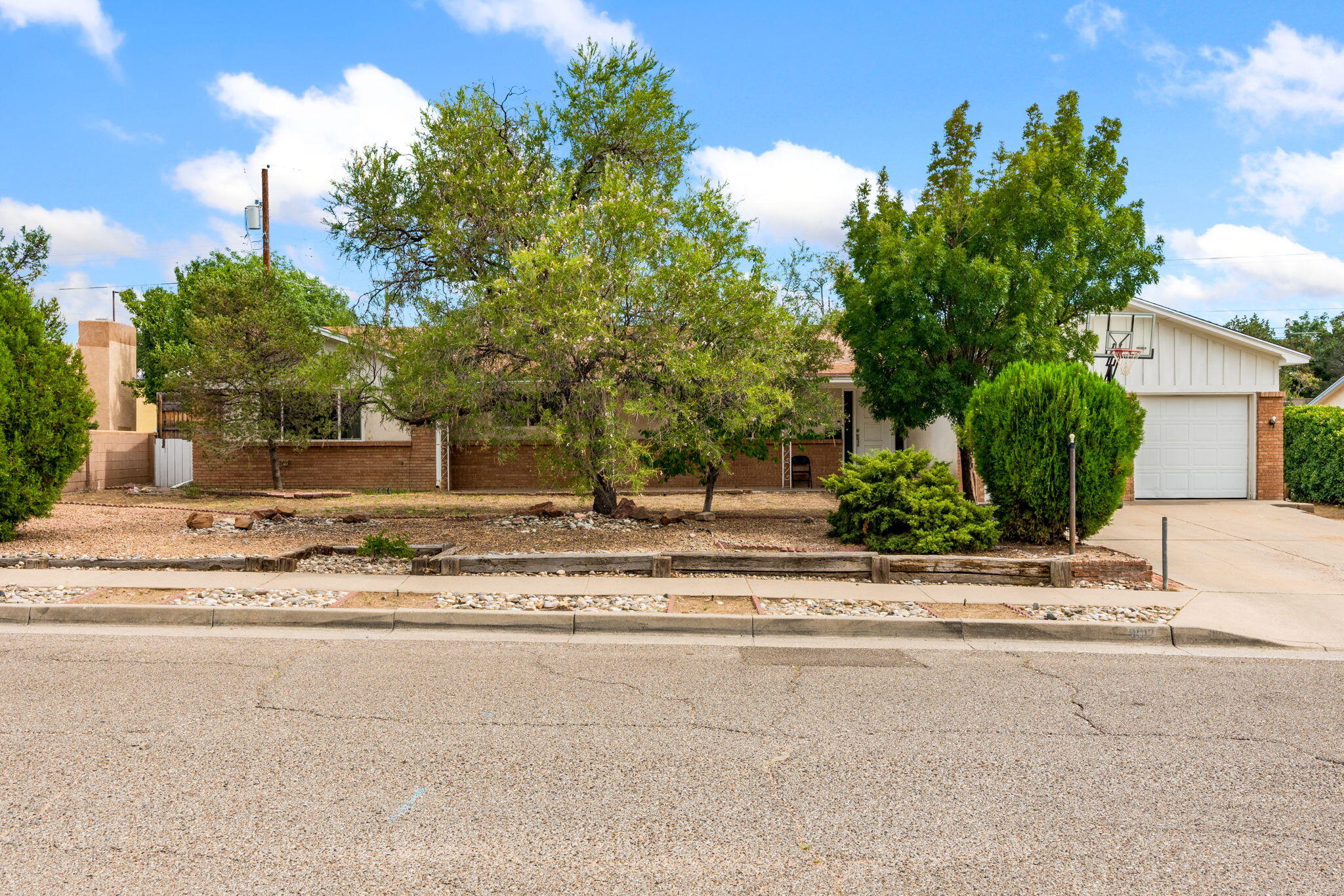
9012 LAGRIMA DE ORO ROAD NE, ALBUQUERQUE, NM

Step into this sprawling, single-story home and be ready to enjoy gorgeous wood floors, 4 bedrooms and multiple living areas. Situated on an oversized lot, the backyard is ready for your personal touch and includes a large storage shed. With NEW Storm Windows by Enchantment Windows in 2024, you'll enjoy these light-filled spaces. The large kitchen features tons of storage with additional wood built-ins by the dining room. Enjoy the wood-burning fireplace in the main living area along with built-in bookshelves for lots of space for all your needs. And don't miss the oversized storage room/workshop behind the entry coat closet! Convenient to shopping, restaurants and more, come see this one today.

GET YOUR MORNING INSPIRATION WITH THE SANDI PRESSLEY TEAM

Selling a house in Albuquerque isn't like selling one in Phoenix or Denver. Elevation changes the way buyers judge a lot. Neighborhood boundaries here mean something specific — a home three blocks apart in the Northeast Heights versus North Albuquerque Acres can sell at a genuinely different pace and price, and an agent who doesn't know that difference cold is guessing with your equity. So before you sign a listing agreement with anyone, sit them down and ask real questions. Not the softball kind. The kind that tells you whether you're hiring a professional or hiring a sign in your yard.

Most homeowners interview one agent, like them well enough over coffee, and sign. That's how a lot of Albuquerque sellers end up with a home that sits on the market 40 extra days or closes for less than it should have. The agent you choose isn't a formality — it's the single biggest variable in what you walk away with. Below are the five questions worth asking, why each one matters more than it sounds, and what separates a rehearsed answer from a real one.

1. What's your actual track record in my specific neighborhood and price range?

"I sell all over Albuquerque" is not an answer — it's a dodge. Every serious agent should be able to tell you, off the top of their head, how many homes they've closed in your specific area over the past year, what those homes sold for relative to list price, and how long they sat on the market. Corrales sells differently than South Valley. Sandia Heights buyers care about different things than buyers looking in Los Lunas. An agent with real, area-specific numbers can price your home with confidence on day one. An agent without them is running an experiment, and you're the one funding it.

This is also where experience compounds in a way that's hard to fake. The Sandi Pressley Team has been actively selling across the Albuquerque metro — Rio Rancho, Placitas, Corrales, Bernalillo, the Northeast Heights, Four Hills, High Desert, Nob Hill, Uptown, the North Valley, Paradise Hills, South Valley, Cedar Crest, Tijeras, and the East Mountain communities — for 47 years. Sandi has personally helped more than 13,147 families buy or sell a home in New Mexico. That's not a number you build from a good marketing budget. It's built one closing at a time, over decades, in the same market you're selling in right now.

2. How will you price my home, and what's the actual marketing plan behind it?

Ask this one carefully, because "I'll list it a little high so we have room to negotiate" is the answer of someone who wants your listing more than they want your sale. Pricing should come from a comparative market analysis built on recent, comparable, closed sales in your immediate area — not a number pulled to flatter you into signing. A good agent will walk you through the data and explain their reasoning instead of just handing you a figure.

Then push further and ask what happens after the sign goes in the yard. Where does your home get seen? Professional photography, a strong MLS presence, syndication to Zillow and the major search platforms, targeted social promotion, and — critically in a market like Albuquerque's — direct outreach to the agent's own buyer network are what actually move a listing. A team that's closed $73 million in sales in a single year, as the Sandi Pressley Team did in 2025, has built exactly that kind of buyer pipeline. When your home lists, it isn't just posted and hoped for. It's put in front of people who are already looking, often before it's fully public.

3. What does communication actually look like once we're under contract?

This question exposes more than almost any other, because it's the one agents tend to answer in the abstract. "I'm very responsive" means nothing. Ask instead: how often will I hear from you, in what format, and who do I call if you're unreachable? A transaction with a real team behind it means there's always someone who knows exactly where your file stands — not a solo agent juggling forty other things who gets back to you Thursday when your buyer's inspection objection was due Tuesday.

This is one of the clearest advantages of working with an established team over a single agent working alone. Every step of a transaction — pricing, showings, offer negotiation, inspection response, appraisal, closing coordination — has a specialist attending to it, rather than one person stretched across all five roles at once. Sellers notice the difference immediately. Questions get answered the same day instead of the same week, and nothing falls through a gap because someone else was supposed to be watching it.

4. How do you negotiate, and what's your plan if we get multiple offers or a lowball one?

Anyone can write up an offer. Negotiating one well, especially in a shifting rate environment where buyer confidence moves month to month, is a different skill entirely. Ask a candidate agent to walk you through a recent negotiation that didn't go smoothly — a lowball offer, a buyer who tried to renegotiate after inspection, a multiple-offer situation that could have turned messy. How they answer tells you whether they've actually been in the room for hard conversations, or whether their experience is mostly signing contracts that went exactly to plan.

Decades of negotiating in this exact market builds instincts that can't be taught from a script. Sandi Pressley has been ranked the #1 top-producing Realtor in Albuquerque and across New Mexico for 40 consecutive years, and among the top-producing Coldwell Banker agents in the entire nation. That kind of consistency doesn't happen without knowing how to read a buyer, hold a price when it's justified, and know precisely when flexibility actually serves the seller instead of just ending the negotiation faster.

5. What's the plan if my home doesn't sell right away, or something goes sideways in escrow?

Every agent has a pitch for the easy scenario. Ask about the hard one instead. If the home hasn't generated a solid offer after three or four weeks, what's the adjustment — price, presentation, marketing reach, or all three? And if an issue surfaces during escrow — an appraisal that comes in low, an inspection finding that spooks a buyer, a title question nobody expected — do they have a track record of solving problems, or do they tend to hand you bad news and step back?

This is where a team's structure and staying power matter most. A single agent hitting a snag has to solve it alone, often while juggling other clients at the same time. An established team has typically already faced that exact scenario and worked out a way through it. It's part of why the Sandi Pressley Team has repeatedly been recognized by the Wall Street Journal as one of Coldwell Banker's top-performing teams internationally — the reputation isn't built on the transactions that went smoothly. It's built on the ones that didn't, and got closed anyway.

Why This Interview Matters More in Albuquerque Than Almost Anywhere Else

Albuquerque's real estate market runs on neighborhood-level detail in a way a lot of buyers relocating from bigger metros don't expect. Elevation, HOA structures that vary block to block in places like High Desert, water rights considerations in Corrales and the North Valley, and a buyer pool that includes a heavy mix of Kirtland Air Force Base transfers, Sandia Labs relocations, and out-of-state retirees all shape how a home should be priced, marketed, and shown. An agent who's spent 47 years working these exact streets brings something a newer agent simply can't manufacture — pattern recognition built from thousands of closings, not a handful.

That's the real case for asking these five questions before you sign anything. The right answers will point you toward an agent — or a team — with the track record, the marketing infrastructure, the communication systems, the negotiating experience, and the problem-solving history to actually deliver on what they promise. For homeowners across Albuquerque, Rio Rancho, Corrales, Placitas, and the surrounding communities, that combination is exactly what's built the Sandi Pressley Team's reputation over four and a half decades: putting the seller first, and having the results across nearly every neighborhood in the metro to back it up.

If you're weighing a sale and want a straight answer to any of these five questions, based on real numbers for your specific street rather than a general market average, the Sandi Pressley Team at Coldwell Banker Legacy is reachable at (505) 263-2173 or through albuquerquehomesolutions.com. Bring the hard questions. They're used to them.

HOT PROPERTY OF THE WEEK


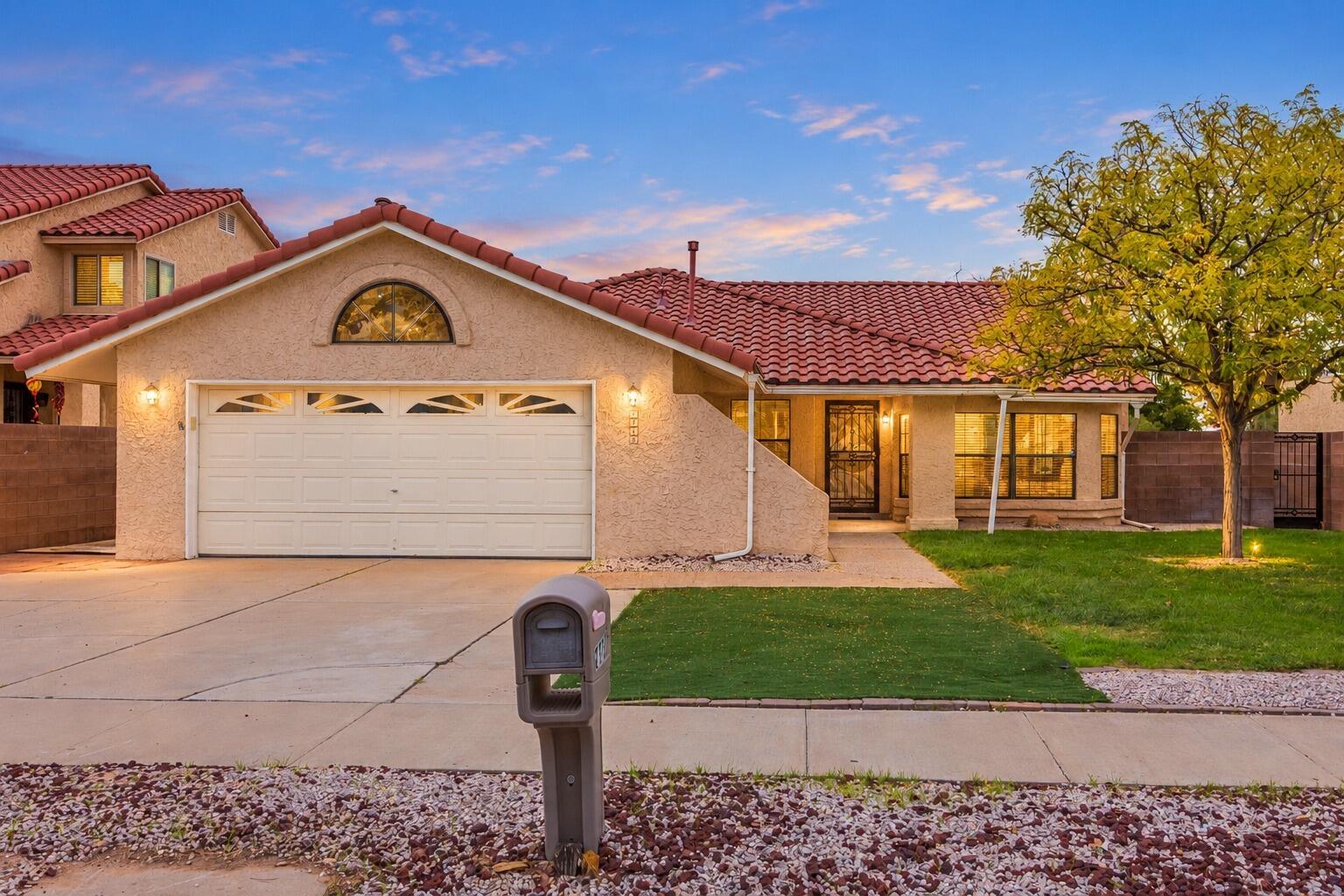
3032 SAN JOAQUIN AVENUE SE, ALBUQUERQUE, NM

Custom-built mid-century style home with paid-off solar, backing directly to Puerto del Sol Golf Course! This unique property features a 1,432 sq. ft. heated and cooled walkout basement that is not included in the listed square footage, offering tremendous potential for additional living space, a home office, gym, workshop, studio, recreation room, or future expansion. Situated on a double lot, the property also features low-maintenance xeriscaping, mature fruit trees, a garden area, backyard access with RV hookup.Upstairs, the main living areas are equally impressive, featuring hardwood plank flooring throughout, spacious bedrooms, and an extra-large living room with plenty of room for family time, movie nights, entertaining, or simply relaxing together. Major updates include a newer furnace and refrigerated air system installed in 2021, water heater replaced in 2022, and sewer line replaced in 2020. The remodeled kitchen features newer quartz countertops and updated cabinetry. Conveniently located near UNM, the VA Hospital, Sandia National Laboratories, shopping, dining, and more. Schedule a showing today!

GET YOUR MORNING INSPIRATION WITH THE SANDI PRESSLEY TEAM!

If you've been thinking about selling your home, you've probably noticed that the advice online is all over the place. One headline says it's a great time to sell. The next says buyers have disappeared. Neither tells you much about what's happening here in Albuquerque.

The truth is that our market has settled into something much more normal than what we experienced a few years ago. Homes are still selling, buyers are still looking, and prices have remained resilient. At the same time, buyers have become more selective, and the days of putting almost any house on the market and expecting multiple offers within a weekend are largely behind us. Recent data from the Greater Albuquerque Association of REALTORS® shows prices have remained strong while market conditions have become more balanced.

So, is now a good time to sell?

For many Albuquerque homeowners, the answer is yes. The key isn't trying to predict what the market might do six months from now. It's understanding what your home is worth today, how it compares to the competition, and whether selling fits your personal goals.

Albuquerque Is Still a Seller-Friendly Market

One of the biggest misconceptions I hear is that because homes aren't selling as fast as they did during the pandemic boom, sellers have somehow lost the advantage.

That's simply not what the numbers show.

Inventory is still well below what economists would consider a fully balanced housing market. Buyers have more choices than they did a few years ago, but they aren't overwhelmed with inventory. Well-priced homes continue to attract attention, especially in desirable neighborhoods throughout Albuquerque.

What has changed is buyer behavior.

People are taking more time before making an offer. They're comparing homes more carefully. They're paying attention to condition, updates, energy efficiency, and value.

That's not bad news for sellers. It simply means strategy matters.

National Headlines Don't Sell Albuquerque Homes

Every week there's another article predicting what the national housing market will do.

Those stories make good headlines, but they don't determine what happens in the Northeast Heights, Nob Hill, Taylor Ranch, Four Hills, the North Valley, or the Westside.

Real estate has always been local.

A home with mountain views in one neighborhood may receive very different interest than a similar home in another part of the city. School districts, commute times, nearby amenities, lot size, condition, and price all influence buyer demand.

That's why I encourage homeowners to stop comparing their situation to national news and start looking at what's happening within a few miles of their own front door.

Buyers Haven't Gone Anywhere

Some homeowners worry that higher mortgage rates have pushed buyers completely out of the market.

They haven't.

People still get married. Families grow. Jobs change. Retirements happen. Companies relocate employees. Life doesn't stop because mortgage rates move up or down.

Today's buyers are simply making more thoughtful decisions.

They're asking more questions before submitting offers.

They're looking closely at maintenance costs.

They're paying attention to monthly payments instead of just purchase price.

And they're willing to wait for the right home instead of settling for the first one they see.

That's exactly why presentation matters more than it did a few years ago.

What Buyers Notice First

When buyers walk through a home, they usually decide how they feel about it within the first few minutes.

It isn't always because of a brand-new kitchen or expensive remodel.

More often, it's the little things.

A clean entryway.

Fresh paint.

Well-maintained landscaping.

Bright rooms.

A home that feels cared for.

Those details build confidence before a buyer ever starts looking at square footage or cabinet finishes.

On the other hand, deferred maintenance tends to raise questions. If buyers notice peeling paint, broken fixtures, or obvious repairs, many begin wondering what else hasn't been maintained.

Pricing Matters More Than Ever

This may be the biggest difference between today's market and the one many homeowners remember.

Pricing aggressively above market hoping someone will negotiate isn't usually the best approach.

Today's buyers have access to more information than ever before. They've been watching listings for weeks or months. They know what comparable homes are selling for.

If your home enters the market priced well above similar properties, many buyers won't schedule a showing at all.

The first few weeks on the market are typically when a listing receives the most attention. That's why starting with a realistic price is often far more effective than chasing the market later with multiple price reductions.

Should You Wait Until 2027?

It's a fair question.

Unfortunately, nobody can accurately predict where mortgage rates, inventory, or home values will be six months from now.

What you can evaluate is your own situation.

If you're relocating, downsizing, moving closer to family, or simply ready for your next chapter, waiting for the "perfect" market often creates more stress than benefit.

The best time to sell isn't determined only by market conditions.

It's determined by when selling helps you accomplish your goals.

Common Mistakes I See Sellers Make

The biggest mistakes usually have nothing to do with the house itself.

They're decisions made before the home ever hits the market.

Some of the most common include:

  • Pricing based on what a neighbor received two years ago instead of today's comparable sales.
  • Spending tens of thousands of dollars on renovations buyers may not value.
  • Relying entirely on automated online estimates.
  • Using phone photos instead of professional listing photography.
  • Waiting too long to prepare the home before listing.

Avoiding these mistakes often makes a much bigger difference than trying to perfectly time the market.

Questions I Hear Almost Every Week

Are Albuquerque home prices still rising?

Home values have remained remarkably resilient, although appreciation has slowed compared to the rapid gains seen during the pandemic years. Recent GAAR reports continue to show a strong median sales price while the market has become more balanced.

Are homes taking longer to sell?

Yes. Buyers are taking more time than they did during the peak seller's market. That doesn't mean homes aren't selling. It means pricing and presentation matter more than ever.

Should I remodel before selling?

Usually, major renovations aren't necessary. Simple improvements like fresh paint, minor repairs, decluttering, and improving curb appeal often provide a better return than expensive remodeling projects.

Is fall still a good time to list?

Absolutely.

While spring is traditionally the busiest season, serious buyers continue shopping throughout late summer and fall. Many are working around job changes, school schedules, or lease expirations, making August and September active months for motivated buyers.

Final Thoughts

If you're waiting for someone to tell you there's a perfect moment to sell, you'll probably be waiting a long time.

Markets change.

Interest rates change.

Life changes.

What doesn't change is the value of making a decision based on accurate local information instead of national headlines.

Every home is different. Every neighborhood is different. Every homeowner has different goals.

That's why a personalized review of your home's value and the current Albuquerque market is far more useful than trying to guess what the market might do next.

If you're considering selling your home in Albuquerque, I'd be happy to help you understand your options and what today's market means for your property.

Sandi Pressley
Real Estate Agent | Albuquerque, New Mexico

HOT PROPERTY OF THE WEEK


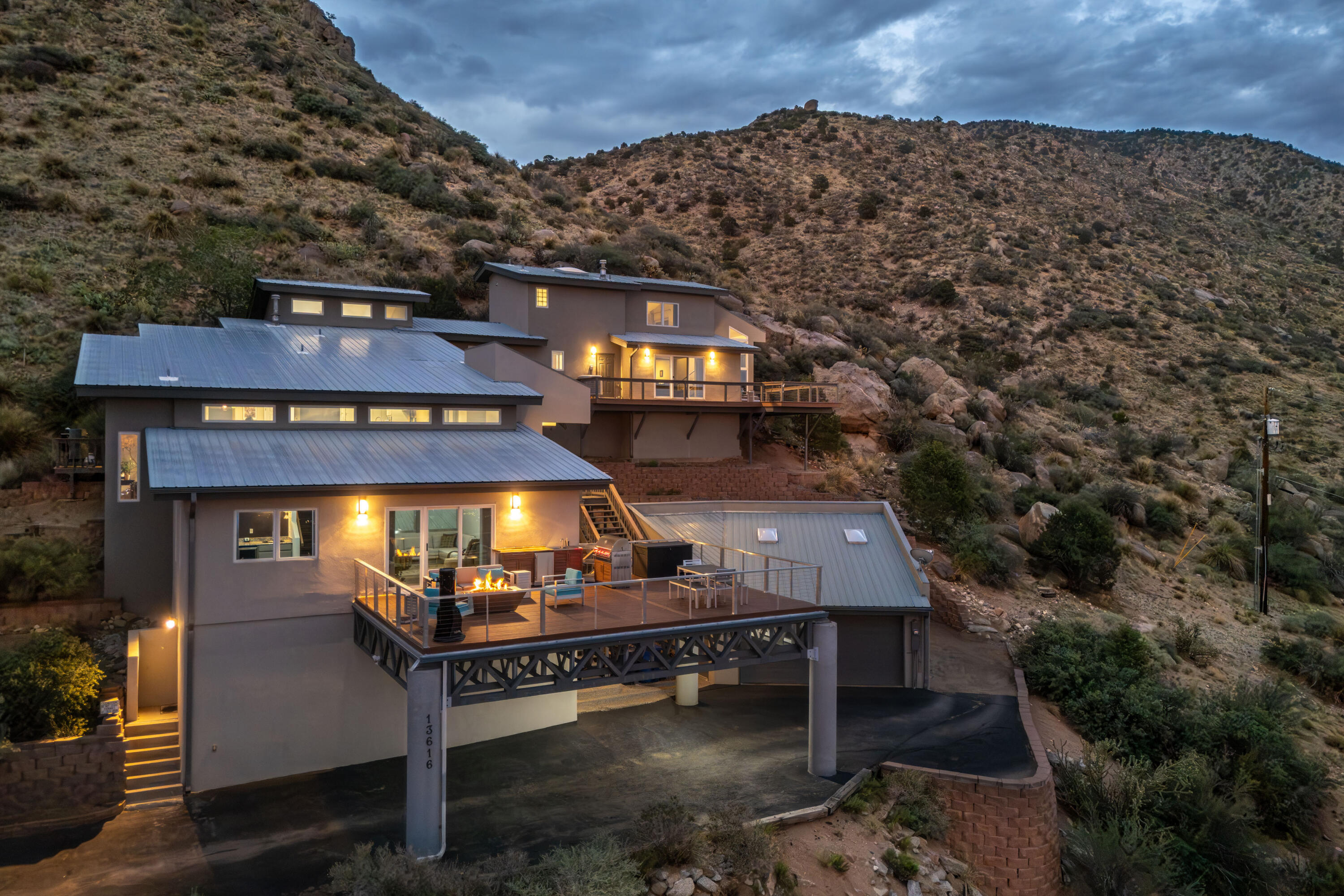
13616 DEER TRAIL PLACE NE, ALBUQUERQUE, NM

Perched alongside the breathtaking Sandia Mountains, this extraordinary custom home enjoys a setting few properties can ever replicate. Thoughtfully designed as a multi-level hillside residence, every level was created to embrace the dramatic landscape and maximize sweeping panoramic views of the Albuquerque skyline. Wake each morning with coffee on the expansive view deck, then unwind in the evening as unforgettable New Mexico sunsets paint the horizon from your own private sanctuary. Multiple decks and patios create seamless indoor-outdoor living, each offering its own unique perspective of the Sandia Mountains and sparkling city lights below. An outdoor kitchen provides the optimal setting for entertaining family and friends or enjoying quiet evenings surrounded by breathtaking scenery. Inside, the home features a sophisticated contemporary design with a clean, vibrant feel and thoughtful appointments throughout. The luxurious primary suite is a private retreat, complete with its own view deck and a spa-inspired bath featuring a distinctive teak soaking tub and his-and-her vanities. This exceptional Albuquerque residence combines timeless architecture, exceptional craftsmanship, and an unparalleled connection to its spectacular natural surroundings. Opportunities to own a home of this caliber in such an extraordinary mountainside setting are exceptionally rare. This is your opportunity to make it yours.

GET YOUR MORNING INSPIRATION WITH THE SANDI PRESSLEY TEAM

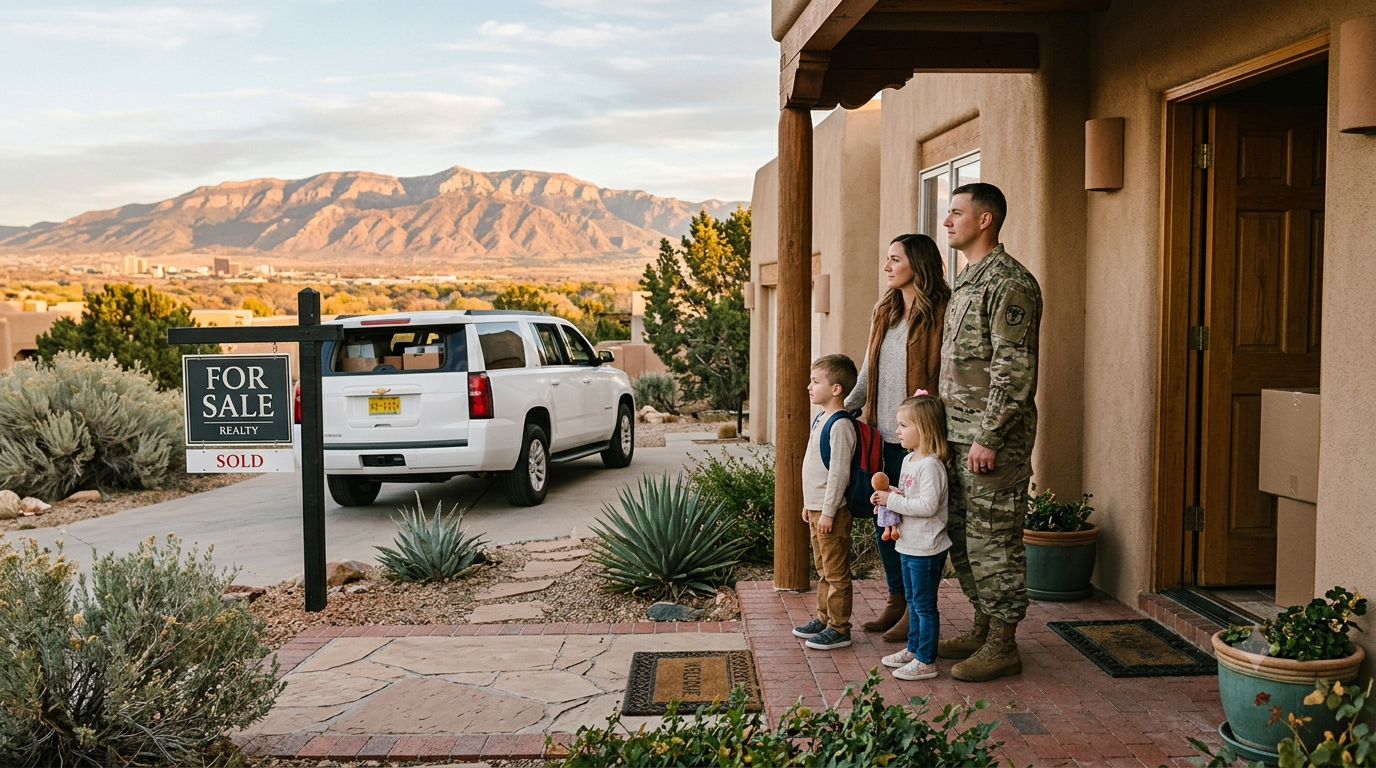
If you've just received PCS orders and you're looking around your Albuquerque home wondering what comes next, you're not alone. This is one of the first questions military families ask after they find out they're moving.

Should we sell the house?

Should we keep it as a rental?

Should we wait and see what the market does?

Those questions sound simple, but they rarely have simple answers. Every military move is different because every family has different goals, different finances, and different timelines.

Some families are heading to another stateside assignment. Others are preparing for an overseas move. Some are retiring after years of service, while others expect they'll eventually return to Albuquerque and would like to keep a home here.

The decision shouldn't be based on headlines or what someone posted in a military Facebook group. It should be based on your situation, your home's value, your equity, and what gives your family the strongest position for the next chapter.

That's exactly where the Sandi Pressley Team starts.

For years, we've helped military families throughout Albuquerque navigate PCS moves with less stress and more confidence. We understand that military timelines don't always leave room for second guesses, and we know that every decision you make now affects what life looks like at your next duty station.

Albuquerque Continues to Attract Military Families

Albuquerque has long been one of the Southwest's most important military communities. Kirtland Air Force Base remains a major employer in the region, working alongside Sandia National Laboratories, the Air Force Research Laboratory, and numerous defense contractors. That steady military presence helps create consistent housing demand throughout many parts of the city.

Unlike communities that depend almost entirely on tourism or seasonal buyers, Albuquerque benefits from people relocating throughout the year. New military families continue arriving with permanent change of station orders, while others retire here because they've grown to love New Mexico during their assignments.

That doesn't mean every home automatically sells quickly.

It does mean that homes which are properly prepared, accurately priced, and professionally marketed continue attracting serious buyers, including many military families looking for housing before they arrive in town.

One of the biggest mistakes homeowners make is assuming national real estate news tells the whole story. Real estate has always been local. A headline about another part of the country doesn't necessarily reflect what's happening in neighborhoods like Northeast Heights, Four Hills, High Desert, or Rio Rancho.

That's why every selling decision should begin with local market data instead of national opinions.

Start With Your Timeline, Not the Headlines

When military families call us after receiving PCS orders, the conversation almost never starts with, "What's the market doing?" It usually starts with, "We have to be in Virginia by October," or "We're leaving for Germany in a few months." The timeline is what drives every decision after that. Before we talk about pricing, marketing, or preparing your home, we need to understand how much time you actually have. A family with six months before reporting to a new duty station has very different options than a family that's packing boxes in three weeks.

That's one reason military moves are different from a typical home sale. You're balancing inspections, movers, travel plans, school transfers, medical records, and everything else that comes with relocating. Selling your home is only one piece of a much bigger transition, which is why having a clear plan early can remove a tremendous amount of stress later.

Think Beyond the Sale

It's easy to focus on getting your house sold because that's the immediate task in front of you. The bigger question is what happens after the closing. Will you be buying another home at your next assignment? Are you planning to rent while you settle into a new area? Is retirement only a year or two away? Those answers matter because they shape whether selling today puts your family in a stronger financial position tomorrow.

For some homeowners, the equity they've built over the past several years becomes the down payment for their next home. For others, selling allows them to eliminate the responsibility of owning property from another state while they adjust to a new assignment. Neither goal is better than the other. They simply require different strategies.

Selling Isn't Automatically the Best Choice

One thing we've learned after helping military families move in and out of Albuquerque is that there isn't a one-size-fits-all answer. Sometimes the smartest recommendation is to sell. Sometimes it isn't.

We've worked with homeowners who purchased their homes years ago, locked in an excellent interest rate, and now have a monthly payment that's far below today's rental rates. If they're likely to return to Albuquerque and the numbers make sense, keeping the property as a long-term investment can be worth exploring.

We've also worked with families who knew they didn't want to manage repairs, maintenance, or tenants from another state. They wanted a clean break before starting the next chapter of their lives. Selling gave them that peace of mind and allowed them to move forward without worrying about a property hundreds or even thousands of miles away.

The important part is making the decision based on your family's goals instead of someone else's experience.

Every Family's Situation Looks Different

Not long ago, we met with a military couple who assumed renting out their Albuquerque home was the obvious choice. Friends had told them real estate always appreciates, so keeping the house sounded like the safest decision. Once we reviewed their equity, estimated rental income, projected expenses, and plans for their next assignment, they realized selling actually gave them more flexibility. They were purchasing another home immediately, wanted to avoid carrying two mortgages, and preferred using their equity rather than tying it up in a rental property.

A few weeks later, another military family sat at the same table with a completely different set of circumstances. They expected to return to New Mexico within a few years, had a low mortgage payment, and were comfortable hiring a professional property manager. For them, keeping the home aligned with both their finances and their long-term plans.

Those conversations ended differently because the families had different priorities. That's exactly how it should be.

Buyers Are Paying Attention to the Details

Today's buyers walk into a home with more information than ever before. They've studied photos online, compared recent sales, researched neighborhoods, and narrowed their choices long before they schedule a showing. By the time they arrive, they're looking for confirmation that your home feels as good in person as it did online.

That doesn't mean you need an expensive remodel before putting your home on the market. In fact, some of the most effective improvements are also the simplest. Fresh paint, thorough cleaning, updated light fixtures, neat landscaping, and taking care of deferred maintenance can dramatically change how buyers experience a home. Those improvements don't just make the property look better. They help buyers feel confident that the home has been cared for, which often makes them more comfortable writing a strong offer.

Military buyers are especially appreciative of homes that are clean, well maintained, and ready to move into. Many are relocating on tight schedules, and they don't want to spend their first few months in Albuquerque coordinating contractors or tackling major repair projects. A home that feels move-in ready often stands out because it removes one more worry from an already stressful relocation.

HOT PROPERTY OF THE WEEK

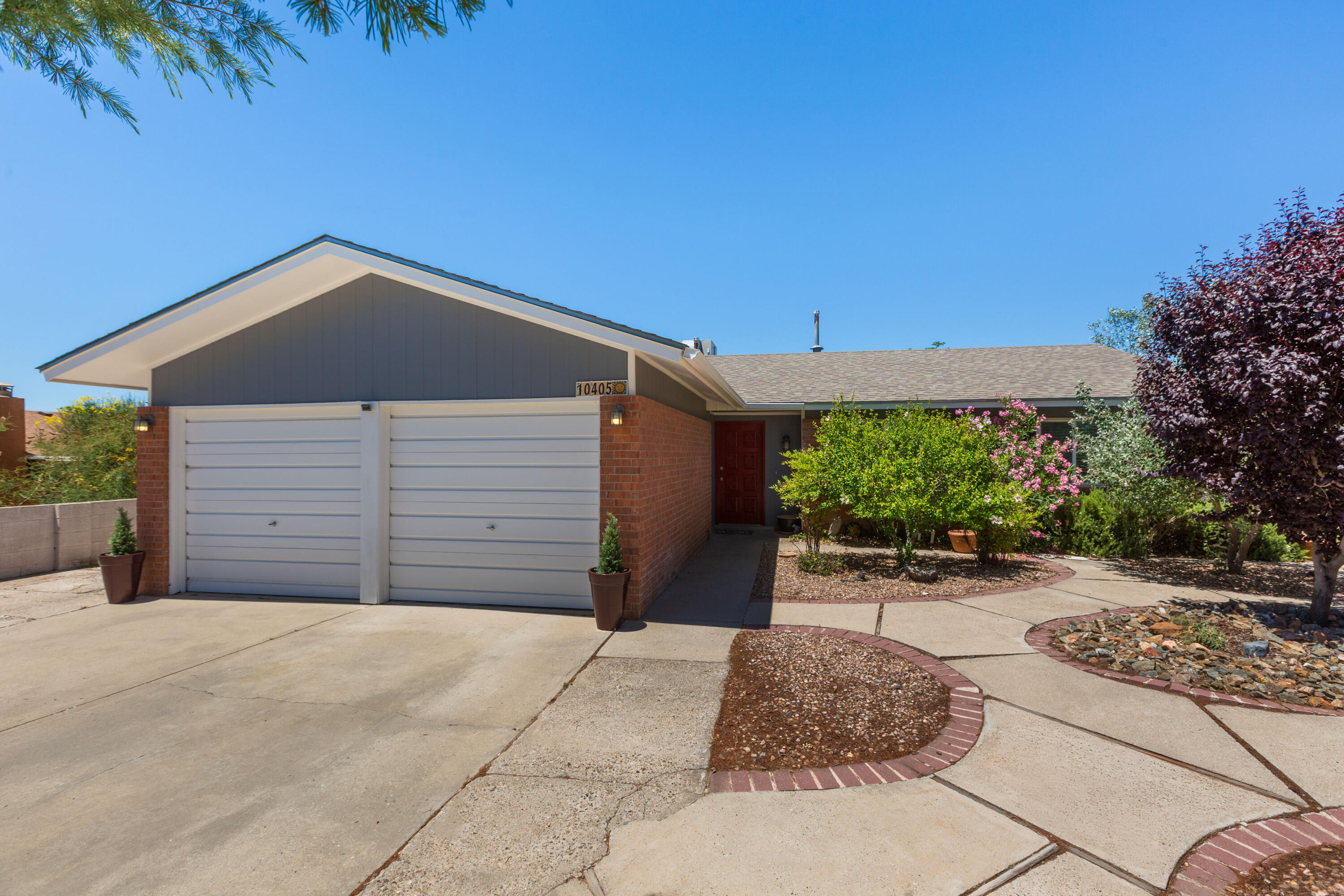
10405 MAZATLAN DRIVE NE, ALBUQUERQUE, NM 


Enjoy Summer sun & fun in the sparkling POOL!! Huge backyard with mature trees & shrubs and gazebo; perfect for entertaining family & friends, parties or just relaxing for a morning swim or evening dining! Beautiful 3BDR/2BA with open great room & dining, second living room/game room w/skylight and patio access. Classic galley style kitchen with sunny bkfst nook. Tile flooring, and new carpet in the secondary bdrs. 1CG with a large storage room. Excellent location in Academy Place, close to parks, schools, shopping and the foothills trails!

GET YOUR MORNING INSPIRATION WITH THE SANDI PRESSLEY TEAM


Six months ago, conversations about real estate in Albuquerque almost always began with interest rates. Buyers wondered whether they should put their plans on hold, sellers questioned whether demand was beginning to soften, and many homeowners decided to wait until the market became a little easier to understand. Today, those conversations are beginning to sound different. Mortgage rates have eased from where they were at the end of last year, more buyers are returning to the market, and homeowners who pressed pause are once again asking whether now might be the right time to make a move. The answer depends on more than interest rates alone, but there is no question that the conversation has changed.

One of the challenges with following the housing market is that the loudest voices are usually talking about the national picture. Every week there's another headline declaring that the market is booming, collapsing, recovering, or headed for trouble. Those stories may make for interesting television, but they rarely help someone trying to decide whether it's the right time to buy a home in Albuquerque or whether selling this year makes sense for their family. Real estate has always been driven by local conditions, and Albuquerque has its own story to tell.

That story is far more encouraging than many people realize.

The Albuquerque market never experienced the dramatic swings that some parts of the country saw during the pandemic. We certainly had an incredibly competitive period when homes sold almost as quickly as they hit the market, often with multiple offers and very little room for negotiation. Buyers found themselves making decisions faster than they ever imagined, while sellers enjoyed a level of demand that seemed almost unbelievable. Like every market, though, that pace eventually settled down. Rising mortgage rates changed affordability, buyers became more selective, and the market found a healthier balance.

That's where we are today.

Some buyers are surprised to hear that because they assume higher mortgage rates have caused demand to disappear. They haven't. People are still relocating to Albuquerque for careers, family, retirement, and the quality of life that has attracted people here for decades. Kirtland Air Force Base continues to bring military families to the area. Intel's continued investment in Rio Rancho and ongoing economic development throughout the metro area continue to create opportunities. The University of New Mexico, Sandia National Laboratories, and countless local businesses all contribute to a steady stream of people who need a place to call home. Life hasn't stopped simply because borrowing money costs more than it did a few years ago.

What has changed is the way people approach the process.

Instead of rushing through a showing and writing an offer before the weekend is over, buyers are taking time to compare neighborhoods, evaluate monthly payments, and think carefully about what makes the most sense for their families over the next five or ten years. That's not a sign of a weak market. It's a sign of a thoughtful one.

For buyers, that's actually created opportunities that didn't exist during the frenzy of 2021 and early 2022. There was a time when asking for closing costs, requesting repairs after an inspection, or negotiating on price often meant losing the home altogether because another buyer was willing to waive those protections. Today, those conversations are happening again. Sellers are more willing to negotiate when appropriate, inspections have become a normal part of the transaction again, and buyers have the opportunity to make decisions without feeling as though every home will disappear before they can think it through.

That doesn't mean every property is sitting on the market waiting for an offer. Far from it. Well-prepared homes in desirable neighborhoods continue to attract strong interest, especially when they're priced correctly from the beginning. Homes in areas like the Northeast Heights, North Valley, High Desert, Tanoan, and many parts of Rio Rancho continue to draw attention because buyers recognize their long-term value. When a home is updated, well maintained, and realistically priced, it often generates significant interest regardless of what interest rates are doing.

That's an important point because interest rates have become the headline, while pricing and preparation remain the factors that actually determine how successful a sale will be.

One of the questions we hear most often is whether buyers should wait a little longer in hopes that mortgage rates continue to come down. It's an understandable question because everyone wants the lowest possible payment. The challenge is that mortgage rates are only one part of the equation. Home prices and competition matter just as much.

Imagine that mortgage rates fall another half percent over the next several months. That would certainly improve affordability, but it would also encourage thousands of buyers who have been waiting on the sidelines to jump back into the market at the same time. More buyers competing for the same inventory almost always places upward pressure on prices. In other words, a lower interest rate doesn't automatically translate into a less expensive purchase. Sometimes it simply shifts where the competition occurs.

That's why trying to perfectly time the market rarely works. No one consistently predicts where mortgage rates will be six months from now, just as no one consistently predicts exactly where home prices will go. Decisions based entirely on those predictions often leave people waiting for conditions that never arrive.

A better question is whether buying a home today makes sense based on your own financial situation, your career, your family, and your long-term plans. Someone planning to stay in a home for the next ten or fifteen years is making a very different decision than someone who expects to move again in two or three. For many families, stability, building equity, and having a place that truly fits their lives are far more meaningful than trying to save a fraction of a percentage point on an interest rate.

The same principle applies to homeowners who are thinking about selling.

Many sellers remember the extraordinary market when almost every home attracted multiple offers within days. Some naturally wonder whether they've missed their opportunity because the market has become more balanced. The truth is that buyers haven't stopped buying homes. They've simply become more discerning. They're paying closer attention to condition, pricing, and overall value because they have the time to do so.

That's not a disadvantage for sellers who prepare properly.

In fact, many homeowners are finding that today's buyers genuinely appreciate homes that have been cared for. Fresh paint, thoughtful maintenance, attractive landscaping, and realistic pricing often make a stronger impression today than they did during the height of the pandemic market because buyers are comparing homes more carefully instead of making split-second decisions. A home that presents well and enters the market at the right price still has every opportunity to attract excellent offers.

The mistake many homeowners make isn't waiting too long or listing too soon. It's assuming their home's value should be measured against what the neighbor down the street sold for during the peak of the market. Buyers aren't making that comparison. They're looking at what's available today, what similar homes have sold for recently, and what monthly payment fits comfortably within their budget. Successful pricing has always been about understanding today's market rather than yesterday's, and that's especially true now.

Picking the right moment to buy or sell has always been more complicated than trying to predict interest rates. Every market cycle has produced headlines telling people to hurry before prices climb higher or to wait because better conditions are just around the corner. Yet when you look back over the years and ask homeowners what ultimately made their move successful, very few point to the exact mortgage rate they locked in. Most talk about finding the right house, selling at the right time for their family, or making a move that improved their daily lives.

That's one of the reasons we encourage clients to step back from the headlines and look at the bigger picture. Mortgage rates matter because they influence affordability, but they aren't the only factor shaping the market. Inventory, buyer demand, employment, population growth, consumer confidence, and local economic conditions all play a role. Albuquerque continues to benefit from a diverse economy, a relatively affordable cost of living compared to many western cities, and a quality of life that attracts people from across the country. Those fundamentals haven't disappeared. If anything, they've become even more important as buyers look for places where they can put down roots without facing the price tags found in places like Denver, Phoenix, Austin, or Southern California.

We've seen that firsthand over the past several years. Many of the families relocating to Albuquerque aren't arriving because they happened to catch the lowest interest rate. They're moving because of a new job, to be closer to family, because they can work remotely, or because they've decided they want a different pace of life. Those decisions tend to be driven by opportunity rather than timing the market. Once they decide Albuquerque is where they want to be, the conversation shifts from "Should we wait?" to "How do we make the smartest decision in today's market?"

For buyers, that often begins with adjusting expectations without giving up on long-term goals. A few years ago, historically low interest rates dramatically increased purchasing power. Many buyers understandably became accustomed to those numbers, even though most economists agreed they were unlikely to last forever. Today's rates, while still higher than those historic lows, have eased enough to bring many buyers back into the conversation. They're also learning that there are ways to structure a purchase that weren't available when every home attracted ten or fifteen competing offers.

Seller concessions have become part of the discussion again. Depending on the property and the market conditions, buyers may be able to negotiate assistance with closing costs or ask a seller to contribute toward buying down the interest rate during the first few years of the loan. Those opportunities don't exist with every transaction, and they shouldn't be expected automatically, but they have become realistic possibilities in a market that's finding a healthier balance. Just a few years ago, most buyers wouldn't have imagined asking for those concessions because they knew another offer was likely waiting behind theirs.

That's one of the more interesting shifts we're seeing. Buyers have regained something that almost disappeared during the height of the pandemic market: choices. They have more time to compare neighborhoods, evaluate floor plans, think about future resale value, and decide whether a home truly fits the way they want to live. Instead of feeling pressured to make one of the largest financial decisions of their lives within a matter of hours, they can approach the process with the confidence that comes from making informed decisions.

For sellers, that shift has created a different opportunity. During the frenzy of the pandemic years, nearly every listing attracted attention because inventory was so limited. Today, presentation matters again. Professional photography matters. Thoughtful staging matters. Pricing strategy matters. Marketing matters. None of those things disappeared during the competitive years, but they often took a back seat to overwhelming demand. Today's buyers are paying closer attention, which means sellers who invest time preparing their home frequently stand out from the competition.

One of the most rewarding conversations we have with homeowners happens before a home ever reaches the market. Instead of immediately discussing listing dates, we walk through the property together and talk about what today's buyers are likely to notice. Sometimes the recommendations are surprisingly simple. Fresh paint in a few rooms, updated light fixtures, a deep cleaning, fresh mulch in the front yard, or replacing worn carpet can completely change the way buyers experience a home. Those improvements aren't about hiding flaws or creating a picture-perfect house. They're about helping buyers imagine themselves living there from the moment they walk through the front door.

The goal has never been perfection. Buyers understand that every home has a history and every property has its own personality. What they respond to is a home that feels well cared for. Small details communicate that message far more effectively than expensive renovations completed simply because someone believes they have to update everything before selling.

Pricing requires the same thoughtful approach.

It's understandable that homeowners remember what neighbors received for similar homes a year or two ago. Those sales become reference points because they're familiar. Buyers, however, aren't making decisions based on memories. They're comparing today's listings, today's sales, today's inventory, and today's financing costs. A home that enters the market priced according to current conditions is much more likely to attract strong interest than one priced according to yesterday's expectations.

We've found that honesty serves our clients better than optimism. If we believe a home will command a premium because of its location, condition, or unique features, we'll say so. If we believe pricing needs to reflect changing market conditions to generate the strongest response, we'll say that too. Those conversations aren't always easy, but they're essential because the first impression a home makes on the market is often its most important one.

One of the advantages of working in Albuquerque for many years is recognizing that our market has always rewarded patience and perspective. We've experienced strong markets, slower markets, rising interest rates, falling interest rates, periods of rapid appreciation, and periods when prices were remarkably stable. Through every cycle, one thing has remained remarkably consistent. People who made thoughtful decisions based on their own goals generally looked back with far fewer regrets than those who tried to outguess the market.

It's easy to understand why timing receives so much attention. Interest rates are measurable. Headlines are immediate. Predictions make for compelling news stories. Real life is more complicated than that. Families don't put their lives on hold simply because economists disagree about where rates might be six months from now. Careers evolve. Children grow up. Parents need to move closer to loved ones. Retirement arrives. Sometimes the house that was perfect for one chapter simply isn't right for the next.

That's why the question we encourage people to ask isn't whether this is the perfect market. Perfect markets rarely exist. A far more useful question is whether this is the right time for you. When that answer is yes, the rest becomes a matter of building the right strategy, understanding the local market, and making informed decisions every step of the way.

Perhaps the biggest takeaway from today's market is that there isn't a single answer that's right for everyone. Mortgage rates have eased from where they were several months ago, but they haven't returned to the historic lows that many people remember. Home prices have remained remarkably resilient in much of the Albuquerque area, and while buyers have gained more negotiating power than they had a few years ago, well-priced homes continue to attract strong interest. Those realities can all exist at the same time, which is why broad national headlines often create more confusion than clarity.

Whether you're considering buying your first home, moving into a larger space, downsizing after many years, or relocating to another part of New Mexico or beyond, the decision should begin with your goals rather than someone else's prediction of where the market is headed next. No one has a crystal ball, and even the most respected economists disagree about where interest rates and home prices will be a year from now. What you can control is making a well-informed decision based on today's market, your financial situation, and the life you want to build over the coming years.

At the Sandi Pressley Team, we've guided buyers and sellers through changing markets for decades. We've seen periods when interest rates were far higher than they are today, markets that favored sellers almost exclusively, and markets where buyers had the advantage. Every cycle has been different, but one thing has remained remarkably consistent. The people who are happiest with their decisions are rarely the ones who perfectly timed the market. They're the ones who understood their options, had realistic expectations, and made a move when it made sense for their lives.

That's the conversation we enjoy having with our clients. Not one built around fear of missing out or trying to predict the next headline, but one focused on helping people understand where the Albuquerque market stands today, what opportunities it presents, and how those opportunities fit into their own plans. Sometimes that conversation leads to buying a home. Sometimes it leads to selling. And sometimes the best advice is to wait. What matters most is that you have the information and perspective to make that decision with confidence.

The Albuquerque real estate market continues to evolve, just as it always has. Mortgage rates will rise and fall over time, inventory will fluctuate, and market conditions will continue to shift. Through it all, the fundamentals remain the same. People will continue to buy homes because they're starting families, accepting new opportunities, planning for retirement, or simply looking for a place that better reflects the next chapter of their lives. Those reasons have always mattered far more than any single interest rate.

If you're wondering what today's market means for your particular situation, we'd be happy to have that conversation. No pressure. No sales pitch. Just an honest look at where the market stands today, what we're seeing across Albuquerque and the surrounding communities, and what options make the most sense for you. Sometimes a straightforward conversation with someone who knows the local market is far more valuable than a dozen national headlines, and we're always happy to help you separate the noise from the reality.

HOT PROPERTY OF THE WEEK


12805 NORTHERN SKY AVENUE NE, ALBUQUERQUE, NM

Enjoy luxurious living and incredible mountain views in sought-after High Desert. This single-story gem has all the amenities: New Roof (2023)...New A/C (2025)..Whole-House Humidifier, Water Softener, Water Filtration. Bring your EV and enjoy included Chargepoint in the garage. The Chef's kitchen has tons of space and high-end SS appliances with gas range, Wolf microwave and vent hood. The primary suite features beautiful views and access to the serene backyard. With a jetted tub & separate shower, you'll enjoy a spa-like bathroom experience. Enclosed, fully-finished sunroom features a mini-split unit, expansive windows, wood floors and banquet seating. This even includes the refined touches of a custom Roberto Gonzalez wood door in the living area.Get ready for living at its finest.

GET YOUR MORNING INSPIRATION WITH THE SANDI PRESSLEY TEAM

Will Buyers Ask Me to Pay Closing Costs or Offer Concessions?

by Sandi Pressley

What Albuquerque Sellers Need to Know About Today's Buyer Expectations — and How to Handle Them Strategically

If you're preparing to sell your home in Albuquerque and you've been hearing things like "buyers want help with closing costs" or "you might need to offer a rate buydown" — you're not imagining it. These conversations are happening all over the metro area right now, from the North Valley to Rio Rancho to the East Mountains. And if it feels unfamiliar or a little unsettling, you're in good company.

The truth is, the market has shifted enough that even beautifully updated, well-priced homes are fielding buyer requests for concessions at the negotiating table. It doesn't mean your home isn't worth full price. It doesn't mean you're in a bad position. It means the landscape has changed — and understanding what buyers are asking for, why they're asking, and how you can respond smartly is exactly what you need going into this process.

This guide is going to walk you through all of it. Plain language, real numbers, real strategies — so you can make confident decisions instead of feeling caught off guard.

First, Let's Talk About Why This Is Happening Now

Mortgage rates. That's really the root of most of this. Buyers who would have happily qualified for a home at 3% in 2021 are now staring down rates in the mid-to-upper 6% range or higher. That difference translates to hundreds of dollars more per month on the same loan amount — and it's created a very different kind of buyer psychology.

Buyers are still out there. Albuquerque's job market, military presence, and University of New Mexico draw means there's consistent demand. But today's buyers are doing more math before they make an offer. They're looking at their monthly payment, their cash on hand for closing, and they're asking themselves: is there any way to make this work a little better?

That's where the requests for concessions come in. Buyers who are financially solid and serious about buying your home may still ask for help — not because they can't afford the house, but because they're trying to optimize every dollar in a higher-rate environment. It's strategic on their end. And you can be strategic too.

What Exactly Are Closing Costs — and What Are Buyers Actually Asking For?

Let's define the terms so we're all on the same page.

Closing Costs are the fees and expenses associated with finalizing a real estate transaction. On the buyer's side, these typically include lender origination fees, title insurance, escrow/closing fees, appraisal fees, prepaid homeowners insurance, and prepaid interest (prorated from closing to the end of that first month). In New Mexico, buyers can expect their closing costs to run roughly 2% to 5% of the purchase price.

On a $375,000 home — which is close to the Albuquerque median as of mid-2026 — that's anywhere from $7,500 to nearly $19,000 that a buyer has to show up with at the closing table, on top of their down payment. That's real money. And when buyers are also putting 5%, 10%, or 20% down, the total cash requirement adds up fast.

When a buyer asks you to "pay closing costs," here's what they're generally requesting:

  • A seller credit applied at closing that covers some or all of their closing cost line items
  • This credit comes off your net proceeds — it doesn't change the purchase price on paper, but it reduces what you walk away with
  • Amounts typically range from $3,000 to $10,000 depending on the price point, but requests can vary

The Rate Buydown: Something New That Resale Sellers Are Now Being Asked to Offer

This one surprises a lot of sellers — because for a long time, permanent rate buydowns and temporary rate buydowns were primarily something you'd see from new construction builders. If you were buying a brand-new KB Home or Pulte home in Albuquerque's master-planned communities, the builder's in-house lender might offer to buy your rate down as part of the deal. It was a competitive sweetener unique to new builds.

That's no longer the case. Today, buyers purchasing resale homes — including yours — are asking sellers to fund rate buydowns at the negotiating table. And if you don't understand what they're asking, it can feel very strange.

Permanent Buydowns: Buying the Rate Down for the Life of the Loan

In this scenario, the buyer asks you to contribute funds — called "points" — that permanently reduce their interest rate. One point equals 1% of the loan amount. On a $350,000 loan, one point is $3,500. Paying one point typically reduces the rate by about 0.25%, though this varies by lender.

If a buyer is facing a 7.0% rate and you contribute two points ($7,000 on that loan), they might get down to 6.5%. Their monthly payment on principal and interest drops by roughly $120–$140/month. Over a 30-year loan, that's significant — which is exactly why buyers are asking for it.

Temporary Buydowns: The 2-1 Buydown and How It Works

The 2-1 buydown is the most commonly requested temporary option right now, and it works like this: the seller funds an account at closing that artificially subsidizes the buyer's interest rate for the first two years. In year one, the buyer pays 2% below their note rate. In year two, 1% below. Starting in year three, they pay the full rate.

So if the actual loan rate is 6.75%, the buyer pays 4.75% in year one and 5.75% in year two. The cost to fund this typically runs around 2% of the loan amount. On a $350,000 loan, that's roughly $7,000 coming from your proceeds at closing.

Why are buyers requesting this? Because many of them genuinely believe rates will come down over the next two to three years — and if they refinance before year three, they never even hit that full rate. In the meantime, the lower payment in the first couple of years gives them breathing room to settle in, furnish the home, and stabilize their budget.

Is This Normal? And Will My Home Still Sell Without Offering Concessions?

Yes and yes — with some important nuance.

Concession requests are increasingly common across the Albuquerque metro area, but they're not universal. A lot depends on your specific price point, neighborhood, property condition, and how your home is priced relative to comparable sales. A home that's priced aggressively below market, in move-in condition, in a sought-after school district like Eldorado High or La Cueva territory? It may receive offers with few or no concessions.

But a home that needs work, is priced at the top of its range, or has been sitting on the market for more than a few weeks? Buyers feel empowered to ask — and statistically, they're doing so at higher rates than we saw in 2021 and 2022.

According to national data compiled by real estate research firms through early 2026, more than 40% of closed transactions included some form of seller concession — a significant jump from the pandemic-era lows when sellers routinely received multiple offers above asking price with zero concessions. The Albuquerque market tracks closely with these national patterns, though our inventory situation means it's still more balanced here than in some coastal markets.

The short answer: concession requests are normal and you should expect them. But agreeing to every request isn't mandatory — especially if you're well-positioned in the market.

How Sellers Can Respond Strategically (Instead of Reactively)

Here's where strategy really matters — and where working with an experienced local team makes all the difference.

1. Know Your Net Before You Counter

Before you respond to any offer with a concession request, you need to know your estimated net proceeds. A $380,000 offer with $8,000 in seller concessions is actually a $372,000 deal in terms of what lands in your pocket. Compare that to a $370,000 clean offer and you're only $2,000 apart — which might change how you evaluate both offers entirely.

We provide sellers with detailed net sheets so you can see, clearly and concisely, what each offer actually means for your bottom line. Never react emotionally to a number on a page — look at the full picture.

2. Consider the "Higher Price, More Concession" Strategy

One approach that benefits both parties: instead of the buyer asking for a lower price AND concessions, the buyer agrees to pay a higher purchase price in exchange for the seller funding a rate buydown or closing cost credit. The buyer preserves more of their cash at closing, and you may net similarly or even better than a lower-priced clean offer.

There's a catch: the home must appraise at the higher purchase price. This is a real consideration in Albuquerque's current market where appraisers are being careful. Your agent needs to pull accurate comps before you structure a deal this way.

3. Choose Concession Type Wisely

Not all concessions are created equal. A closing cost credit is generally simpler and cleaner from a transaction standpoint. Rate buydown contributions can be slightly more complex to structure and require the buyer's lender to be involved. Make sure your agent coordinates with the buyer's lender to confirm the buydown is being properly structured before you agree to fund it.

4. Set Limits and Communicate Them Upfront

If you're willing to offer some concessions but have a cap in mind, your listing agent can communicate that in advance — especially in a multiple-offer situation. This positions you as a motivated but firm seller and often reduces the back-and-forth negotiating that can feel exhausting and unpredictable.

5. Don't Confuse Concessions with Price Reductions

Sellers sometimes make the mistake of offering both a price reduction and concessions. In most cases, that's unnecessary and leaves money on the table. In a negotiation, pick one lever. If you're adjusting the price, you may not need to also fund a buydown. Your agent should help you understand which tool is most appropriate given the specific offer you're reviewing.

What About Loan Type Limits on Seller Concessions?

This matters more than most sellers realize. Each loan type has limits on how much of the purchase price a seller can contribute toward closing costs and concessions. If a buyer asks for more than their loan allows, the excess doesn't transfer to them — it just reduces your proceeds without any benefit.

Here's a quick breakdown by loan type:

  • Conventional Loans (less than 10% down): Seller can contribute up to 3% of the purchase price
  • Conventional Loans (10–25% down): Seller can contribute up to 6% of the purchase price
  • FHA Loans: Seller can contribute up to 6% of the purchase price
  • VA Loans: Seller can contribute up to 4% of the purchase price (plus all actual closing costs)
  • USDA Loans: Seller can contribute up to 6% of the purchase price

Albuquerque has a notable population of military families connected to Kirtland Air Force Base and Sandia National Laboratories — which means VA loans are common in our market. If you're reviewing a VA offer, know that the rules are a little different, and a knowledgeable agent will walk you through the specifics.

The Albuquerque Market Context: What's Actually Happening Right Now

As of mid-2026, Albuquerque's housing market has settled into what most experts would describe as a transitional or moderately balanced market. We're not in the frenzy of 2021, but we're also not in a buyer's market where sellers are desperate. It's nuanced.

Inventory has increased compared to the historic lows of a few years ago, which gives buyers more options and, consequently, more negotiating leverage than they've had in years. Days on market have lengthened in many price bands — particularly above $500,000 — which signals that buyers are being more selective and patient.

On the other hand, Albuquerque's relative affordability compared to Phoenix, Denver, and other Sun Belt metros continues to attract buyers from out of state. Our economy — anchored by the federal government, national labs, UNM, Lovelace and Presbyterian health systems, and a growing tech sector — provides employment stability that keeps demand alive.

What this means for you as a seller: the buyers looking at your home are real, qualified, and motivated — but they're also careful. They've done their homework. They know what competing homes are selling for. And they will ask for things.

Your job — with our help — is to anticipate those requests, position your home to minimize unnecessary ones, and respond to legitimate requests in a way that keeps the deal alive without leaving your interests on the table.

How to Position Your Home to Minimize Concession Requests

The best way to reduce concession requests isn't to refuse them — it's to eliminate the conditions that invite them in the first place.

  • Price it right from day one. Overpriced homes linger. The longer a home sits, the more emboldened buyers become to ask for everything. A well-priced home attracts serious buyers quickly — and serious buyers are less likely to nickel-and-dime you on concessions.
  • Address obvious issues before listing. Deferred maintenance, aging HVAC systems, and cosmetic issues invite inspection-driven renegotiations and concession requests. A pre-listing inspection can identify what to fix — and what to disclose — so nothing surfaces as a surprise during escrow.
  • Present the home immaculately. Buyers subconsciously justify concession requests when they feel a home has been neglected. A home that shows like it's been cared for signals to buyers that they're getting something well-maintained — and that changes the negotiating dynamic.
  • Market strategically. Homes with strong professional photography, compelling descriptions, and wide digital reach attract more buyers — and competition is still the most powerful tool a seller has. Even in today's market, multiple interested parties changes the negotiating dynamics dramatically.

Real Scenarios: How This Plays Out at the Negotiating Table

Sometimes the best way to understand this is to look at a few examples of how these conversations actually unfold.

Scenario 1: The FHA Buyer in the Northeast Heights

A buyer submits an offer at $359,000 on your $365,000 listed home in the Northeast Heights. They're using FHA financing with 3.5% down and request $7,000 in seller concessions toward closing costs. Your net on the $359,000 minus $7,000 concession is $352,000 before other costs. You counter at $365,000 purchase price with $7,000 concession — their net loan increases slightly, but they get the credit they need and you maintain your price. The appraisal comes in at $364,000 and the deal closes. Both sides got what they needed.

Scenario 2: The VA Buyer Asking for a Rate Buydown Near Kirtland

A military family makes a VA offer on your home near Kirtland AFB at full price — $419,000 — but requests a 2-1 temporary buydown funded by the seller. The buydown costs approximately $8,000. You feel hesitant. But your agent points out: this is a full-price offer, no down payment required on VA loans means no appraisal gap risk, and the buyer's lender has confirmed the structure. Your net is $411,000. Compare that to a conventional offer at $410,000 with no concessions — you're within $1,000 of each other, and the VA deal closes faster. You accept.

Scenario 3: The Luxury Home in Corrales

Your custom home in Corrales is listed at $875,000. A buyer with 25% down makes an offer at $850,000 with $15,000 in closing cost concessions. Your agent walks through the math: their loan allows up to 6% in concessions — they're well within limits. The $850,000 price with $15,000 credit nets you $835,000. But you've had limited showings and this is the only offer after 45 days on market. A counteroffer at $865,000 with $15,000 concession gets accepted. You net $850,000 and the buyer gets the help they needed. A deal that almost didn't happen gets done.

Questions to Ask Your Agent Before You Respond to Any Offer

Before you sign a counteroffer or agree to any concessions, make sure you have clear answers to these:

  • What is my estimated net proceeds on this specific offer, including all concessions and selling costs?
  • Does this buyer's loan type allow the concession amount they're requesting?
  • If we go higher on the purchase price to offset a concession, is the home likely to appraise?
  • How does this offer compare to what similar homes in my neighborhood have actually sold for in the last 60–90 days?
  • Is there a realistic chance we'll get a better offer if we decline this one — or is this likely our best opportunity?

The Bottom Line for Albuquerque Sellers in Mid-2026

Yes — buyers are asking for concessions. Yes — even well-priced, well-maintained homes in great Albuquerque neighborhoods are fielding these requests. And yes — rate buydowns, once the exclusive territory of new construction builders, are now a standard part of the resale negotiation toolkit.

None of this should panic you. What it should do is prompt you to go into the process informed, prepared, and paired with an agent who has seen every version of this scenario and can guide you through it with clarity.

The sellers who come out ahead in this market are the ones who understand the full picture — not just the purchase price, but the net. Not just the concession request, but the leverage behind it. Not just what a buyer is asking for, but what it actually costs you — and whether giving it to them still gets you where you need to go.

The Sandi Pressley Team has been navigating Albuquerque's real estate market through multiple cycles, and this moment is no different. We know this city, we know these neighborhoods, and we know how to build a selling strategy that protects your interests while keeping deals alive.

HOT PROPERTY OF THE WEEK


4309 BALD EAGLE LOOP NE, RIO RANCHO, NM

Comfort and luxury abound in this elegant 3BDR/2BA home! PREPAID PID! Gorgeous entry, light, bright & open! Tile flooring thru out entry, hallway, kit & din rm & 2nd BDR. Newer carpet in living room & primary bedroom (2025). Spacious living room features a custom tile design to the ceiling at gas fireplace. Modern kitchen has SS appls, built in-wall oven & micro, gas cooktop, LG refrig, pantry, cabinet crown molding, granite countertops & island/bar w/seating. Primary suite features recessed ceiling & custom closet w/addl drawers, shelving & cabinet storage. Primary bath has dual sink vanity w/granite countertops, water closet & linen closet. Amenities; Water softener, tankless WH w/recirc pump, rain gutters, window drapes & custom blinds in living room & primary bath. Starlink dish.

GET YOUR MORNING COFFEE WITH THE SANDI PRESSLEY TEAM


Ready to Talk About Selling Your Albuquerque Home?

We'll walk you through exactly what to expect in today's market — including how to respond to concession requests in a way that protects your bottom line. No pressure, just clarity.

Call or text the Sandi Pressley Team today.

If you're getting ready to sell your home in Albuquerque, you're probably asking some version of the same question that almost every homeowner asks at the beginning of the process: "How do I know I'm choosing the right Realtor?" It's a fair question because there is no shortage of agents to choose from. A quick online search will bring up hundreds of names, countless reviews, and plenty of promises about great service and top-dollar results. The challenge is figuring out who can actually deliver when it's time to put one of your biggest financial assets on the market.

Most people don't sell homes every day. They might buy and sell a handful of properties over the course of their lifetime. Real estate professionals, on the other hand, live in this world every day. They see what works, what doesn't, and where homeowners make costly mistakes. That means the person or team you hire can significantly affect not only your final sales price but also how stressful or enjoyable the entire experience becomes.

One of the biggest misconceptions sellers have is that all real estate agents essentially do the same thing. They don't. Some agents simply put a home into the MLS and wait for buyers to come along. Others take a much more strategic approach and guide every step of the process, from pricing and preparation to marketing, negotiations, and closing. The difference between those two approaches can be substantial.

The first thing homeowners should look for is experience that actually matters. Years in the business by themselves don't necessarily tell the whole story. What matters is whether that experience has been built through helping people in different kinds of markets and through all kinds of situations. Selling real estate in Albuquerque today is very different than it was five years ago, and five years from now it will probably look different again. Markets change. Interest rates change. Buyer behavior changes. Experienced professionals know how to adapt because they've already seen markets rise, cool, shift, and recover.

That kind of perspective becomes especially valuable when challenges arise. Maybe a property isn't receiving the traffic everyone expected. Maybe an appraisal comes in lower than anticipated. Maybe a buyer asks for significant repairs after an inspection. These things happen all the time, and experience is often the difference between a transaction falling apart and one that reaches the closing table successfully.

This is one of the reasons The Sandi Pressley Team has remained one of the most respected names in Albuquerque real estate for decades. Sandi Pressley has spent more than forty years helping buyers and sellers throughout Albuquerque and New Mexico and has consistently been one of the top-producing Realtors in the state. Markets have changed dramatically during that time, yet her team has continued to thrive because experience creates judgment, perspective, and the ability to navigate situations that simply cannot be learned from a textbook.

Another thing homeowners should pay close attention to is local knowledge. Real estate is incredibly local, and Albuquerque is a perfect example of that. A national housing headline may tell you what the market is doing across the country, but it won't tell you what is happening in North Albuquerque Acres, High Desert, Tanoan, Nob Hill, Corrales, or the North Valley.

Every area of Albuquerque has its own personality and its own buyer pool. The family looking for a home near La Cueva High School may have entirely different priorities than someone relocating to a custom home in Sandia Heights or someone moving from out of state and wanting easy access to Downtown and the University of New Mexico. Buyers considering homes in Rio Rancho may be looking at commute times to Intel or Kirtland Air Force Base, while others are focused on mountain views, nearby trails, or larger lots.

A truly knowledgeable local team understands these differences because they work in these neighborhoods every day. They understand why one street may command a premium over another. They know how buyers perceive different communities and how to position a property so that it appeals to the right audience. This kind of hyper-local knowledge is difficult to replace and can make a meaningful difference in pricing strategy and marketing.

Homeowners should also pay close attention to communication. It sounds simple, but it is one of the biggest reasons sellers become dissatisfied with their agent. Selling a home can feel overwhelming. There are showings to coordinate, offers to review, inspections to navigate, and dozens of decisions to make along the way. Most sellers simply want to know what's happening and feel confident that someone is looking out for their interests.

Unfortunately, many people have had experiences where they felt completely in the dark during the process. They didn't know what buyers were saying after showings. They weren't sure why certain recommendations were being made. They felt like they had to chase their agent for updates.

A great real estate team understands that communication creates confidence. They keep their clients informed, answer questions promptly, and explain the reasoning behind their recommendations. They also don't shy away from difficult conversations. If a property needs a price adjustment or buyers are responding negatively to something, experienced professionals address those issues honestly and help sellers make informed decisions.

Pricing strategy is another area where homeowners should be extremely careful. One of the most common mistakes sellers make is assuming that the agent who suggests the highest list price is the one who believes in their home the most. Unfortunately, that approach can backfire.

Overpricing often causes a home to sit on the market longer than it should. Today's buyers are incredibly educated. They study comparable sales, monitor inventory, and understand values better than many people realize. If a home is priced above what buyers believe it is worth, many will simply move on to the next listing.

The first few weeks on the market are often when a property receives the most attention. If that opportunity is missed because of unrealistic pricing, sellers may find themselves making price reductions later and wondering why the momentum disappeared.

An experienced team knows how to study recent sales, neighborhood trends, and buyer demand before recommending a pricing strategy. They understand that pricing is not about guessing or simply choosing the highest number. It is about positioning the property so it attracts attention and creates the best opportunity for success.

Marketing is another area where there can be enormous differences between agents and teams. Years ago, putting a listing into the MLS and placing a sign in the yard might have been enough. Today's buyers begin their search online, and first impressions happen long before someone walks through the front door.

Professional photography matters. Video matters. Presentation matters. The way a property is described matters.

Buyers don't simply purchase bedrooms and bathrooms. They purchase a lifestyle.

Someone considering a home in Corrales may be drawn to the larger lots and rural atmosphere. A buyer looking in High Desert may be imagining evenings with mountain views and weekends spent on nearby trails. A family moving to Albuquerque from another state may care deeply about schools, parks, and access to major employers.

A strong marketing strategy tells the story of the home and the lifestyle that comes with it. The best teams understand how to communicate that story in a way that resonates with buyers.

Negotiation skills are equally important. Many homeowners assume that once an offer is accepted, the hard part is over. In reality, there can still be numerous hurdles between contract and closing.

The highest offer is not always the best offer. Financing terms matter. Inspection contingencies matter. Appraisal issues matter. Closing timelines matter.

A skilled negotiator understands how to evaluate an offer as a complete package and how to structure a deal that protects the seller's interests. They also know how to navigate unexpected challenges that may arise during the transaction and keep things moving toward a successful closing.

Another quality that often separates exceptional teams from average ones is their ability to prepare a home for the market. Many homeowners aren't sure what improvements are worth making before listing. Some spend money on renovations that never provide a meaningful return, while others overlook simple updates that could significantly improve buyer perception.

Experienced professionals help sellers focus on the improvements that matter most. Sometimes a fresh coat of paint, updated light fixtures, landscaping, and a deep cleaning can dramatically change the way buyers respond to a property. The goal isn't necessarily to spend the most money. The goal is to make smart decisions that improve the home's appeal and help it stand out.

Perhaps one of the most important qualities to look for in a real estate professional is honesty. A great agent isn't someone who simply tells you what you want to hear. It's someone who tells you what you need to hear.

Sometimes that means recommending against expensive renovations. Sometimes it means explaining that a seller's expectations don't align with market realities. Sometimes it even means advising someone to wait before listing their home.

The best real estate professionals understand that their job isn't simply to get a listing. Their job is to help people make good decisions.

That matters because selling a home is often tied to significant life events. People sell because they're retiring, relocating, downsizing, upsizing, welcoming new family members, or navigating difficult transitions. These are deeply personal decisions, and having the right guidance can make a tremendous difference.

There is also significant value in working with a team rather than a single individual. Real estate has become increasingly complex, and there are countless moving pieces involved in every transaction. Marketing, communication, negotiations, contracts, and transaction management all require time and attention. Having an experienced team behind the sale often means better service, more availability, and a smoother overall experience.

The Sandi Pressley Team has built its reputation by helping thousands of buyers and sellers throughout Albuquerque, Rio Rancho, Corrales, Placitas, Sandia Heights, High Desert, North Albuquerque Acres, the North Valley, and communities throughout New Mexico. Their longevity and consistent success are not the result of chance. They are the result of years spent guiding homeowners through changing markets, solving problems, and helping people make smart decisions during some of the biggest transitions of their lives.

At the end of the day, choosing a real estate agent or team isn't really about finding someone who can put your home into the MLS. It's about finding someone you trust to guide you through an important financial and personal decision. It's about finding professionals who understand Albuquerque, know how to price strategically, market effectively, negotiate skillfully, and communicate honestly.

When you're selling one of your most valuable assets, experience matters. Local knowledge matters. Reputation matters. And having the right people in your corner can make all the difference.

If you're considering selling your home in Albuquerque or anywhere in the surrounding communities, the best first step is simply having a conversation. Understanding what your home may be worth, what buyers are looking for in your neighborhood, and what strategy makes sense for your goals can provide clarity and confidence long before a sign ever goes in the yard.

For more than four decades, homeowners throughout New Mexico have trusted The Sandi Pressley Team because of their experience, deep local knowledge, and commitment to putting their clients first. If you're wondering whether now is the right time to sell or what your next move should be, their team would be honored to help you understand your options.

There is no pressure and no obligation. Just honest advice, thoughtful guidance, and the kind of experience that only comes from helping thousands of Albuquerque homeowners successfully move into their next chapter.

HOT PROPERTY OF THE WEEK


12108 N STAR TRAIL NW, ALBUQUERQUE, NM

Why wait to build when this almost-new Pulte home is ready now--without the delays, added costs, or stress of new construction? Enjoy all the sought-after Pulte amenities already in place, offering comfort, style, and energy efficiency from day one. The dream kitchen is designed to impress, featuring upgraded stainless steel appliances, a spacious island, and an optional built-in buffet perfect for entertaining and everyday living. The private owner's suite is thoughtfully separated from the secondary bedrooms, while the flexible fourth bedroom makes an ideal home office, guest room, or additional bedroom. Step outside to the covered patio with a gas stub for your future BBQ setup, creating the perfect space for relaxing or entertaining. Built with Pulte's Energy Advantage features.

GET YOUR MORNING INSPIRATION WITH THE SANDI PRESSLEY TEAM


If you’re selling a home in Albuquerque, NM, and your buyer suddenly switches from a conventional loan to a VA loan after the contract is signed, you’re not alone. This scenario is increasingly common, especially near Kirtland Air Force Base, where military buyers make up a large part of the market. But what does this mean for you as a seller? Let’s break down the real risks, delays, and steps you should take to protect your sale.

In this post, we’ll explain what to expect if your buyer changes to a VA loan after contract, based on the facts and trends in Albuquerque’s 2026 housing market. Whether you’re a first-time seller or a seasoned homeowner, you’ll get the local insights you need.

The Short Answer

If a buyer switches from a conventional to a VA loan after signing the contract in Albuquerque, expect some changes that could impact your sale. The most immediate effect is time: VA loans require a new VA-specific appraisal, which often takes 10-14 additional days and can push your closing back by as much as 30 days in Albuquerque’s current market.

There’s also a higher risk of renegotiation. VA appraisals tend to be more conservative - local lenders report VA appraisals in Southeast Albuquerque often come in 5-10% lower than conventional, mainly because VA has stricter Minimum Property Requirements (MPRs) for things like roof age, safety, and durability. If the appraisal is low or repairs are needed, you may need to negotiate price reductions, offer credits, or split repair costs. Still, with 18% of area sales using VA financing, many sellers are adapting by adding appraisal gap clauses and prepping for VA standards upfront.


How a Post-Contract Switch to VA Loan Changes the Process in Albuquerque

• VA loans make up about 18% of all purchases in Bernalillo County, largely because of military and veteran buyers from Kirtland AFB.

• When a buyer switches to a VA loan after you’re under contract, the lender must order a new VA appraisal, even if a conventional appraisal was already done.

• VA appraisals in Albuquerque typically take 10 days to schedule and complete, but average closing for VA is 45 days compared to 30 days for conventional loans.

• The VA appraisal has stricter guidelines, checking for safety, durability, and property condition (MPRs). Older Albuquerque homes, especially those near UNM or Southeast neighborhoods, may fail for issues like outdated electrical panels or roof age.

• If your home doesn’t meet VA MPRs, you may be required to make repairs before closing, or the buyer could walk away.

• Sellers in Albuquerque are commonly asked to pay for the VA-required termite inspection, which costs around $100-150 locally.


Financial Impacts and Risks for Albuquerque Sellers

• VA appraisals in military-heavy areas can appraise homes 5-10% lower than conventional appraisals, especially near Kirtland AFB.

• If the VA appraisal is below contract price, 8-12% of Albuquerque deals end up in price renegotiation or require seller credits (local agent survey).

• Buyers often ask sellers to cover the appraisal gap or split the difference. Some contracts now include an “appraisal gap” addendum, where buyers agree to pay up to 3% above the appraised value.

• Expect requests for repairs that meet VA MPRs. Common issues in older Albuquerque homes include peeling paint, missing handrails, or HVAC problems.

• Delays from a VA switch can push closing out by 10-30 days, risking your timeline if you’re buying another home or need proceeds quickly.


Legal and Practical Steps for Albuquerque Home Sellers

• NM Real Estate Commission rules require the buyer to notify you in writing of the loan change within 3 days. Make sure you get this notification and review any new addendums.

• Double-check your contract for financing and appraisal contingencies. Standard GAAR forms include these, but confirm with your agent.

• Request the buyer’s VA Certificate of Eligibility (COE) and updated pre-approval right away.

• Consider negotiating a VA Loan Rider or “appraisal gap” clause to reduce your risk if the appraisal comes in low.

• Proactively fix any known issues that might trigger VA repair requirements, especially if your home is older than 40 years.

• If delays exceed 15 days, NM law allows you to activate a termination clause with 3-day notice after contingency expiration.


Local Albuquerque Market Trends Affecting VA Loan Switches

• Albuquerque’s median home price is $340,000 (Q1 2026), with VA loans offering 0% down and rates averaging 6.1-6.5% (lower than conventional).

• Median days on market is 35-45, so unexpected delays can impact your ability to relist quickly if the deal falls through.

• The market is still seller-friendly but cooling, so buyers have more leverage to request repairs or concessions.

• VA loan usage jumped 12% near Kirtland AFB after base expansions, and more sellers now accept VA offers upfront, but post-contract switches still cause the most deal delays.

• New VA-approved condo projects near Kirtland are easing some appraisal challenges, but single-family homes still face strict MPR scrutiny.


Frequently Asked Questions


Can the buyer legally switch to a VA loan after signing the contract in Albuquerque?

Yes, but per NM Real Estate Commission rules, the buyer must notify you in writing within 3 days, and any change in financing requires a written contract addendum.


How likely is it that my home will appraise lower with a VA loan?

In Southeast Albuquerque near Kirtland AFB, VA appraisals come in 5-10% lower than conventional appraisals, especially if there are few recent comparable sales.


Who pays for the VA-required termite inspection?

In Albuquerque, the seller is usually responsible for the VA termite inspection, which costs about $100-150.


What happens if the VA appraisal comes in under contract price?

You may need to renegotiate the price, offer credits, or agree to split the difference. Some deals include an “appraisal gap” clause where the buyer covers a portion of the gap.


How long will a VA loan switch delay my closing?

On average, switching to a VA loan adds 10-14 days for the new appraisal and underwriting, making total closing time about 45 days compared to 30 for conventional loans.


If your buyer switches to a VA loan after contract in Albuquerque, expect extra paperwork, a possible delay of 10-30 days, and a higher risk of price renegotiation due to stricter appraisals. However, with nearly one in five local buyers using VA financing - especially near Kirtland AFB - these situations are common and manageable. Work closely with your real estate agent, request an appraisal gap addendum, and fix any VA red flags early. The Sandi Pressley Team is here to help you navigate every twist in Albuquerque’s fast-changing market - reach out today for expert guidance!


HOT PROPERTY OF THE WEEK


746 CHAMISAL ROAD NW, ALBUQUERQUE, NM 

Gorgeous Tuscan-style home in the sought after North Valley neighborhood of Los Ranchos! Elegant, classic exterior lines complement warm, rustic earth-tone interiors with graceful arched windows & doors throughout. Designed for comfort & hospitality, this home offers an inviting, effortless lifestyle. The chef's kitchen features custom cabinetry, granite countertops, stainless steel appliances, & center island with seating. The private primary suite overlooks the rear garden & opens to an outdoor balcony, offering a spa-like bath with a large walk-through shower, jetted tub, dual vanities, & oversized walk-in closet. Enjoy exceptional outdoor living in the secluded entertaining area complete with a beautiful pool, elevated spa, & tranquil koi pond. Gated & situated on approx 1.13 acres.


GET YOUR MORNING INSPIRATION WITH THE SANDI PRESSLEY TEAM

Displaying blog entries 1-10 of 161

Syndication

Categories

Archives

Contact Information

Photo of The Sandi Pressley Team Real Estate
The Sandi Pressley Team
Coldwell Banker Legacy
10400 Academy Rd. NE Suite 100
Albuquerque NM 87111
505-980-2999
505-263-2173 / 505 293-3700
Fax: 505-212-0729

Quick links to this site are also SandiSells.net or SandiSellsHomes.com